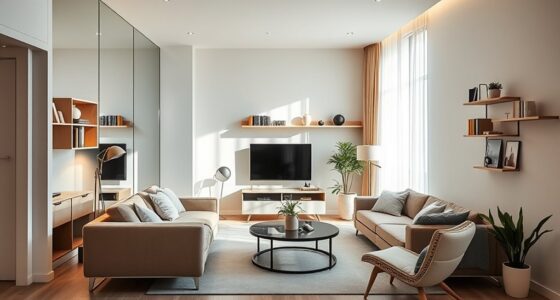

To create a focal point in any room, choose a bold or contrasting element like artwork, furniture, or lighting that draws immediate attention. Arrange your furniture to face or frame this feature and add targeted lighting to highlight it. Use accessories and colors that complement your main focus to unify the space. Balancing these elements carefully helps your focal point stand out while keeping the overall room harmonious—discover more tips for a stunning transformation.
Key Takeaways
- Choose a bold, contrasting color or striking artwork to instantly draw attention.
- Arrange furniture to face or frame the focal point, guiding the eye naturally.
- Use targeted lighting like spotlights to highlight the feature and add visual depth.
- Incorporate accessories that complement the focal element, enhancing overall harmony.
- Ensure the focal point integrates seamlessly with the room’s color scheme and design style.
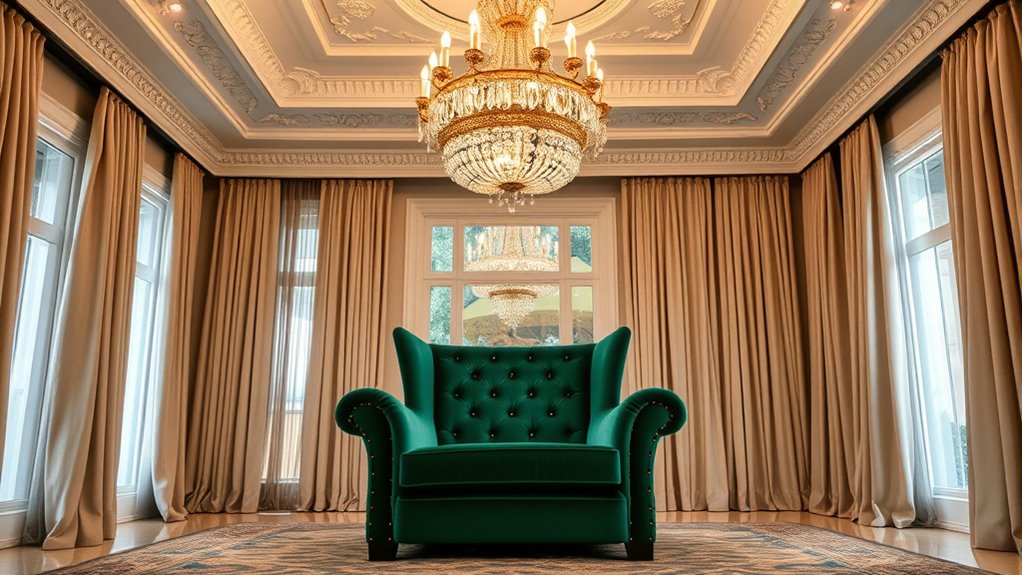
A well-chosen focal point can instantly transform any room, drawing attention and creating a sense of harmony. It’s the element that anchors your space and guides the eye, making the entire room feel complete. To achieve this, you need to carefully consider your color schemes and furniture arrangements. Your goal is to select a feature that stands out naturally without overwhelming the room’s balance.
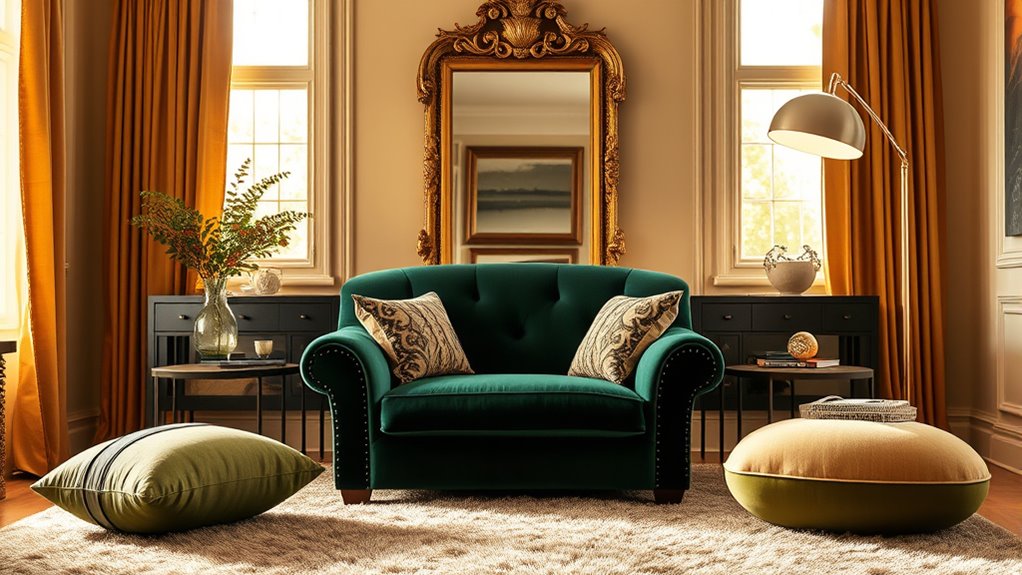
Start by thinking about the colors you use. Bold, contrasting color schemes work well if you want your focal point to draw immediate attention. For example, if your walls are neutral, choosing a vibrant piece of art or a brightly colored piece of furniture can serve as a striking focal point. Conversely, if you prefer a more subtle approach, opt for a focal element in a tone that complements the rest of the room. This creates visual interest without feeling jarring. Remember, the key is balance. You don’t want the focal point to clash with the overall color palette; instead, it should enhance and unify the space.
Use bold or contrasting colors for focal points, balancing vibrancy with the room’s overall palette.
Next, focus on furniture arrangements. Your furniture should direct attention toward the focal point naturally. For instance, if you’re highlighting a fireplace, arrange seating to face that feature. If you’ve chosen a large piece of artwork as your centerpiece, position your sofa and chairs in a way that frames it. Keep pathways clear so the eye isn’t distracted or obstructed. Using furniture to create a visual pathway toward your focal element helps reinforce its importance and makes the space feel cohesive. Additionally, understanding home decor principles can guide you in creating balance and harmony within your space.
Lighting also plays a vital role. Highlight your focal point with targeted lighting, like spotlights or wall-mounted fixtures, to make it pop even more. Proper lighting draws the eye and adds depth, especially in rooms with darker color schemes or subdued furniture choices. Avoid placing too many competing light sources that could dilute the focus.
Finally, accessorize thoughtfully around your focal point. Use decorative objects, rugs, or curtains that complement its color and style. These accents shouldn’t overshadow the main feature but instead support it. When all elements—color schemes, furniture arrangements, lighting, and accessories—work together, your focal point becomes an effortless centerpiece that ties the room together beautifully. With a little thought and planning, you’ll create a space that feels both inviting and visually balanced.
Frequently Asked Questions
Can a Focal Point Be Functional as Well as Decorative?
Yes, a focal point can be both functional and decorative. You can incorporate functional decor, like a striking fireplace or an eye-catching kitchen island, that also serves a purpose. This adds visual impact while enhancing practicality. When you choose a piece that stands out and functions well, you create a room that’s visually appealing and highly usable, making your space more inviting and efficient.
How Do I Choose the Right Focal Point for Small Rooms?
Did you know small rooms with a clear focal point feel 20% more spacious? To choose the right one, consider lighting accents that highlight a specific feature, like a bold artwork or unique furniture. Use complementary color schemes to draw attention without overwhelming the space. Pick a focal point that reflects your personality and enhances the room’s natural charm, making it feel inviting and well-designed.
What Are Cost-Effective Ways to Create a Focal Point?
You can create a focal point cost-effectively using DIY projects and lighting techniques. Paint an accent wall with bold colors or interesting patterns to draw attention. Use string lights or LED lamps to highlight specific areas or artwork, adding warmth and focus. Repurposing furniture or adding a statement piece like a unique mirror or clock also works. These simple, budget-friendly ideas can transform your space without breaking the bank.
Can Artwork Serve as an Effective Focal Point?
Artwork can serve as an effective focal point, like a beacon guiding your eye. Proper art placement creates strong visual emphasis, drawing attention instantly. Choose a bold piece or one with vibrant colors, and position it at eye level for maximum impact. When you carefully arrange artwork, it transforms a plain space into a mesmerizing centerpiece that anchors the room and sparks conversation effortlessly.
How Often Should I Update or Change My Room’s Focal Point?
You should update or change your room’s focal point every few years to keep your decor fresh and interesting. This decor update helps maintain focal point longevity, preventing the space from feeling outdated or stagnant. Pay attention to your style preferences and how the room functions; if you notice your current focal point no longer resonates or feels outdated, it’s time for a change to refresh the overall ambiance.
Conclusion
By creating a focal point, you’re planting a vibrant seed in your room’s garden, drawing the eye like a lighthouse guiding ships through a foggy night. It transforms chaos into harmony, turning an ordinary space into a story waiting to unfold. With this centerpiece anchoring your design, every glance becomes a brushstroke on your personal masterpiece. Embrace the power of that visual anchor — your room’s heartbeat, its soul, shining brightly against the backdrop of everyday life.