
To prevent bathroom mold, guarantee proper ventilation by using exhaust fans during and after showers, opening windows, or installing vents. Develop a routine of wiping down surfaces, especially grout lines and corners, and keep towels and curtains dry and clean. Manage humidity levels with dehumidifiers or mold-resistant paints for long-term protection. Consistent habits like quick drying and prompt mold removal can make a big difference—keep going to find out more effective strategies.
Key Takeaways
- Use exhaust fans during and after showers, and keep them clean and functional.
- Wipe down wet surfaces promptly and schedule weekly deep cleaning to prevent mold spores.
- Maintain proper humidity levels with vents or windows and consider a dehumidifier if needed.
- Keep towels, rugs, and shower curtains dry and wash them regularly to reduce moisture.
- Use mold-resistant paints combined with moisture control habits for long-term mold prevention.

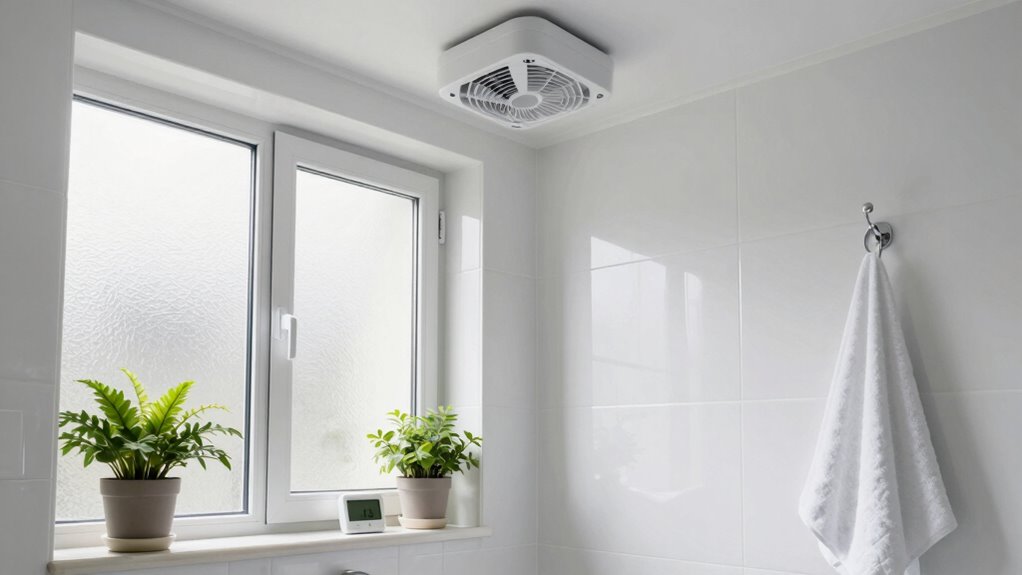
Are you wondering how to keep mold out of your bathroom? The key lies in implementing effective strategies like proper ventilation, timing your cleaning routines, and adjusting your habits. One of the best ways to prevent mold growth is to use mold resistant paints on bathroom walls and ceilings. These specially formulated paints contain antimicrobial agents that inhibit mold spores from settling and multiplying, giving you an extra layer of protection. However, even the best paint won’t do much if moisture isn’t controlled. That’s why managing humidity levels is essential. Investing in a good exhaust fan and running it during and after showers helps to remove excess moisture from the air, reducing the environment where mold thrives. Keep a close eye on bathroom ventilation, making sure fans are clean and functioning properly, and use them consistently to maintain low humidity. Additionally, ensuring proper air circulation in the bathroom by opening windows or installing vents can significantly decrease mold risk. Timing your cleaning routines also plays an important role. Regularly wiping down bathroom surfaces—especially tiles, glass, and sinks—removes water and soap scum that mold loves to cling to. Pay special attention to grout lines, corners, and any areas where water tends to pool. Cleaning these spots with mold-inhibiting solutions or vinegar-based sprays can make a significant difference. Additionally, try to schedule deep cleaning sessions weekly to keep mold spores at bay and prevent them from establishing a foothold. Don’t forget that moisture control isn’t just about cleaning; it’s about managing the bathroom environment overall. Keep towels, rugs, and shower curtains dry and wash them frequently to prevent mold spores from taking hold. Also, consider installing a dehumidifier if your bathroom tends to stay damp for long periods, especially in humid climates. Beyond cleaning and ventilation, your habits matter. Always run the exhaust fan during showers and leave it on for a few minutes afterward to clear out residual moisture. After bathing, wipe down wet surfaces with a squeegee or towel to cut down on damp patches. Ventilate the space by opening windows when possible, especially during and after showers, to promote air circulation. If you notice any signs of mold, address them immediately to prevent larger infestations. Using mold resistant paints combined with moisture control measures creates a formidable barrier against mold growth. Consistent habits, timely cleaning, and proper ventilation will keep your bathroom healthier, preventing mold from taking hold and saving you from costly repairs and health issues down the line.
Frequently Asked Questions
Can Houseplants Help Reduce Bathroom Mold?
Houseplants can help reduce bathroom mold by boosting plant benefits like air purification, which improves overall humidity levels. When you choose the right plants, such as ferns or pothos, they absorb excess moisture and filter airborne toxins. This natural process can help maintain a healthier bathroom environment, making it less hospitable for mold growth. Just guarantee your plants get proper light and avoid overwatering to maximize their air-purifying effects.
What Natural Remedies Prevent Mold Growth?
You can prevent mold growth naturally by using herbal sprays and essential oils. Spray a mixture of tea tree oil or eucalyptus oil diluted in water after showers to inhibit mold spores. These essential oils have antifungal properties that keep mold at bay. Regularly mist your bathroom with herbal sprays made from natural ingredients like thyme or rosemary. This routine helps maintain a dry environment and stops mold from forming before it starts.
How Often Should I Replace Bathroom Ventilation Filters?
Sure, because nothing says exciting like replacing ventilation filters. Usually, you should swap out your ventilation filter every 6-12 months, depending on usage and filter quality. Proper ventilation maintenance guarantees mold doesn’t decide to throw a party in your bathroom. Keep an eye on the filter lifespan—if it looks dirty or clogged sooner, don’t hesitate to replace it. Your bathroom (and lungs) will thank you for it.
Is It Safe to Use Bleach Regularly?
Using bleach regularly can be safe if you follow proper bleach safety guidelines. Always dilute it properly and guarantee good ventilation to prevent inhaling fumes. Bleach is effective for mold prevention and removing existing mold, but overusing it can damage surfaces and harm your health. Use it sparingly, and consider alternative mold prevention methods like improving ventilation. Keeping your bathroom dry and well-ventilated helps reduce mold without relying solely on bleach.
Can Humidity Levels Be Permanently Lowered?
Like Da Vinci’s pursuit of perfection, you can permanently lower humidity levels with consistent humidity control and mold monitoring. While fluctuations happen, maintaining proper ventilation, using dehumidifiers, and fixing leaks help stabilize moisture. Over time, these habits reduce excess humidity, discouraging mold growth. Though you can’t eliminate humidity entirely, your efforts create a balanced environment, ensuring your bathroom stays dry and mold-free for the long haul.
Conclusion
By staying vigilant with proper ventilation, timing your cleaning, and building good habits, you can keep mold at bay. Imagine stepping into a bathroom where fresh air flows freely, sunlight dances on clean surfaces, and no damp corners harbor trouble. With these simple fixes, you create a space that feels bright and healthy every time you enter. Take control now, and let your bathroom become a fresh, mold-free sanctuary you can trust.