
The 5-Box Declutter Method is an easy, effective way to regain control over cluttered spaces. By sorting items into “Keep,” “Donate,” “Sell,” “Trash,” and “Relocate,” you make quick decisions without overthinking, keeping the process moving smoothly. Using timers and focusing on small sections helps prevent overwhelm and boosts motivation. This simple system transforms chaos into clarity and can become a sustainable habit. Keep going to discover how to make decluttering even more manageable.

Get your next haul delivered free — and shop member deals
- Fast, free delivery on millions of items
- Access to Prime Big Deal Days deals on October 6–7
- Prime Video, Amazon Music and more included
Key Takeaways
- The 5-box method simplifies decluttering by categorizing items into Keep, Donate, Sell, Trash, and Relocate for quick decisions.
- Using timers keeps the process focused and prevents burnout, making decluttering feel manageable and less overwhelming.
- Immediate disposal of Trash and quick organization of Donate and Sell items boost motivation and visible progress.
- It encourages developing sustainable habits, helping you identify truly needed items and maintain an organized space long-term.
- The method is adaptable for any area, including outdoor gear, turning chaos into clarity with minimal stress.
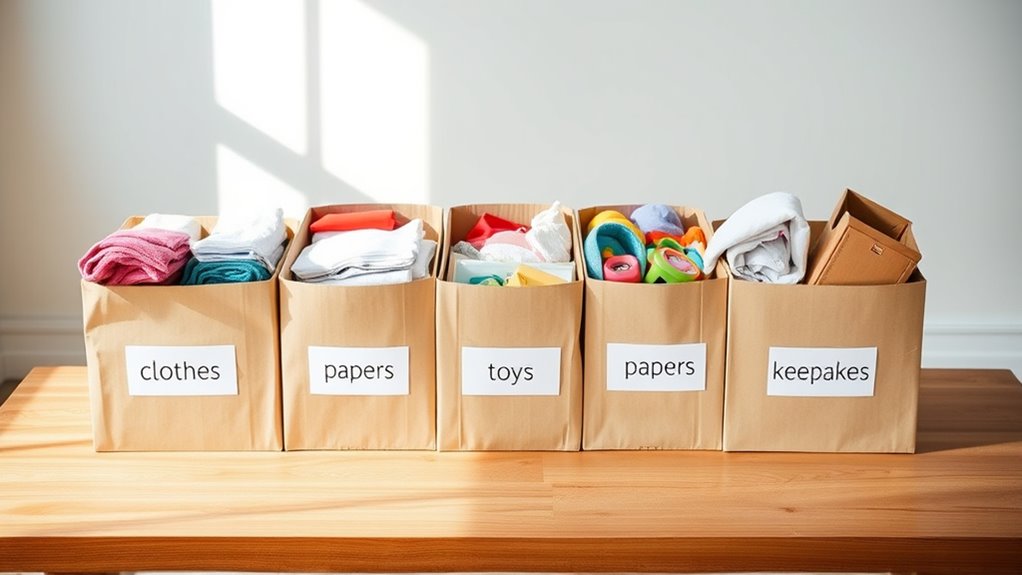
If clutter has taken over your space, the 5-Box Declutter Method offers a simple, effective way to regain control. Instead of feeling overwhelmed by the mess, you’ll focus on sorting items into five clear categories, making the process manageable and motivating. The key is to gather five sturdy boxes or bins and label them as “Keep,” “Donate,” “Sell,” “Trash,” and “Relocate.” As you start, set a timer to prevent burnout and remind yourself that even small progress counts.
Use the 5-Box Method to declutter efficiently and stay motivated through quick, focused decisions.
Begin by choosing a specific area to declutter. It could be a closet, a countertop, or a corner of your living room. Pick up an item and decide quickly which box it belongs in. If it’s something you love or need, place it in the “Keep” box. If it’s still useful but no longer serves you, toss it into the “Donate” or “Sell” box. Items that are broken, expired, or beyond repair should go straight into “Trash.” If an item belongs somewhere else in your home, put it in the “Relocate” box to keep the current space tidy and streamline your journey through decluttering.
The beauty of this method is that it keeps you moving without overthinking every decision. You don’t need to agonize over whether to keep or toss an item; you simply make a quick choice and stay focused. As you fill each box, you’ll see your space clearing up, which fuels your motivation to keep going. When you finish, empty the “Trash” box into your garbage or recycling. The “Donate” and “Sell” boxes can be taken to charities or scheduled for a sale. Moving “Relocate” items to their rightful places helps complete the process and keeps your home organized.
Additionally, integrating portable camping gear such as tents or portable toilets into your decluttering process can help you streamline outdoor equipment storage, ensuring your camping trips are hassle-free. This approach isn’t just about decluttering; it’s about creating a sustainable habit. Once you see how fast the boxes fill up, you’ll realize that decluttering doesn’t have to be an intimidating project. It’s about making quick decisions and acting on them. Over time, you’ll develop a sharper eye for what you truly need and what’s just taking up space. The 5-Box Declutter Method is practical, adaptable, and surprisingly freeing. It’s a method you’ll wish you’d started years ago because it transforms chaos into clarity, one box at a time.
sturdy storage boxes for decluttering
As an affiliate, we earn on qualifying purchases.
As an affiliate, we earn on qualifying purchases.
Frequently Asked Questions
How Long Does the Decluttering Process Typically Take?
The decluttering process usually takes a few hours to a full day, depending on the size of your space and how much clutter you have. You might find it helpful to set aside dedicated blocks of time, like a weekend or a few evenings. Stay focused, work steadily, and remember that breaking it into smaller sessions can make the task feel less overwhelming and more manageable.
Can the Method Be Adapted for Large or Cluttered Spaces?
Absolutely, you can adapt the box declutter method for large or cluttered spaces. Break the area into manageable sections, and tackle each with the same focused approach. Use multiple boxes or containers to categorize items, making sorting quicker and more organized. While it might take longer, maintaining a steady pace helps prevent overwhelm, ensuring you stay motivated and make significant progress, no matter how big the space.
What Should I Do With Items I Want to Keep but Don’t Need Now?
You should consider storing items you want to keep but don’t need now in labeled boxes or bins. Find a designated storage space, like a closet or attic, to keep these items organized and accessible for future use. Regularly review and update your stored belongings to prevent clutter buildup. This way, you maintain a tidy space while preserving your cherished items for when you truly need them.
Is the Box Declutter Method Suitable for Sentimental Items?
Yes, the box declutter method works well for sentimental items. You can set aside a dedicated box for keepsakes, photos, or mementos. When the box is full, review its contents and decide what truly matters. This approach helps you preserve meaningful items without clutter, making it easier to cherish special memories while keeping your space organized. It’s a simple, effective way to honor your sentimental treasures.
How Often Should I Repeat the Decluttering Process?
You should repeat the decluttering process every few months to keep your space organized and prevent clutter from building up again. Regularly revisiting your items helps you stay aware of what truly matters and what no longer serves a purpose. If your circumstances change or you notice clutter creeping in, do it sooner. Consistency makes it easier to maintain a tidy, stress-free environment over time.
labelled storage bins for home organization
As an affiliate, we earn on qualifying purchases.
As an affiliate, we earn on qualifying purchases.
Conclusion
So, there you have it—your foolproof, game-changing 5-box declutter method. Who knew that conquering clutter could be so simple, yet so satisfying? Now, go ahead, grab those boxes, and watch your space transform faster than you can say “minimalist paradise.” Because really, who needs chaos when you’ve got a game plan? Happy decluttering—your future clutter-free self will thank you (and maybe even send a thank-you card).
portable outdoor gear storage containers
As an affiliate, we earn on qualifying purchases.
As an affiliate, we earn on qualifying purchases.
As an affiliate, we earn on qualifying purchases.
Fall Picks
fall essentials
As an affiliate, we earn on qualifying purchases.