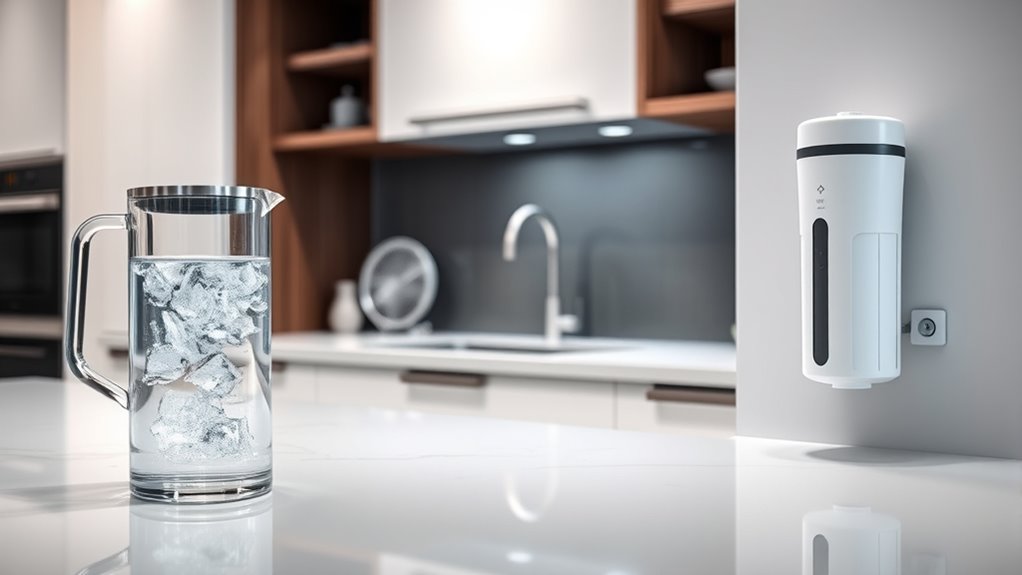

Water filters like pitchers, under-sink, and whole-home systems help you enjoy safe, tasty water daily. Pitchers are easy to use and great for convenience, while under-sink units offer more thorough filtration directly at your tap. Whole-home systems provide clean water for your entire house, protecting your appliances and plumbing. Proper installation and regular maintenance ensure these systems work effectively. Keep exploring to learn how to choose and maintain the right water filter for your needs.
Key Takeaways
- Pitcher filters are easy to install, insert the cartridge into the reservoir, and require regular filter replacements for optimal performance.
- Under-sink systems involve hose connections and mounting brackets, with proper installation ensuring no leaks and correct filter alignment.
- Whole-home filters connect to the main water supply, requiring secure fittings, pressure checks, and routine maintenance for consistent water quality.
- Regularly inspect all systems for leaks, odors, or reduced flow, and replace filters according to manufacturer guidelines to ensure safety and efficiency.
- Proper installation and maintenance of all filter types prolong system lifespan, maintain water safety, and ensure access to clean, filtered water.
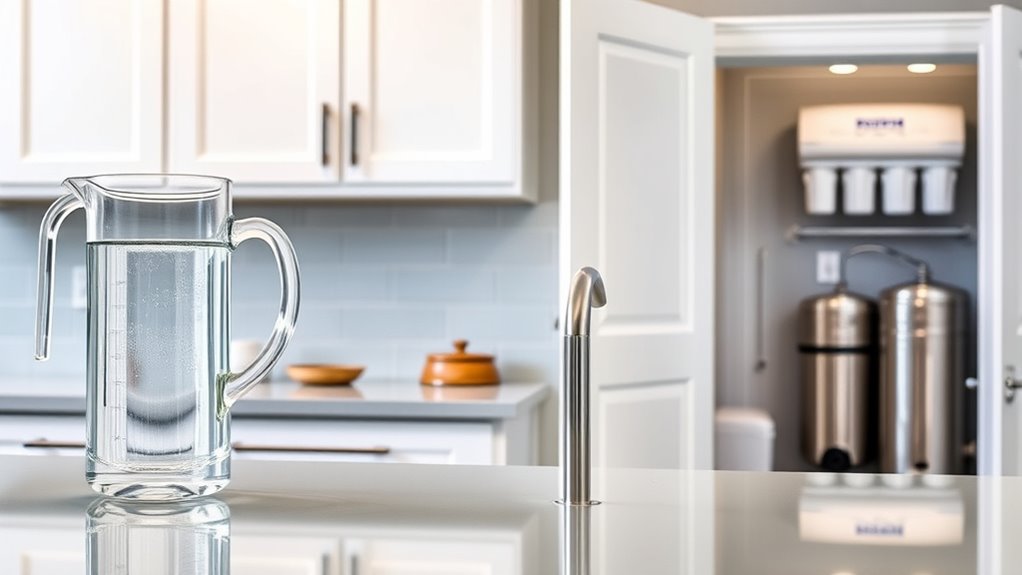
Water filters are vital tools for guaranteeing clean, safe drinking water. Whether you’re choosing a pitcher, under-sink, or whole-home system, understanding how to properly install and maintain your filter is key to getting the most from it. When you’re setting up a new filter, start with the installation tips provided by the manufacturer. Carefully read the instructions, and confirm your water supply is turned off before beginning. For pitcher filters, installation often involves simply inserting a filter cartridge into the reservoir, but for under-sink and whole-home systems, you might need to connect hoses or mount brackets. Make sure all connections are secure to prevent leaks, and double-check that the filter is correctly aligned to avoid bypassing unfiltered water.
Proper filter installation and secure connections ensure safe, effective water filtration.
Once your filter is installed, regular filter maintenance is vital. Each filter type has a different lifespan, typically ranging from a few months to a year, depending on usage and water quality. Keep track of the replacement date so you don’t forget to swap out old filters. Neglecting filter maintenance can lead to reduced water flow, decreased filtration efficiency, or even bacterial growth inside the unit. To maintain peak performance, flush the system as recommended—some filters require you to run water through them for a few minutes after installation or replacement. This step clears out any carbon dust or impurities from manufacturing and prepares your system for use.
In addition to routine replacements, periodic inspections will help you spot potential issues early. Check for leaks, unusual odors, or changes in water taste, which can indicate a filter needs attention or replacement. For under-sink models, ensure the housing remains tightly sealed, and for whole-home systems, verify that the pressure gauges and valves are functioning properly. Proper filter maintenance not only prolongs the life of your system but also guarantees your water remains crystal clear and safe. If you notice a drop in water quality, it might be time to replace your filter sooner than scheduled. Regular replacement helps prevent issues linked to contaminant buildup, ensuring the continued safety of your water supply.
Taking the time to follow installation tips and stay attentive to filter maintenance pays off in the long run. It ensures your water filtration system operates efficiently, providing you with clean, fresh water whenever you need it. Remember, a well-maintained filter is an investment in your health and convenience. So, stay proactive about replacing filters on time, and don’t hesitate to consult the manufacturer’s guidelines or seek professional help if you encounter any installation or maintenance challenges. When you do, you’ll enjoy the peace of mind that comes with knowing your water is as safe and clean as possible.
Frequently Asked Questions
How Often Should I Replace My Water Filter?
You should replace your water filter based on its filter lifespan, which varies by type but typically ranges from 2 to 6 months. Keep an eye on replacement indicators, like a change in water flow or taste, to know when it’s time. Regularly checking these signs guarantees your filter functions properly and keeps your water clean. Don’t wait too long—timely replacements protect your health and maintain ideal filtration.
Do Water Filters Remove All Contaminants?
Water filters don’t remove all contaminant types, but they considerably improve water quality. Their effectiveness depends on the filter’s design and the specific contaminants you’re concerned about. For example, some filters target chlorine, lead, or sediments, while others also reduce bacteria or viruses. To guarantee maximum protection, choose a filter rated for the contaminants you want to remove and replace it according to the manufacturer’s guidelines.
Can I Use Filtered Water for Cooking and Brewing?
You can definitely use filtered water for cooking and brewing. In fact, 85% of people notice better taste and aroma when they use filtered water. Filters improve taste by removing chlorine and other odors, while still retaining essential minerals that enhance flavor. Using filtered water guarantees your coffee, tea, and meals taste fresher and more vibrant. Plus, it’s better for your appliances, helping them last longer and perform at their best.
Are Water Filters Effective Against Bacteria and Viruses?
Water filters can be effective against bacteria and viruses if they feature microbial filtration capabilities. These filters are designed to remove waterborne pathogens, reducing the risk of illness. However, not all filters offer this level of protection. Check the product specifications to guarantee it’s certified for microbial filtration. For exhaustive safety, especially in areas with contaminated water, consider using filters specifically designed to eliminate bacteria and viruses.
What Is the Cost Difference Between Pitcher and Whole-Home Filters?
Imagine your water filter budget as a mountain range. Pitcher filters are the gentle hills, costing around $20–$50, with minimal installation and maintenance. Whole-home filters are towering peaks, demanding $1,000–$5,000 for installation and higher ongoing maintenance expenses. While pitchers are budget-friendly, whole-home systems offer extensive coverage but require a bigger investment upfront and over time. Your choice depends on your needs and willingness to climb the cost mountain.
Conclusion
Choosing the right water filter is like finding the key to pure, revitalizing water. Whether you opt for a pitcher, under-sink, or whole-home system, each safeguards your health and enhances your daily life. Remember, your water quality is the foundation of well-being—don’t settle for less. Like a lighthouse guiding ships to safety, the right filter lights your path to cleaner, clearer water every day. Make the choice today for a healthier tomorrow.