To prevent robot vacuum failure, stick to a simple maintenance schedule. Regularly check and clean the charging station, ensuring contacts are dust-free and station is unobstructed. Empty the dustbin and clean or replace filters weekly, especially during frequent use. Keep the docking area clear of debris and obstacles for seamless recharging. Consistent upkeep minimizes breakdowns and maintains performance. Staying on top of these tasks means your vacuum stays reliable — and if you continue, you’ll discover more helpful tips.
Key Takeaways
- Schedule regular cleaning of the dustbin and filters to maintain optimal suction and odor control.
- Check and clean charging contacts weekly to ensure proper docking and recharging.
- Place the charging station on a flat, unobstructed surface for consistent connection and operation.
- Perform routine inspections of the vacuum’s brushes and sensors to prevent malfunctions.
- Follow manufacturer guidelines for periodic filter replacement and overall system maintenance.

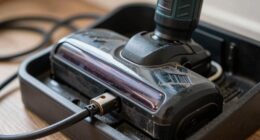
Regular maintenance is essential to keep your robot vacuum running efficiently and prolong its lifespan. One of the most important steps is paying attention to your charging stations. These stations are the hubs where your vacuum docks to recharge, so ensuring they’re clean and properly positioned can prevent many issues. Regularly check that the charging contacts on both the station and your vacuum are free of dust, debris, or any buildup that could interfere with charging. Dust and dirt can accumulate quickly, especially if your vacuum tends to pick up a lot of pet hair or fine dust. Wipe down the charging contacts with a soft, dry cloth to maintain a solid connection. Also, make sure the station itself is placed on a flat, stable surface and isn’t obstructed by furniture or cables, which could hinder your vacuum’s ability to dock correctly. Proper placement guarantees your vacuum can find and connect to the charging station effortlessly, reducing the chances of it getting stuck or failing to recharge.
Additionally, connected home fitness solutions often emphasize the importance of maintenance routines to prevent system failures, which can be applied to robot vacuums as well.
Equally critical is dustbin cleaning. Your robot vacuum’s dustbin collects dirt, dust, and allergens, which means it needs regular attention. A full or clogged dustbin can cause your vacuum to work harder than necessary, leading to decreased cleaning performance and potentially overheating the motor. To prevent this, empty the dustbin after each use or at least once a week if your vacuum runs frequently. When you do, take a moment to inspect the filter and clean or replace it as recommended by the manufacturer. Many vacuums have washable filters—simply rinse them with water and let them dry thoroughly before reinstalling. Keeping the dustbin and filter clean guarantees maximum suction power and helps prevent unpleasant odors or blockages. Don’t forget to also check for any debris stuck in the dustbin compartment or around the intake area, which could impede airflow.
Frequently Asked Questions
How Often Should I Replace the Robot Vacuum’s Brushes?
You should replace your robot vacuum’s brushes every 3 to 6 months as part of your maintenance schedule. Regular brush replacement prevents buildup, guarantees peak cleaning, and reduces wear on the motor. Keep an eye on the brushes for signs of damage or wear, and clean them regularly between replacements. Following this schedule helps your vacuum perform efficiently and extends its lifespan, making maintenance simple and effective.
Can I Use Any Cleaning Solution on the Robot Vacuum?
You shouldn’t use any cleaning solutions on your robot vacuum, especially harsh or chemical ones, because they can damage internal components and reduce your vacuum’s efficiency. Stick to dry or slightly damp cloths for cleaning the sensors and exterior. Using the wrong cleaning solutions can also impact your battery lifespan over time, causing it to degrade faster. Always follow the manufacturer’s cleaning instructions to keep your vacuum running smoothly.
What Should I Do if My Vacuum Is Making Strange Noises?
Did you know that 65% of robot vacuum users report noise issues? If your vacuum makes strange noises, it’s likely due to motor issues or debris caught in the brushes. First, turn off and unplug it. Check for tangled hair or debris around the wheels and brushes. If noises persist, inspect the motor and filters, and consider contacting support if you’re unsure. Regular maintenance prevents future strange noises and motor problems.
How Do I Troubleshoot Connectivity Issues With Smart Features?
If you’re having connectivity issues with your smart vacuum, start by checking your Wi Fi signal; a weak connection can cause problems. Make sure your device is within range and restart your router if needed. Also, confirm your vacuum’s app is updated to the latest version, as updates often fix bugs and improve connectivity. Reconnecting your vacuum to Wi Fi after these steps usually restores smooth operation.
Is It Necessary to Schedule Maintenance Even if the Vacuum Seems Fine?
Think of your robot vacuum as a car—you wouldn’t skip oil changes and inspections, right? Scheduling regular maintenance is key to ensuring its longevity. Even if it seems fine, routine upkeep prevents hidden issues from turning into costly repairs. Maintenance scheduling keeps your vacuum running smoothly, extends its lifespan, and saves you money. So yes, it’s worth setting a regular schedule to keep your device performing at its best.
Conclusion
Remember, an ounce of prevention is worth a pound of cure. By sticking to a simple maintenance schedule—cleaning filters, checking brushes, and emptying the bin—you keep your robot vacuum running smoothly. Don’t wait until it’s struggling to do its job; regular care saves you time, money, and frustration. Stay proactive, and your trusty vacuum will serve you well for years to come. Keep up with maintenance, and let your cleaner do the dirty work!