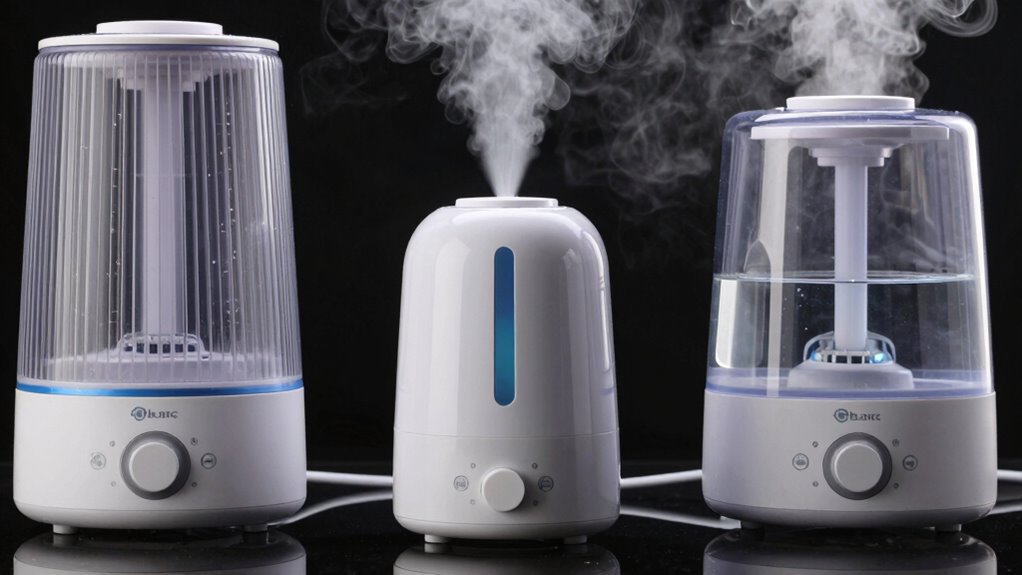

When choosing a humidifier, you’ll find three main types: evaporative, ultrasonic, and steam. Evaporative models are energy-efficient, self-regulating, and help prevent mold. Ultrasonic units are quiet, quick, and produce a fine mist, but may release mineral dust unless you use filtered water. Steam humidifiers quickly raise humidity and are sterile but consume more energy and pose burn risks. To find the best fit for your needs, there’s more to discover about each option.
Key Takeaways
- Evaporative humidifiers use a wick filter and naturally regulate humidity, while ultrasonic units produce a fine mist via vibrations and steam models boil water.
- Evaporative models are energy-efficient and self-regulating, whereas steam humidifiers consume more energy and provide sterile mist.
- Ultrasonic humidifiers operate quietly and quickly but may release mineral dust unless using distilled water.
- Steam humidifiers quickly raise humidity levels but have higher energy costs and a burn risk if mishandled.
- Regular cleaning and water quality are essential for all types to maintain air quality and device performance.
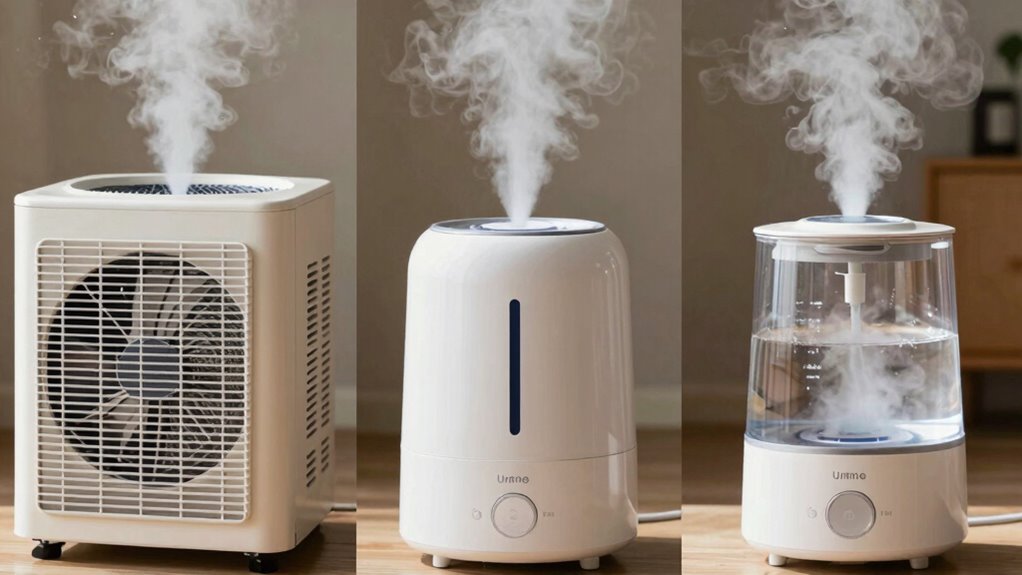
Humidifiers come in various types, each designed to suit different needs and preferences. When choosing the right one, it’s important to consider how it impacts your air quality and energy efficiency. Different models operate in unique ways, offering distinct advantages and drawbacks that can influence your home’s comfort and your energy bills.
Evaporative humidifiers are among the most popular choices. They work by drawing air through a wet wick filter, where the air absorbs moisture before being released back into the room. This process naturally regulates humidity levels, preventing over-humidification. Because they rely on natural evaporation, these units tend to be energy-efficient and cost-effective over time, making them a great option if you want to improve your air quality without considerably increasing energy consumption. Their self-regulating nature means they adjust to room conditions, so you’re less likely to experience excessive humidity, which can cause mold or dust mites. However, you’ll need to regularly clean or replace filters to maintain ideal performance and air quality. Additionally, evaporative humidifiers often require less maintenance than steam models, making them easier to operate regularly.
Evaporative humidifiers are energy-efficient, self-regulating, and help prevent mold and dust mites.
Ultrasonic humidifiers use high-frequency vibrations to produce a fine mist that disperses into the air. They are praised for their quiet operation and ability to add moisture rapidly. Since they use less energy compared to steam models, ultrasonic units are considered energy-efficient, especially if you need quick relief from dry air. They can also produce very fine mist, which helps improve air quality by evenly distributing moisture. However, some ultrasonic humidifiers may release mineral dust if you use tap water, which can negatively impact air quality. To mitigate this, using distilled water or filtering tap water is recommended, though this can add to ongoing maintenance costs.
Steam humidifiers, also known as warm-mist units, boil water to create steam that’s released into the room. These are effective at quickly raising humidity levels, making them suitable for very dry environments or for alleviating cold symptoms. Because they operate by boiling water, they tend to use more energy than evaporative or ultrasonic models. While they produce a sterile mist, their higher energy consumption can increase your utility bills. Furthermore, since they heat water to produce steam, they can also pose a burn risk if not used carefully. Their ability to sterilize water before dispersing can be a benefit for air quality, particularly in homes with vulnerable individuals, but this comes at the expense of higher energy use. Some models include filtering tap water options to reduce mineral dust, though they still consume more power than other types.
Frequently Asked Questions
Which Humidifier Type Is Safest for Children and Pets?
You should choose an evaporative humidifier for the safest option regarding child and pet safety. It naturally self-regulates humidity levels and doesn’t produce hot steam, reducing burn risks. Ultrasonic models can be safe if maintained properly but might disperse bacteria or minerals if not cleaned regularly. Steam humidifiers pose burn hazards due to boiling water. Always keep humidifiers out of children’s reach and clean them often to guarantee safety for both kids and pets.
How Energy-Efficient Are Different Humidifier Types?
You’ll find evaporative humidifiers are generally the most energy-efficient, consuming less power while effectively humidifying your space. Ultrasonic models use more energy but operate quietly, making them eco-friendly options if used wisely. Steam humidifiers tend to use the most energy due to boiling water. To save energy, choose models with adjustable settings, prioritize those with eco-friendly features, and use them only when necessary.
Can Humidifiers Help Reduce Allergy Symptoms Effectively?
Yes, humidifiers can help reduce allergy symptoms by improving moisture control in your environment. They add necessary humidity, soothing irritated nasal passages and easing allergy-related discomfort. To maximize allergy relief, keep your humidifier clean and use distilled water to prevent mold and bacteria buildup. Proper moisture levels can make a significant difference in reducing airborne allergens, helping you breathe easier and feel more comfortable during allergy seasons.
What Maintenance Do Each Humidifier Type Require Regularly?
Think of your humidifier as a loyal garden that needs tending. You’ll regularly replace filters to keep it running smoothly and prevent mineral buildup that can clog the system. For evaporative units, keep the wick filters fresh. Ultrasonic models need mineral deposits cleaned to avoid white dust. Steam humidifiers require descaling to prevent mineral buildup. Regular maintenance guarantees your device stays efficient and safe for your home’s air.
Are There Specific Room Sizes Best Suited for Each Humidifier Type?
You should choose a humidifier based on room size suitability and humidifier capacity. For small rooms, ultrasonic models work well due to their quiet operation and adequate coverage. Medium to large spaces benefit from evaporative humidifiers, which can handle higher capacities and more extensive areas. Steam humidifiers are ideal for very large rooms or spaces needing rapid humidity increases. Always match the humidifier’s capacity to your room size for maximum performance.
Conclusion
Choosing the right humidifier depends on your needs. Evaporative models are energy-efficient, while ultrasonic ones offer quiet operation, and steam humidifiers provide the highest moisture output. Did you know that ultrasonic humidifiers make up over 60% of the market? This shows their popularity for quiet, effective humidification. By understanding these differences, you can pick the best option for your home, keeping your air comfortable and healthy.