To prevent mold in your humidifier, you should clean it regularly by emptying and wiping down the tank daily with vinegar and water. Use fresh, filtered, or distilled water to reduce mineral buildup and avoid stagnant conditions. Keep indoor humidity levels between 30-50% with a hygrometer, and perform weekly deep cleanings to remove mold and bacteria. Proper maintenance keeps your air healthy and your device working efficiently—continue this focused approach for long-term mold prevention.
Key Takeaways
- Regularly clean and disinfect the humidifier, especially the water tank, to prevent mold buildup.
- Use clean, filtered, or distilled water to reduce mineral deposits and mold growth.
- Maintain indoor humidity levels between 30-50% to inhibit mold proliferation.
- Replace or clean filters as recommended by the manufacturer to prevent mold circulation.
- Empty and dry the water tank daily to discourage mold and bacteria development.
Keeping your humidifier clean is vital to guarantee it functions effectively and maintains healthy air quality in your home. Regular maintenance prevents mold growth, which can compromise both your health and the device’s performance. One of the most important steps you can take is paying close attention to air filter maintenance. Many humidifiers have filters that trap dust, mold spores, and other airborne particles. Over time, these filters can become clogged or contaminated, providing a breeding ground for mold if not replaced or cleaned regularly. Check your manufacturer’s recommendations for how often to change or clean these filters, and make it a routine to inspect them. Doing so guarantees your humidifier isn’t circulating mold or bacteria into your living space.
Regularly inspect and replace humidifier filters to prevent mold and ensure healthy air quality at home.
Alongside filter maintenance, water quality testing plays a pivotal role in mold prevention. Using contaminated or hard water can promote mineral buildup, which creates a hospitable environment for mold and bacteria. Test your water periodically to confirm it’s within safe parameters, especially if you use well water or your tap water has high mineral content. If testing reveals impurities, consider using distilled or filtered water in your humidifier. This simple step reduces the risk of mineral deposits that can encourage mold growth and guarantees your device operates efficiently. Additionally, selecting mold-resistant humidifier models can further enhance your efforts in preventing mold development.
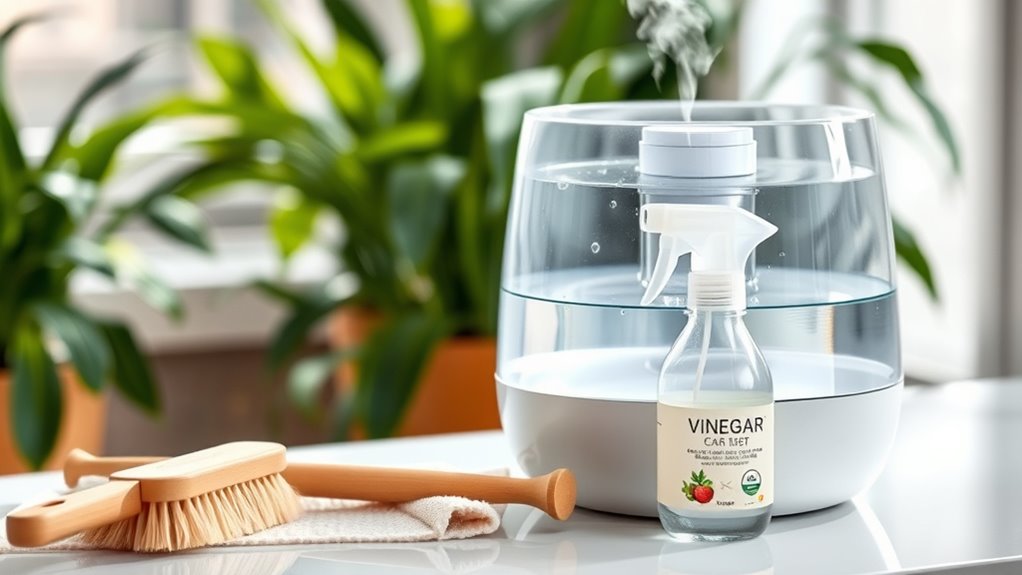
Cleaning your humidifier thoroughly on a regular basis is equally vital. Empty the water tank daily and wipe down all surfaces with a mixture of vinegar and water to remove any residue or mold spores. Once a week, give the entire unit a deep clean, paying special attention to hidden corners and hard-to-reach areas where mold can hide. Use a soft brush to scrub away any mineral buildup or mold. When cleaning, avoid harsh chemicals that could damage the device or release harmful fumes into your home. Instead, stick with natural solutions like vinegar or commercial humidifier cleaning agents designed to combat mold.
Monitoring the humidity levels in your home also helps prevent mold growth. Excess humidity creates an ideal environment for mold, so aim to keep indoor levels between 30-50%. Use a hygrometer to keep tabs on the moisture, and adjust your humidifier’s settings accordingly. Keeping the environment within the suitable range minimizes the chances of mold developing on surfaces or inside your humidifier.
Frequently Asked Questions
How Often Should I Replace the Humidifier Filter?
You should replace your humidifier filter every 1 to 3 months, depending on usage and water quality. Regular filter maintenance is essential to extend your humidifier’s lifespan and prevent mold buildup. Check the manufacturer’s recommendations for your specific model, and inspect the filter regularly. If it looks dirty or discolored, substitute it sooner. Proper filter maintenance keeps your humidifier running efficiently and ensures healthy, mold-free humidity in your space.
Can Using Essential Oils Damage My Humidifier?
Using essential oils can damage your humidifier if you don’t follow proper essential oil safety and humidifier maintenance. Oils may clog filters, damage the reservoir, or cause buildup that’s hard to clean. Always check your humidifier’s manufacturer guidelines before adding oils. To keep it running smoothly and prevent mold, avoid oils not recommended, clean your unit regularly, and ensure proper ventilation. This way, you safeguard your appliance and maintain healthy air quality.
What’s the Ideal Humidity Level for Preventing Mold?
Maintain an ideal humidity level between 30% and 50% to maximize air quality and prevent mold. When you keep humidity within this range, mold is less likely to flourish, and your space stays fresh and healthy. Monitoring with a hygrometer helps you stay on track. Consistent control of moisture ensures mold prevention, making your environment more comfortable and safe. Stay vigilant, and your air quality will stay excellent.
Are There Eco-Friendly Options for Humidifier Cleaning?
Yes, you can choose eco-friendly humidifier cleaning options. Look for biodegradable cleaning agents that effectively disinfect without harming the environment. Additionally, opt for reusable filter options to reduce waste and minimize replacement costs. Regularly using these environmentally conscious products helps keep your humidifier clean and mold-free while supporting sustainability efforts. This way, you maintain healthy indoor air quality without compromising your eco-friendly values.
How Do I Detect Mold Growth Inside My Humidifier?
You might notice a musty smell or see slimy spots during humidifier inspection, which suggests mold growth. To detect mold, carefully open your unit and look for discoloration or fuzzy patches on the surfaces. Pay special attention to corners and filters. Mold detection is key to maintaining a healthy environment. Regular inspection helps catch issues early, ensuring your humidifier stays clean and safe for continuous use.
Conclusion
To keep your humidifier mold-free, clean it regularly, change the water daily, and dry all parts thoroughly—just like a diligent Victorian housekeeper would. Remember, neglecting these steps is as perilous as trusting a snake oil salesman in the Old West. By staying vigilant and maintaining proper care, you’ll ensure fresh, safe air in your home. Don’t let mold turn your cozy space into a haunted house—stay proactive and enjoy breathable comfort every day.