
To care for your garbage disposal safely, regularly clean it by grinding citrus peels or ice with rock salt, and run cold water during and after use. Always turn off the power and disconnect it before maintenance, using tools instead of your hands to avoid injury. Keep fibers, bones, and grease away to prevent clogs. For more tips on proper care and safety, continue exploring effective ways to keep your disposal running smoothly.
Key Takeaways
- Always turn off and unplug the disposal before performing maintenance or clearing jams.
- Regularly clean the unit with citrus peels or ice and salt to prevent odors and buildup.
- Avoid putting hard or fibrous items, grease, or metal into the disposal to prevent damage and clogs.
- Use cold water during operation and after to solidify fats and flush debris effectively.
- Follow manufacturer instructions and schedule inspections if you notice leaks, unusual noises, or performance issues.
A garbage disposal is a convenient appliance that helps keep your kitchen clean, but it requires proper care and safety precautions to function effectively. Regular disposal maintenance is essential to prevent jams, unpleasant odors, and potential damage. To ensure your disposal operates smoothly, you should routinely clean it by grinding small citrus peels or using a mixture of ice and rock salt to scrub away grime and debris. Avoid pouring grease or fibrous foods down the drain, as these can cause clogs and strain the motor. Instead, run cold water during and after use to help flush waste and solidify fats, making them easier to break down. Incorporating these simple disposal maintenance habits can extend the life of your unit and keep it functioning efficiently. Proper disposal usage also minimizes unexpected malfunctions and promotes safety.
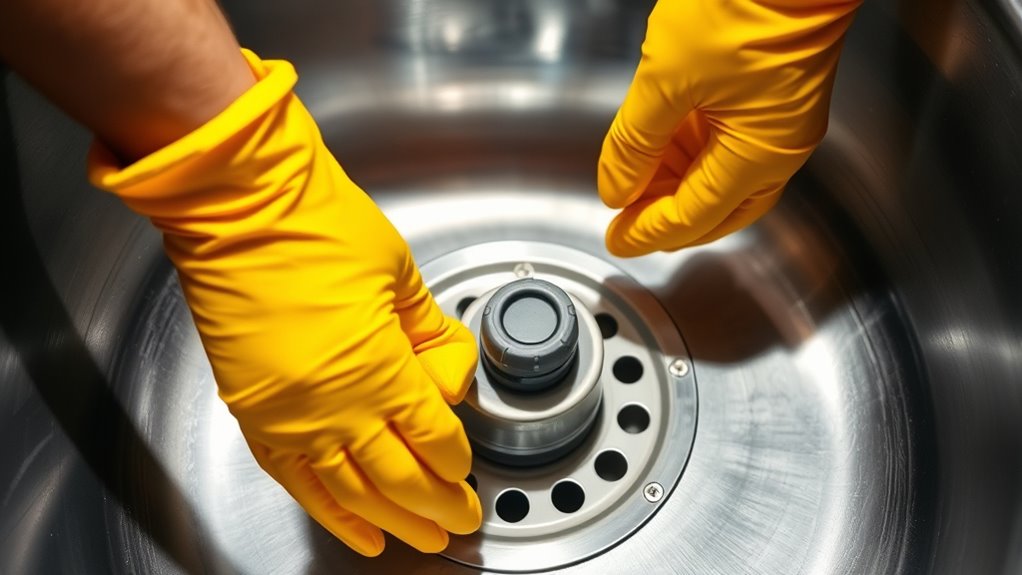
Safety precautions are equally important when using your garbage disposal. Before starting any maintenance or clearing jams, always turn off the power switch and disconnect the unit from the electrical outlet. Never reach into the disposal with your hands; instead, use tongs or pliers to remove any obstructions. If something gets stuck, avoid forcing it with excessive force, as this can damage the blades or motor. Instead, use the disposal’s reset button, usually located on the bottom or side of the unit, to reset the motor after clearing a jam. It’s also wise to keep your hands away from moving parts and to wear gloves if you need to handle debris manually.
Additionally, be cautious about what you dispose of. Avoid putting hard items like bones, shells, or metal objects into the disposal, as these can cause serious damage. Always run cold water while the disposal is active and for a few seconds afterward to help wash away particles and prevent buildup. Regularly inspecting your unit for leaks, unusual noises, or signs of wear will help you catch issues early before they become costly repairs. When in doubt, consult your manufacturer’s guidelines for specific disposal maintenance and safety precautions tailored to your model.
Frequently Asked Questions
Can I Put Coffee Grounds Down the Garbage Disposal?
You should avoid putting coffee grounds down the garbage disposal because they can cause clumping and clogging, making disposal maintenance more difficult. Coffee grounds don’t break down easily and can stick to pipes, leading to buildup over time. Instead, compost coffee grounds or dispose of them in the trash. Proper disposal prevents potential clogs and keeps your garbage disposal functioning smoothly, saving you time and costly repairs.
How Often Should I Replace My Disposal’s Splash Guard?
You should replace your disposal’s splash guard every 6 to 12 months as part of regular disposal maintenance. Over time, it can become cracked or moldy, which affects its effectiveness and hygiene. Keep an eye out for signs of wear, and don’t hesitate to do splash guard replacement sooner if you notice leaks or bad odors. Regular maintenance ensures your garbage disposal stays clean and functions smoothly.
Is It Safe to Use Chemical Drain Cleaners?
Using chemical drain cleaners isn’t safe for your disposal, as they can damage the unit and pose risks to your safety. Instead, opt for natural solutions like baking soda and vinegar, which effectively clear clogs without harming your disposal. Always prioritize disposal safety by avoiding harsh chemicals, and if you’re uncertain, consult a professional to prevent costly damage and guarantee your disposal functions properly.
What Are Signs My Disposal Needs Repair?
Did you know that about 80% of disposal problems are fixable with proper troubleshooting? If your disposal makes strange noises, doesn’t drain, or is jammed, these are clear repair indicators. You should act quickly to prevent further damage. For disposal troubleshooting, check for clogs or jams first. If the problem persists, it’s time to contemplate repairs or calling a professional to avoid costly replacements.
Can I Install a Garbage Disposal Myself?
Yes, you can install a garbage disposal yourself if you follow proper installation tips and have basic DIY troubleshooting skills. Start by turning off the power, disconnecting the plumbing, and removing the old unit carefully. Use a mounting assembly, connect the drain, and secure everything tightly. Follow the manufacturer’s instructions closely, and test for leaks afterward. If you encounter issues, consult troubleshooting guides or consider professional help to guarantee safety and proper functioning.
Conclusion
Taking care of your garbage disposal keeps it running smoothly and safely. Regularly cleaning and avoiding harmful items can prevent costly repairs and accidents. Did you know that over 75% of household plumbing issues are caused by improper disposal? By following simple safety tips, you can reduce your risk and extend your disposal’s lifespan. Stay vigilant, clean it often, and remember—your attention keeps your kitchen safe and efficient.