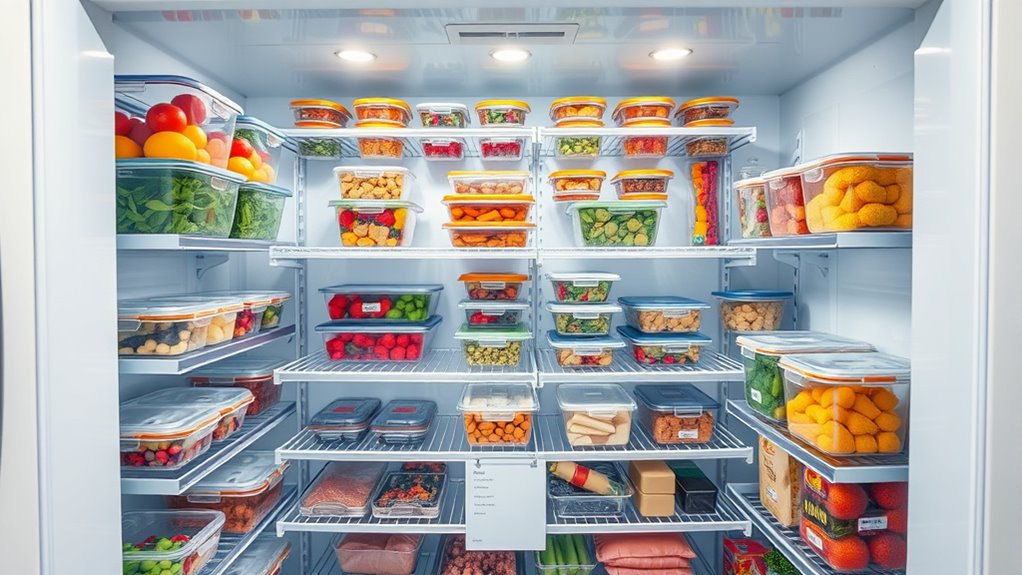
To organize your freezer for efficiency, categorize and label items so you can find what you need quickly, placing frequently used foods at the front or eye level. Keep clear containers and leave space for air circulation to maintain proper temperature and prevent ice crystal formation. Regularly check the thermostat to make certain the temperature stays around 0°F (-18°C), and avoid overfilling to promote even cooling. Follow these tips, and you’ll discover more ways to keep your freezer functioning at its best.
Key Takeaways
- Categorize and label items to streamline access and prevent food waste.
- Use clear containers and organize items by usage frequency for quick retrieval.
- Maintain proper freezer temperature at 0°F (-18°C) to prevent ice crystal formation.
- Avoid overfilling and leave space for air circulation to ensure consistent cooling.
- Regularly check and defrost non-frost-free freezers to prevent frost buildup and maintain efficiency.
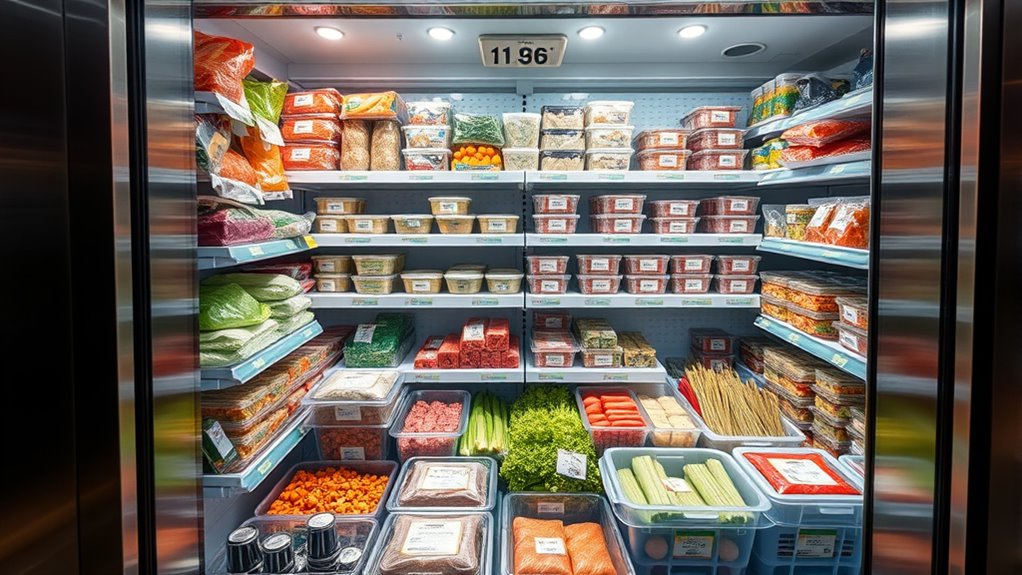
A well-organized freezer makes meal prep easier and helps prevent food waste. When you keep things tidy and systematically arranged, you save time hunting for ingredients and avoid accidentally losing food to spoilage. One key to maintaining an effective freezer is understanding how ice crystal formation impacts food quality. Ice crystals develop when food is frozen too slowly or stored at incorrect temperatures, leading to freezer burn and texture changes. To prevent this, you need to guarantee your freezer operates at the ideal temperature settings. The best temperature for most freezers is 0°F (-18°C). When set properly, this temperature slows down ice crystal formation, preserving the texture and flavor of your food. Regularly checking the thermostat is vital because even a slight deviation can compromise your food’s quality. Investing in a thermometer helps you monitor the temperature accurately, so you can make adjustments as needed.
Keeping your freezer organized also involves categorizing items and storing them strategically. Place frequently used items towards the front or at eye level, so you can grab them quickly without rummaging through the entire space. Use clear, labeled containers or bins to separate different food groups, such as vegetables, meats, and leftovers. This not only speeds up your meal prep but also reduces the chances of forgetting items, which can lead to unnecessary waste. When stacking items, make sure to leave enough space for air circulation. Proper airflow helps maintain a consistent temperature throughout the freezer, minimizing the risk of ice crystal formation in some areas and ensuring your food stays frozen evenly.
Another tip is to avoid overfilling your freezer. Overcrowding hampers airflow and can cause temperature fluctuations, which encourage ice crystals to form in unwanted places. Conversely, a partially filled freezer is more efficient because the existing frozen items help maintain the cold temperature when you add new items. Additionally, you should periodically defrost your freezer if it’s not frost-free. Excess frost buildup can insulate items from the cold, leading to uneven freezing and increased ice crystal formation. Regular defrosting keeps your freezer running efficiently and preserves your food’s quality over time. Moreover, maintaining a steady temperature can help prevent ice crystal formation, which is crucial for preserving food freshness and preventing spoilage.
Incorporating these practices — setting the right temperature, organizing strategically, and maintaining your freezer — guarantees your frozen foods stay fresh longer and retain their quality. A well-maintained freezer saves you money and reduces waste, making your meal prep smoother and more efficient. When you take these steps, you’re not just tidying up a space; you’re actively caring for your food, ensuring it stays delicious and safe until you’re ready to enjoy it.

MSERCUOR Freezer Organizer Bins, 4 Pack Stackable Deep Chest Freezer Organizer Bins, Foldable Baskets with Handles, Black Storage Container Baskets for 5/ 7 Cu.FT Deep Freezer Sort Frozen Meats
【High Quality】MSERCUOR deep freezer organizer bins are made of antirust metal, which has good corrosion resistance and can…
As an affiliate, we earn on qualifying purchases.
As an affiliate, we earn on qualifying purchases.
Frequently Asked Questions
How Often Should I Defrost My Freezer for Optimal Efficiency?
You should defrost your freezer when the ice buildup reaches about a quarter-inch thick. A good defrosting schedule is every 6 to 12 months, depending on usage and humidity. Regular freezer maintenance helps prevent excessive ice, keeping your appliance running efficiently. By staying on top of defrosting, you avoid energy waste and prolong your freezer’s lifespan, ensuring it remains effective and cost-efficient over time.
What Is the Best Way to Label Frozen Items?
Think of your freezer like a library—clear labels keep everything in order. Use a simple labeling system with waterproof markers or freezer tags to jot down contents and dates. Place labels on packages or use tags that clip onto items. This way, you’ll quickly find what you need, prevent freezer burn, and reduce waste. Keep it consistent, and your freezer will stay organized, efficient, and easy to navigate.
How Can I Prevent Freezer Burn on My Food?
You can prevent freezer burn by using airtight containers and proper wrapping. Make sure to remove as much air as possible before sealing, and use vacuum-sealing methods if you can. Wrap food tightly with plastic wrap or aluminum foil, then place it in a sealed container. Keeping your freezer at the right temperature, around 0°F, also helps protect your food from freezer burn and keeps it fresh longer.
What Are Eco-Friendly Methods to Organize My Freezer?
To organize your freezer eco-friendly, opt for reusable storage containers and biodegradable freezer bags, reducing waste and plastic use. Use clear containers for easy visibility, label everything with eco-friendly markers, and rotate items regularly to prevent spoilage. Keep similar items together, and create zones for frozen vegetables, meats, and leftovers. This approach minimizes environmental impact while keeping your freezer tidy and efficient.
How Do I Troubleshoot Strange Noises From My Freezer?
If your freezer makes strange noises, start by checking the evaporator fan; it might be blocked or malfunctioning. Listen for compressor noise, which is normal but should be steady. If the sounds are loud or irregular, verify nothing is touching the fan blades or compressor. Clean any debris around these parts, and if the noise persists, consider calling a professional to inspect the compressor or fan motor for potential issues.

Xomoo 2 Cup Silicone Freezer Trays with Lids, Silicone Soup Freezer Molds – Leakproof, BPA-Free, Stackable, Microwave & Dishwasher Safe, Perfect for Soups, Sauces, Meal Prep, and Baked Goods – 4 Pack
PERFECT SET: The freezer trays with lids are made of BPA-free food-grade platinum silicone (lids included) and consist…
As an affiliate, we earn on qualifying purchases.
As an affiliate, we earn on qualifying purchases.
Conclusion
By organizing your freezer, you turn chaos into harmony, transforming a cluttered space into a well-oiled machine. When you keep everything in its place, you’ll save time, reduce waste, and make meal prep a breeze. Think of your freezer as a treasure chest—once organized, every item becomes a gem waiting to be discovered. Embrace this simple change, and watch your kitchen become a symphony of efficiency, where every frozen delight is easy to find and enjoy.

TempPro Refrigerator Thermometer 2 Pack with Large Backlit LCD Display, Waterproof Freezer Fridge Thermometer with Max/Min Record, Easy Battery Replacement for Room, Cooler (Previously ThermoPro)
【Backlit Display for Clear Visibility】The oversized LCD screen with bright backlight ensures easy readability, even in dark freezers…
As an affiliate, we earn on qualifying purchases.
As an affiliate, we earn on qualifying purchases.

Danby DFF070B2BSLDB-6 7.0 cu. ft. Frost Free Top Mount Freezer in Black Stainless Steel
7.0 cu. ft. (198 L) Capacity Apartment Size Refrigerator Top Mount
As an affiliate, we earn on qualifying purchases.
As an affiliate, we earn on qualifying purchases.