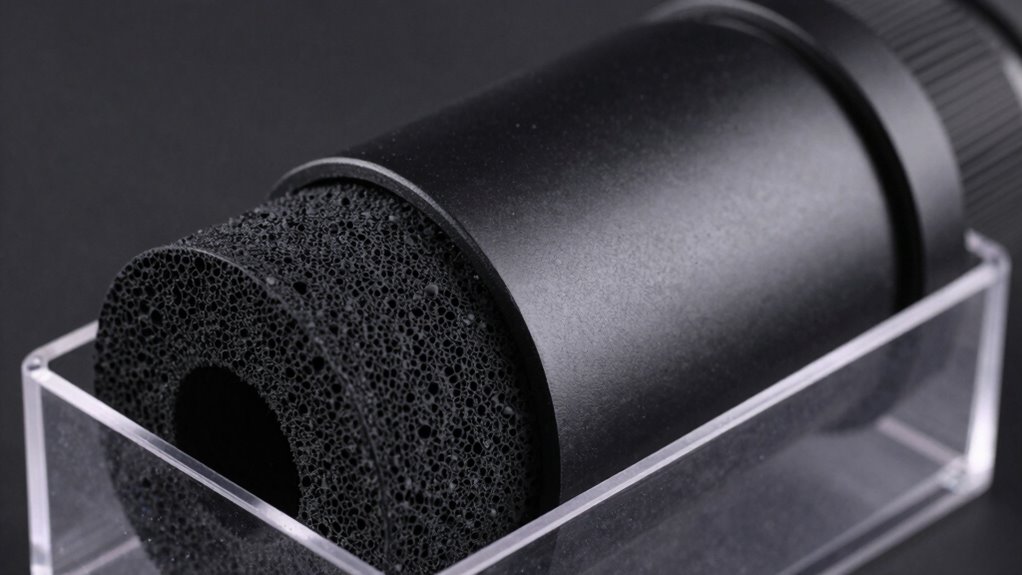

Activated carbon filters effectively remove chemicals, odors, and organic contaminants by trapping them on their large, porous surface. They’re great for eliminating chlorine, VOCs, and unpleasant tastes from water and air. However, they don’t remove inorganic substances like heavy metals, nitrates, or pathogens such as bacteria and viruses. To understand how these filters work and their limitations, explore the details below to find the best options for your needs.
Key Takeaways
- Activated carbon filters effectively remove organic chemicals, chlorine, odors, and VOCs through adsorption.
- They are less effective against inorganic substances like heavy metals and nitrates.
- Activated carbon cannot eliminate bacteria, viruses, or other pathogens from water or air.
- Filter capacity and maintenance are crucial for sustained removal of chemical contaminants.
- Additional filtration methods are needed to address inorganic pollutants and microbial contaminants.
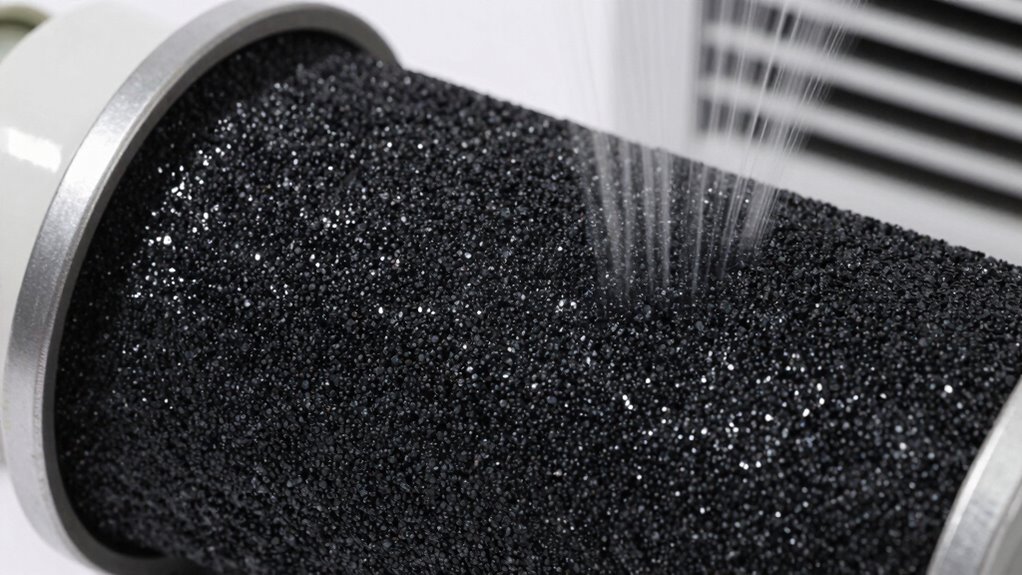
Activated carbon filters are an effective way to improve your water and air quality by removing contaminants and odors. These filters work through a process called adsorption, where impurities stick to the surface of the activated carbon. The adsorption capacity of the filter determines how much contaminant it can hold before becoming saturated, meaning it can effectively trap a variety of pollutants until its capacity is reached. This makes activated carbon an excellent choice for chemical filtration, especially when dealing with organic compounds, chlorine, and unpleasant odors. When you use a filter with a high adsorption capacity, you guarantee that more contaminants are removed efficiently, prolonging the filter’s lifespan and maintaining clean water or air.
The chemical filtration properties of activated carbon make it particularly effective against volatile organic compounds (VOCs), pesticides, and other chemicals that cause odors or taste issues. These substances are often responsible for the foul smell or bad taste in water and air, and activated carbon’s porous structure provides a large surface area for chemical reactions. As contaminants pass through, they bind to the carbon’s surface, removing them from your water or air supply. This process is especially beneficial in household water filters, air purifiers, and industrial applications where chemical contaminants are a concern. The ability to target specific chemicals through tailored activated carbon types enhances its versatility for different filtration needs. Additionally, the adsorption capacity of activated carbon can vary based on its manufacturing process and the type of activated carbon used, influencing its effectiveness for various applications.
However, it’s important to recognize what activated carbon filters don’t remove. While they excel at trapping many organic chemicals and odors, they are less effective against dissolved inorganic substances like heavy metals, nitrates, and certain pathogens such as bacteria and viruses. If your water or air contains these contaminants, you’ll need additional filtration methods, like reverse osmosis or UV sterilization, to guarantee comprehensive purification. Relying solely on activated carbon might leave some harmful substances unaddressed, so understanding its limitations helps you choose the right combination of filters for your specific needs.
Frequently Asked Questions
How Long Do Activated Carbon Filters Typically Last?
You can expect activated carbon filters to last about 3 to 6 months, depending on your filter’s lifespan and how often you use your system. To maintain peak performance, it’s crucial to monitor the filter’s condition and replace it as needed. Regular replacement frequency ensures your filter continues to effectively remove odors, chemicals, and impurities without letting contaminants pass through, keeping your water or air clean.
Can Activated Carbon Filters Remove Viruses From Water?
Think of your filter as a security guard, but it’s not equipped to stop all threats. Activated carbon filters mainly handle chemicals and odors, not viruses. For virus filtration, they fall short because microbes have microbial resistance, allowing viruses to slip through. If you’re concerned about waterborne viruses, you need a UV purifier or a specialized filter designed for microbial resistance, since activated carbon alone won’t keep those out.
Are Activated Carbon Filters Effective Against Heavy Metals?
Activated carbon filters aren’t very effective against heavy metals because they primarily rely on chemical adsorption, which doesn’t work well with metals like lead or mercury. For heavy metal filtration, you should look for filters specifically designed with ion-exchange resins or other advanced materials. While activated carbon excels at removing chemicals, odors, and organic compounds, it’s not the best choice for heavy metal removal.
How Often Should I Replace My Activated Carbon Filter?
Like a wise gardener tending to delicate blooms, you should replace your activated carbon filter every 3 to 6 months. Regular filter maintenance and timely replacement guarantee peak performance, preventing buildup that reduces efficiency. Keep an eye on signs like foul odors or decreased flow rate, which signal it’s time for a change. Staying attentive guarantees your water stays clean, and your filter continues to do its job effectively.
Do Activated Carbon Filters Remove Beneficial Minerals?
Activated carbon filters don’t typically remove beneficial minerals or trace nutrients from your water. They mainly target chemicals, odors, and contaminants, leaving minerals like calcium and magnesium intact. So, you won’t lose essential nutrients that contribute to your health. However, if your water has high mineral content, consider other filtration methods, but generally, activated carbon filters preserve the beneficial minerals in your water.
Conclusion
Activated carbon filters excel at removing odors and chemicals, making your air and water fresher. However, they don’t tackle viruses, heavy metals, or minerals, leaving some contaminants behind. Think of them as a powerful deodorizer that’s great at what it does, but not a complete safeguard. While they improve your environment’s scent and taste, don’t rely solely on them for full protection. Use them wisely—pair them with other filters to cover all your needs.