
To test your hair’s porosity, try the slip-and-dip test by placing a strand in water; if it sinks quickly, you likely have high porosity. For a strand test, feel the cuticle’s roughness or smoothness—rough indicates high porosity, smooth suggests low. Keep in mind, these tests aren’t perfect, and factors like damage or product buildup can affect results. Want to discover more about your hair’s limits and how to care for it properly?
Key Takeaways
- Common tests include the slip-and-dip test and strand float test to assess porosity levels.
- High porosity strands absorb water quickly but lose moisture fast, indicating damage or gaps in cuticles.
- Low porosity hair resists water absorption, requiring heat or opening treatments to improve moisture intake.
- Limitations of tests include environmental factors affecting results and subjective interpretation of strand behavior.
- Understanding porosity limits helps optimize product use and prevent buildup or over-treatment.
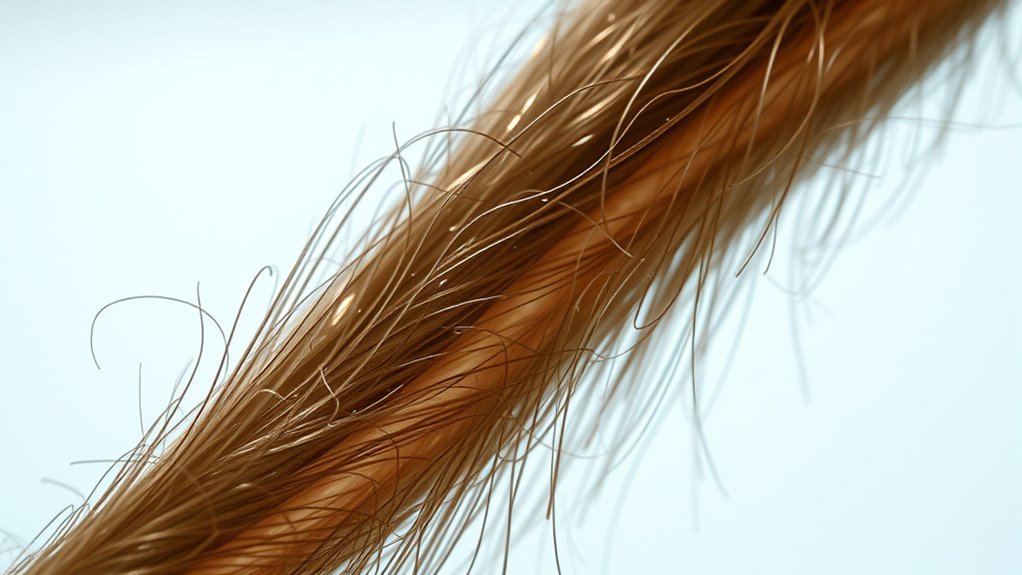
Have you ever wondered why some hair soaks up moisture quickly while others resist it? The answer lies in your hair’s porosity, which determines how your strands absorb and retain moisture. Understanding porosity types is essential because it influences how you care for your hair and how well your products work. There are three main porosity types: low, medium, and high. Low porosity hair has tightly bound cuticles, making it difficult for moisture to penetrate. As a result, it tends to resist water and products but retains moisture once absorbed. Medium porosity hair has a balanced cuticle layer, allowing it to absorb and retain moisture efficiently. High porosity hair, on the other hand, has gaps or raised cuticles, making it quick to soak up water but also prone to losing moisture just as fast.
Knowing your porosity type helps you tailor your hair care routine for ideal moisture retention. For example, if you have low porosity hair, you might find that heavy oils and heat treatments help open the cuticles, allowing moisture to penetrate better. Conversely, if your hair is highly porous, lightweight leave-in conditioners and sealing products can help lock in moisture and prevent dryness. Medium porosity hair typically requires less maintenance, but regular moisturizing and occasional clarifying treatments keep it healthy and balanced. Recognizing your porosity also helps you avoid overdoing certain products; high porosity hair can become overwhelmed with heavy products, leading to buildup, while low porosity hair can become weighed down easily.
To determine your porosity type, simple tests can guide you. The slip-and-dip test involves placing a few strands of clean, dry hair in water; if they sink quickly, your hair is likely high porosity. If they float or take time to sink, your hair may have low or medium porosity. Another method is the strand test: take a strand and slide your fingers along its length. If you feel roughness or rough cuticles, it might be high porosity. Smooth strands suggest low porosity. Understanding these signs helps you adjust your routine accordingly, improving moisture retention and overall hair health. Additionally, being aware of your hair’s cuticle structure can help you select the most suitable products and techniques. Ultimately, knowing your porosity type empowers you to select the right products and techniques, making your hair care routine more effective. Whether you want to boost moisture retention or keep dryness at bay, understanding porosity is key to achieving healthy, vibrant hair.
Frequently Asked Questions
How Does Hair Porosity Affect Dye Absorption?
Your hair porosity directly impacts how well it absorbs dye and holds color. High porosity allows for faster absorption but can cause damage and fading, while low porosity resists dye penetration, making color less vibrant. Understanding your porosity helps you choose the right products and techniques, ensuring better color results and minimizing damage. Properly managing porosity and color interaction is key to achieving your desired look without compromising your hair’s health.
Can Hair Porosity Change Over Time?
Yes, your hair porosity can change over time. Hair porosity evolution occurs due to factors like damage from chemical treatments, heat styling, or environmental exposure. These long-term porosity changes can make your hair more or less receptive to moisture and color treatments. So, it’s important to regularly assess your hair’s condition and adjust your hair care routine accordingly, as porosity isn’t static and can improve or worsen over time.
What Products Best Suit High Porosity Hair?
When it comes to high porosity hair, you need products that work double duty. Think deep moisturizing routines with rich conditioners and leave-in treatments to lock in hydration. Protein treatments are your best friends, helping to strengthen and close the cuticles. Look for products with ingredients like keratin or silk proteins. Remember, it’s like putting a band-aid on a leaky faucet—targeted care makes all the difference.
Is Hair Porosity Testing Suitable for All Hair Types?
Hair porosity testing isn’t suitable for all hair types, especially if your hair has extensive damage or scalp issues. If your hair is severely damaged or your scalp health is compromised, the test results might not be accurate or beneficial. Instead, focus on observing how your hair responds to products and treatments. Keeping your scalp healthy and minimizing damage will give you better insights into your hair’s needs than testing alone.
How Often Should Porosity Tests Be Redone?
You should redo your hair porosity testing every 3 to 6 months, depending on your hair’s condition. Hair porosity can change due to factors like damage, chemical treatments, or environmental exposure. Regular testing helps you adjust your hair care routine accordingly. Keep an eye on how your hair responds to products and treatments, and perform testing frequency more often if you notice shifts in moisture retention or damage.
Conclusion
So, now that you know your hair’s porosity secrets, feel free to wield this knowledge like a magic wand—except, of course, without the guarantee of flawless hair. Remember, whether your strands drink up products or stubbornly refuse them, it’s all part of the grand hair-raising adventure. Embrace your porosity quirks with wit and a dash of sarcasm, because in the end, hair is just hair—delightfully unpredictable and wonderfully yours.