Brush types include boar, nylon, and mixed brushes, each designed for different needs. Boar brushes use natural bristles to distribute oils, adds shine, and gently detangles hair, promoting healthier scalp and hair over time. Nylon brushes are durable and ideal for thick or coarse hair, offering precise styling and easy cleaning. Mixed brushes combine both bristle types for balanced performance, making routines smoother. Exploring these options further can help you find the perfect tool for your hair or project.
Key Takeaways
- Boar brushes use natural bristles to distribute oils, enhance shine, and gently detangle hair.
- Nylon brushes are synthetic, durable, ideal for thick or coarse hair, and suited for professional styling.
- Mixed brushes combine natural and synthetic bristles for balanced detangling, cleaning, and styling performance.
- Boar brushes promote scalp health and natural shine with gentle grooming benefits.
- Nylon and mixed brushes offer versatility, resilience, and precision for various hair types and styling needs.
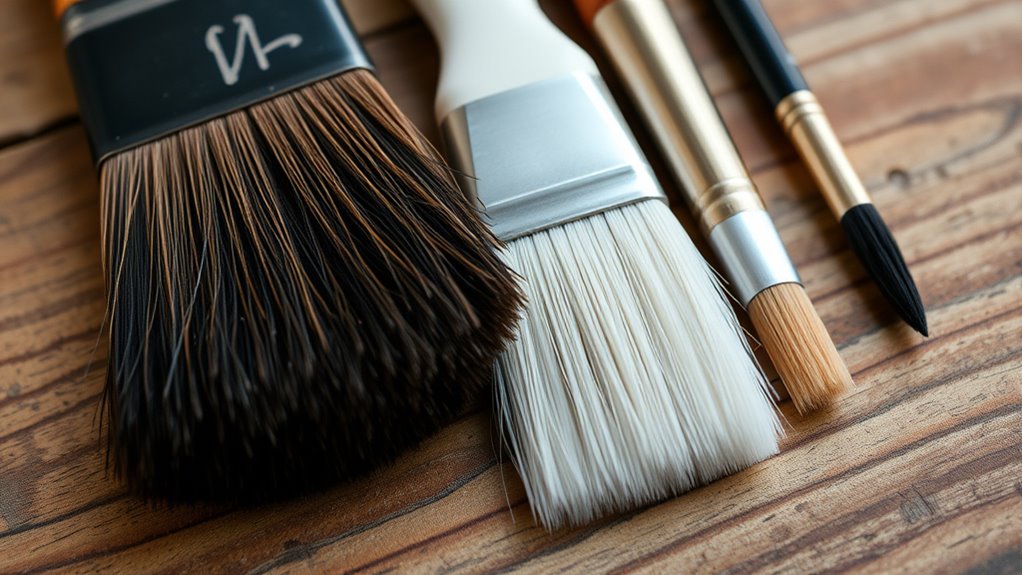
Have you ever wondered how the right brush can make all the difference in your painting or grooming routine? Choosing the proper brush isn’t just about aesthetics; it directly impacts the quality of your work and the ease of your process. When it comes to grooming, understanding the types of brushes—boar, nylon, or mixed—can help you achieve better results faster and more comfortably.
Let’s start with boar brushes. These brushes are prized for their natural bristles, which have unique boar brush benefits. They’re gentle on hair and scalp, distributing natural oils evenly across your hair, adding shine and softness. If you want to maintain healthy hair and reduce breakage, a boar brush is a wise choice. Using a boar brush regularly helps you detangle hair smoothly without pulling or causing damage. Plus, the natural bristles generate enough friction to remove dirt and loose hair efficiently. When you incorporate boar brushes into your grooming routine, you’ll notice improved hair texture and a healthier scalp over time. Their benefits extend beyond just grooming; they’re also great for styling, giving a polished, natural look.
Boar brushes gently distribute oils, reduce breakage, and promote healthier, shinier hair over time.
On the other hand, nylon brushes are popular because of their durability and versatility. They’re especially good for styling and detangling, thanks to their synthetic bristles that glide through hair or paint with ease. Nylon brush techniques involve using these brushes to create precise lines or smooth finishes. They’re less gentle than boar brushes but excel at handling thick or coarse hair, or in painting, where they can produce consistent strokes. If you’re working on a project that requires sharp, clean lines or you need a brush that withstands frequent use, nylon brushes are your go-to. They’re easy to clean and maintain, making them ideal for daily use or professional work. While they don’t offer the same natural benefits as boar brushes, their resilience and affordability make them a staple in many routines. Additionally, understanding the different types of brushes can help you choose the most suitable tool for your specific needs.
Mixed brushes combine the best of both worlds, featuring natural and synthetic bristles. They’re designed to provide balance—offering gentle grooming with effective cleaning or styling power. With mixed brushes, you get some of the boar brush benefits, like gentle detangling, along with the durability and precision of nylon. They’re especially useful if you want a versatile tool that adapts to different hair types or painting styles. By mixing materials, these brushes ensure you don’t have to switch tools for different tasks, streamlining your routine.
In the end, understanding the strengths of each brush type helps you select the best tool for your specific needs. Whether you prefer the gentle, nourishing qualities of a boar brush, the precision and durability of nylon, or the versatility of a mixed brush, making the right choice will elevate your grooming or painting game.
Frequently Asked Questions
Which Brush Type Is Best for Sensitive Scalps?
For sensitive scalps, a boar bristle brush is your best choice because it distributes natural oils gently and minimizes irritation. Use sensitive scalp remedies like soothing oils or gentle shampoos, and adopt gentle brushing techniques to avoid discomfort. Nylon brushes can be too harsh, so steer clear. By combining the right brush with gentle care, you’ll reduce scalp sensitivity and promote healthier, happier hair.
How Do Mixed Brushes Compare in Durability?
Mixed brushes offer good durability due to their combined bristle types, which balance softness and strength. You’ll find that mixed bristle durability tends to be higher than pure boar or nylon brushes, making them suitable for regular use. Their mixed brush longevity means they hold up well over time, resisting breakage and wear. If you want a versatile brush that lasts longer, a mixed bristle brush could be your best choice.
Are Boar Brushes Suitable for All Hair Types?
Boar brushes aren’t suitable for all hair types. Imagine gliding a natural boar brush through thick, curly hair—your strands may resist, making styling difficult. But for fine or straight hair, it adds a brilliant shine and makes styling easier, like a gentle wave of perfection. If you want smoother, shinier hair, boar brushes work wonders, but for textured or coarse hair, you might need a different tool.
Can Nylon Brushes Damage Delicate Hair?
Nylon brushes can damage delicate hair if you’re not careful. Their stiff bristles might cause breakage or split ends, especially if you pull or brush aggressively. To prevent this, choose a nylon hair brush with gentle cleaning features and softer bristles. Always be gentle, avoid tugging, and consider switching to a softer brush for delicate hair to keep it healthy and minimize damage.
How Often Should I Replace My Brush?
You should replace your brush every 3 to 6 months to maintain ideal brush longevity and hair health. Regular replacement helps prevent buildup of dirt, oils, and bacteria that can harm your scalp. Keep an eye on brush wear, such as frayed bristles or reduced effectiveness. For best results, clean your brush weekly and follow simple replacement tips—like marking your calendar—to guarantee your hair stays healthy and your brush performs well.
Conclusion
Choosing the right brush transforms your grooming routine into an unstoppable force of hair perfection. Whether you opt for the fierce boar, the resilient nylon, or a powerful mixed blend, each type holds the secret to conquering frizz, adding shine, and taming even the wildest strands. Don’t settle for ordinary—unleash the ultimate hair revolution with your perfect brush. After all, with the right tool in hand, your hair’s destiny becomes nothing short of legendary.