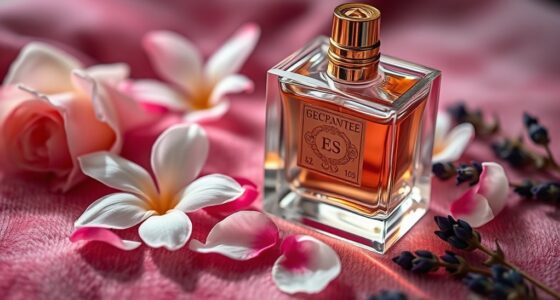
To master the art of layering scents, start by choosing complementary notes that blend smoothly, like citrus with vanilla or woody with floral elements. Apply longer-lasting base notes first, then add lighter scents on pulse points like wrists and neck to enhance longevity. Be mindful to keep the balance harmonious, avoiding overpowering combinations. Experiment with different pairings to find your signature fragrance. Curious to explore more about creating your perfect scent harmony? Keep exploring for expert tips and ideas.
Key Takeaways
- Start with a strong, long-lasting base scent like musk or woods to ensure longevity.
- Layer complementary notes, such as citrus with vanilla, to create harmony and balance.
- Apply scents to pulse points and clothing for enhanced projection and staying power.
- Consider scent characters and occasions to craft appropriate, multidimensional combinations.
- Use moderation to achieve harmony, avoiding overpowering or clashing fragrances.
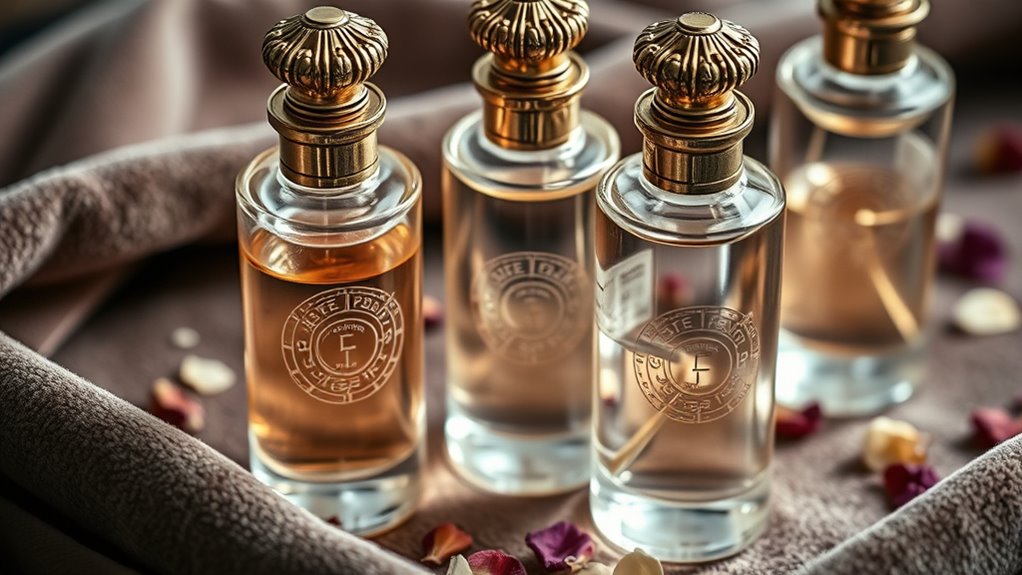
Layering scents is an effective way to create a personalized and enduring fragrance experience. When you combine different scents thoughtfully, you enhance scent longevity, ensuring your aroma stays vibrant throughout the day. To achieve this, focus on selecting complementary notes that work harmoniously together. Complementary notes are scents that blend smoothly, amplifying each other without clashing or overpowering. For example, pairing a fresh citrus top note with a warm vanilla base creates a balanced fragrance that feels both lively and comforting. By choosing scents with compatible notes, you not only craft a unique signature but also improve how long the scent lasts on your skin or clothing.
Layering compatible scents enhances longevity and creates a personalized, balanced fragrance experience.
Understanding scent longevity is key to successful layering. Some fragrances naturally last longer because of their composition, often featuring base notes like musk, woods, or resins. Light top notes, such as citrus or florals, tend to fade faster. When layering, start with the scent that has the most lasting power—usually a perfume with deep, rich base notes—and then add lighter scents on top. This approach ensures the core of your fragrance stays strong, while the lighter notes gently enhance the overall aroma without diminishing the longevity. You want your scent to evolve over time, revealing different layers as it settles, which is one reason why selecting complementary notes matters so much. Additionally, incorporating AI-driven insights can help identify the best scent combinations based on personal preferences and skin chemistry.
To maximize scent longevity, apply your fragrances strategically. Spray or dab your base scent first, then layer other scents onto pulse points—wrists, neck, behind the ears—where blood flow helps to diffuse the aroma. You can also layer scents on your clothing or hair for extra staying power, but be cautious with delicate fabrics or hair treatments. When choosing which scents to layer, think about their characters: floral and citrus notes brighten a base of amber or woody scents, creating a multidimensional experience that lasts longer. Remember, moderation is essential. Overlayering can lead to a muddled smell, so aim for harmony rather than overpowering.
Finally, consider the context and your mood when layering scents. Different combinations can evoke various feelings or complement specific occasions. By thoughtfully pairing complementary notes and paying attention to scent longevity, you craft a fragrance profile that is uniquely yours—dynamic, balanced, and long-lasting. This art form allows you to express your personality while ensuring your signature scent leaves a memorable impression that endures throughout your day.
Frequently Asked Questions
How Do I Choose Complementary Scents for Layering?
To choose complementary scents for layering, focus on scent harmony by selecting fragrances with similar or matching notes. Consider the fragrance balance, ensuring one scent doesn’t overpower the other. Start with a base scent and add a lighter, complementary fragrance to enhance depth. Trust your nose and experiment to find combinations that feel natural and pleasing, creating a personalized, harmonious aroma that reflects your style.
What Are Common Mistakes to Avoid When Layering Fragrances?
When layering fragrances, avoid overdoing scent blending or creating overwhelming combinations. Stick to a few complementary scents to maintain fragrance harmony, and always test new blends on your skin first. Don’t forget that mixing fragrances with clashing notes can disrupt the balance, so choose scents that enhance each other. Keep in mind that subtlety often leads to a more sophisticated, long-lasting aroma, preventing your scent from becoming too overpowering.
How Long Should I Wait Between Applying Different Scents?
Imagine your skin as a canvas, waiting for each scent to leave its mark. You should wait about 5 to 10 minutes between applying fragrances. This allows the scent to settle, enhancing scent longevity and fragrance projection. Rushing too soon can muddle layers, making them less distinct. Patience guarantees each aroma breathes freely, creating a harmonious blend that lasts longer and projects beautifully.
Can Layering Scents Affect Allergy or Skin Sensitivity?
Layering scents can affect allergy or skin sensitivity, especially if you’re prone to reactions. To minimize risks, choose hypoallergenic options and follow skin sensitivity tips, like doing a patch test first. Pay attention to how your skin reacts and avoid combining strong fragrances if you notice irritation. Always wait a few minutes between applications to let scents settle, and opt for gentle, fragrance-free moisturizers to protect your skin.
Which Scent Families Pair Best for Layering?
You’ll find that floral and citrus scent families pair beautifully for layering, creating fresh, uplifting fragrance blends. Don’t worry if it seems complex—focused scent blending helps achieve fragrance harmony effortlessly. Combining these scent families offers versatility and a balanced aroma that lasts longer. Experimenting with different intensities enhances your personal scent signature, making your fragrance truly unique. Remember, the key is to match complementary notes for seamless scent blending.
Conclusion
Now that you’ve learned the art of layering scents, think of yourself as a master painter blending colors to create a masterpiece. Each scent adds a brushstroke, weaving a symphony of aroma that’s uniquely yours. With a little experimentation, you’ll craft a fragrance tapestry that dances around you like a personal aura, leaving others captivated by your signature scent. Embrace the adventure, and let your scent story unfold like a beautiful, fragrant sunrise.