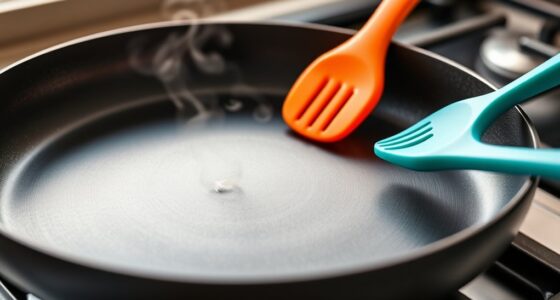

Before adding food to your stainless steel pan, it’s essential to be patient and let it preheat properly. Rushing this step leads to uneven heating, causing food to stick or burn. A few moments on medium heat creates a hot surface that releases food easily and prevents sticking. Developing patience during preheating lets you control the temperature better, ensuring perfect results. Stick around, and you’ll discover simple tips to master your pan and improve your cooking.

Get your next haul delivered free with Prime
- Fast, free delivery on millions of items
- Prime Video, Amazon Music and more included
- Member-only deals all year
Key Takeaways
- Proper preheating ensures even heat distribution, preventing food from sticking or burning.
- Allowing the pan to reach the right temperature creates a non-stick surface for easy food release.
- Rushing the process can cause uneven heating, leading to sticking and poor cooking results.
- Patience during preheating helps develop a routine for better heat management and consistency.
- Well-preheated pans reduce the need for constant adjustments, making cooking more efficient and reliable.
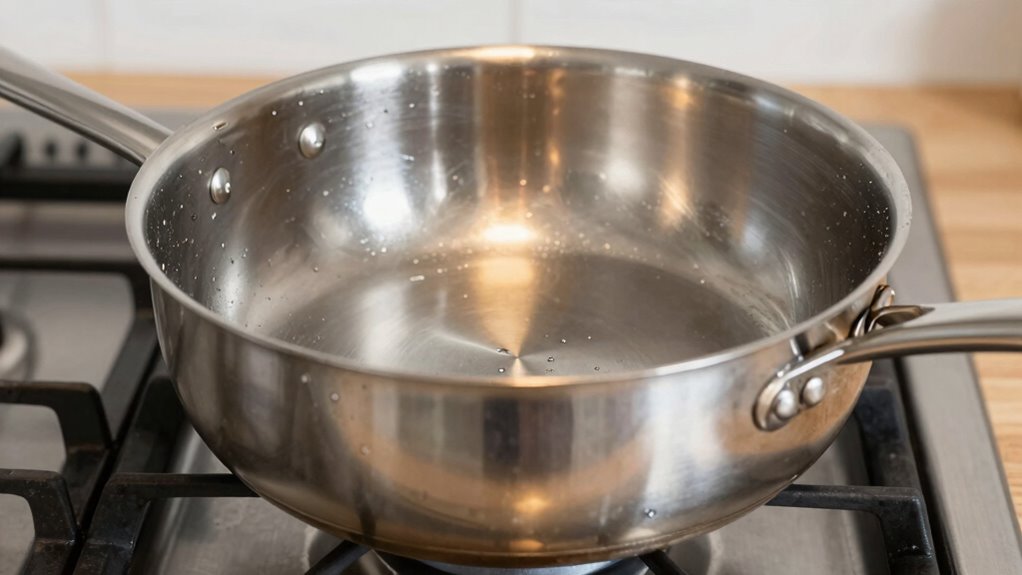
Stainless steel pans might seem simple, but mastering their use requires patience before you start cooking. These versatile tools demand more than just a quick heat-up; they require you to understand how to manage their temperature and surface properties. When you’re new to stainless steel cookware, you might notice foods sticking or burning before you even get a chance to enjoy a perfectly cooked meal. That’s because the key lies in proper cooking techniques and diligent pan maintenance. Taking the time to learn these fundamentals will improve your results and prolong the life of your pans.
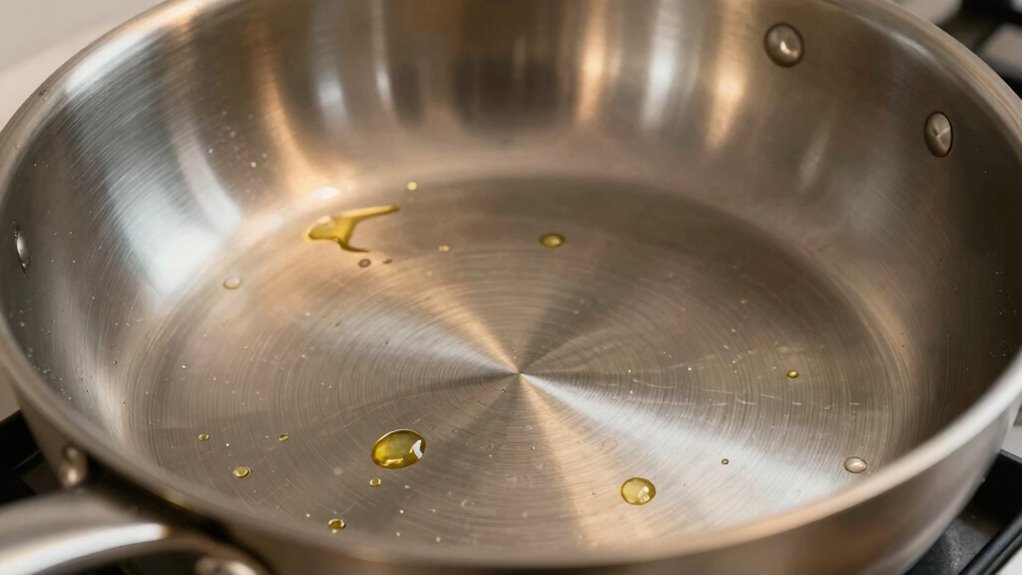
Before you start, it’s essential to recognize that stainless steel heats unevenly if not preheated correctly. You want to give your pan a few moments on medium heat to warm up evenly. This preheating step is crucial because it creates a ‘hot pan’ surface that helps food release naturally. When you add oil or butter at the right temperature—just enough to shimmer or ripple—you’re setting the stage for a smooth cooking process. Rushing this step often leads to food sticking or burning, which can frustrate even seasoned cooks. Remember, patience in this phase is a sign of respect for the pan’s material and a commitment to mastering your technique. Understanding the cooking science behind heat transfer can also help you better control your cooking process. Additionally, practicing consistent heat management routines will allow you to develop a more intuitive sense of your pan’s behavior over time. Developing a cooking patience mindset can significantly improve your overall results.
Cooking techniques play a vital role here. Instead of constantly moving food or trying to force it loose, allow it to develop a natural crust before flipping or stirring. When your pan is properly heated, foods like meats or vegetables will release easily once seared. If they stick initially, give it a little more time—sticking often indicates the pan isn’t hot enough yet. Learning to read these signals takes patience and experience, but it’s worth it for the non-stick results you’ll achieve. Over time, you’ll develop an intuitive sense of when your pan is ready, making your cooking more efficient and less stressful. Developing a proper heat management routine can help you prevent sticking and burning, ensuring consistent results.
Pan maintenance is equally important. Regularly cleaning and properly storing your stainless steel pans ensures they stay in top condition. Avoid abrasive scrubbers that can scratch the surface; instead, use gentle scrubbing with warm water and mild detergent. Occasionally, a vinegar or baking soda soak can remove stubborn stains or discoloration. Proper maintenance prevents buildup that can interfere with heating and sticking issues. Developing a routine that includes these care steps takes patience but pays off by extending your pan’s lifespan and maintaining its performance. Additionally, understanding the importance of pan care routines helps you optimize your technique and achieve better results. Remember, a well-maintained pan not only performs better but also requires less patience during cooking because it heats more evenly.
stainless steel pan preheating thermometer
As an affiliate, we earn on qualifying purchases.
As an affiliate, we earn on qualifying purchases.
Frequently Asked Questions
How Long Should I Preheat a Stainless Steel Pan?
You should preheat your stainless steel pan for about 2-3 minutes over medium heat. This allows the cooking temperature to rise gradually, preventing sticking. When the pan is properly heated, a few drops of water will dance and evaporate quickly. This patience helps with pan seasoning, creating a natural non-stick surface. Avoid rushing; proper preheating guarantees even cooking and better results for your dishes.
What’s the Best Way to Test if the Pan Is Ready?
You can test if your pan’s ready with a simple trick—drop a tiny bit of water on the surface. If it sizzles, dances, and evaporates quickly, your cooking temperature is just right, and the surface is ready. This quick test saves you from guessing, ensuring your pan is preheated properly. Patience pays off—wait for that water to behave just right before adding your food for perfect searing and even cooking.
Does Pan Material Affect Heating Time?
Yes, pan material considerably affects heating time. Different materials, like stainless steel, aluminum, or cast iron, conduct heat differently, influencing how quickly your pan heats up. Your cooking techniques also matter—more durable materials like stainless steel may take longer to reach the right temperature but offer better heat distribution. Being patient with your pan’s heating process ensures even cooking and helps you avoid hot spots or sticking.
Can I Speed up the Heating Process Safely?
You can speed up heating safely by using lower heat settings and preheating your pan gradually, which aligns with proper cooking techniques. Scientific studies show that rapid temperature changes can damage stainless steel, so avoid high heat or adding cold liquids too quickly. Always follow safety precautions, like monitoring the process closely to prevent overheating or warping. Patience guarantees even heating, preserving your pan’s longevity and your dish’s quality.
How Does Pan Thickness Influence Heating and Patience?
Thicker stainless steel pans promote better heat distribution, but they take longer to heat evenly. Your pan material, especially stainless steel, needs patience because it heats gradually to prevent hot spots and guarantee uniform cooking. Rushing the process can cause uneven heating, leading to sticking or burning. So, be patient, let the pan warm up slowly, and you’ll achieve more consistent results and better control over your cooking.
non-stick stainless steel cookware set
As an affiliate, we earn on qualifying purchases.
As an affiliate, we earn on qualifying purchases.
Conclusion
So, next time you reach for your stainless steel pan, remember patience is key. Allow it to heat gradually and properly before adding your food. Rushing the process could lead to sticking or uneven cooking. Are you willing to sacrifice perfect results just for a quick moment? Embracing patience guarantees your dishes turn out beautifully every time, proving that good things truly come to those who wait. After all, great meals deserve a little patience, don’t they?
heat resistant silicone spatula for stainless steel pans
As an affiliate, we earn on qualifying purchases.
As an affiliate, we earn on qualifying purchases.
stainless steel pan heat diffuser
As an affiliate, we earn on qualifying purchases.
As an affiliate, we earn on qualifying purchases.
Fall Picks
fall essentials
As an affiliate, we earn on qualifying purchases.