
Choosing a pizza steel or stone depends on how each material conducts heat. Steel heats quickly, allowing you to start with a colder dough and bake shorter, crisper crusts. A stone takes longer to preheat but retains heat well for an evenly baked, tender crust. Understanding these differences can help you optimize your bake time and crust texture. Keep exploring to learn more about how these materials can elevate your pizza game.
Key Takeaways
- Steel heats up quickly, enabling shorter baking times and crispier crusts compared to stone.
- Proper preheating is essential for stone to achieve even heat distribution and optimal crust texture.
- Steel’s rapid heat transfer allows for colder dough, while stone requires room-temperature dough for best results.
- Longer preheating of stone ensures even surface heating, producing a crispy, tender crust.
- Material differences influence baking duration, crust crispness, and the need for preheating or dough handling adjustments.
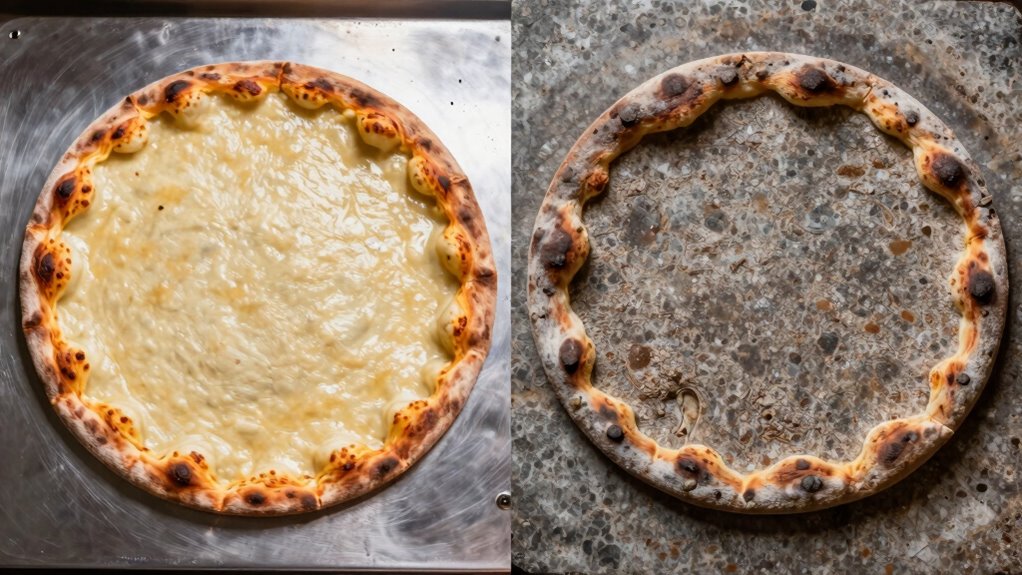
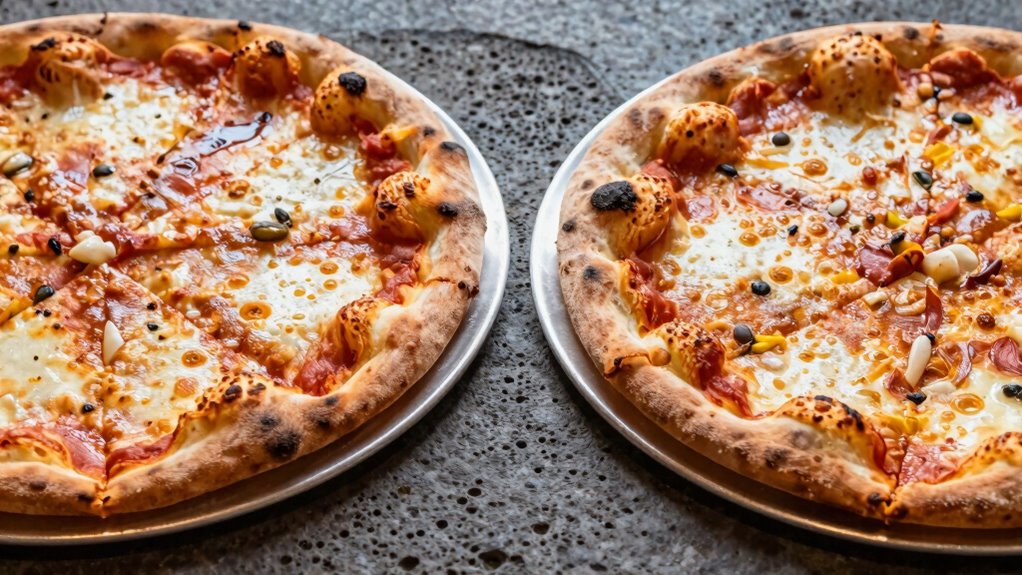
When it comes to making pizza at home, choosing the right baking surface can make all the difference in achieving that perfect crust. Whether you opt for a pizza steel or a pizza stone, understanding how each influences the baking process is key. One of the most vital factors is dough temperature. When you work with a baking surface that conducts heat efficiently, like a steel, you can often start with a colder dough and still get a beautifully crisp bottom. This is because steel heats up more rapidly and retains heat better than stone, which means your dough hits a surface that’s already at an ideal temperature, promoting quick, even cooking. This rapid heat transfer allows you to bake pizza in a shorter duration, often reducing the baking time and helping you achieve that desirable char and crispness without overcooking the toppings.
In contrast, a stone takes longer to heat up but retains heat remarkably well once warmed. If you’re using a stone, it’s best to preheat it for at least an hour at a high temperature, ensuring the dough encounters a hot, evenly heated surface. This longer preheat time allows the stone to reach a temperature that promotes excellent heat transfer, resulting in a crust that’s crisp on the bottom and tender inside. Because of the slower heat transfer, you might need to extend your baking duration slightly compared to steel, especially if your oven isn’t as powerful or if the stone isn’t fully preheated. The key here is patience; giving your stone ample time to reach the right temperature ensures your dough’s surface heats evenly, creating a uniform crust.
Additionally, managing dough temperature plays a vital role regardless of your chosen surface. If your dough is too cold, it won’t rise and develop the right texture, and the crust may end up dense or doughy. On the other hand, if it’s too warm, it can overproof or become sticky, making it harder to handle. Ideally, keep your dough chilled until you’re ready to shape it, then bring it to room temperature briefly before baking. When you match the dough’s temperature appropriately with the baking surface, you optimize the baking duration and dough’s response, resulting in a crust that’s crisp, evenly cooked, and flavorful.
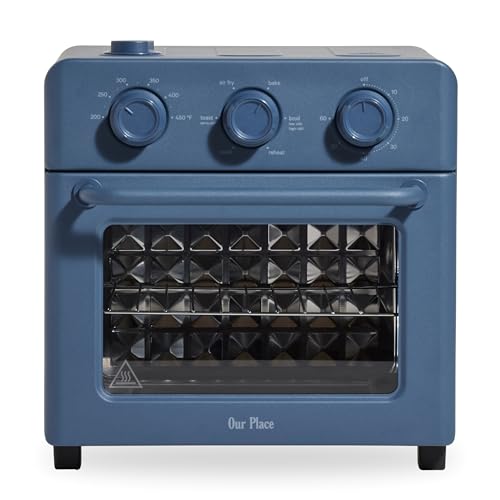
Our Place Wonder Oven | 6-in-1 Stainless Steel Air Fryer Toaster Oven Combo with Basket, Rack, Pan & Tray | Compact 13 QT Countertop Capacity - Toast, Roast, Bake, Reheat, Broil & Steam | Blue Salt
6-IN-1 COOKING POWER: Air fry, bake, roast, toast, broil, and reheat in one compact countertop oven designed for...
As an affiliate, we earn on qualifying purchases.
Frequently Asked Questions
Which Material Heats Faster, Steel or Stone?
You’ll find that steel heats faster than stone because of its higher thermal conductivity, meaning it transfers heat more quickly. Steel also heats up rapidly but doesn’t retain heat as long as stone does. If you want a quick, intense heat for your pizza crust, steel is your best choice. However, for steady heat retention and a more evenly cooked crust, stone might be better.
Can I Use a Pizza Steel or Stone on an Outdoor Grill?
Absolutely, you can use a pizza steel or stone on your outdoor grill. Just keep in mind, outdoor cooking can be a bit more rugged, so choose a material with good durability. Place the steel or stone on the grates carefully to avoid damage, and monitor the heat to prevent cracking or warping. With a little care, you’ll enjoy crispy crusts and delicious pizzas right in your backyard.
How Long Does It Take to Preheat Each Surface Properly?
You should preheat each surface for about 30 minutes to reach the ideal surface temperature. For a pizza steel, it heats quickly, so a 20-30 minute preheat usually suffices. A pizza stone takes a bit longer, around 30-45 minutes, because it needs to absorb and evenly distribute heat. Always check the surface temperature with an infrared thermometer to guarantee it’s hot enough for that crispy crust.
Are There Any Health Concerns With Using Steel or Stone?
Using steel or stone for pizza baking is generally safe, but you should consider food safety and material leaching. Steel is non-porous and resistant to bacteria, reducing health concerns. Stone, especially if unglazed, may absorb oils or residues over time, so proper cleaning is essential. Avoid using materials with coatings or glazes that could leach harmful substances. Regular cleaning and choosing food-safe, high-quality materials help guarantee safe, delicious pizzas.
How Do Cleaning and Maintenance Differ Between Steel and Stone?
Think of cleaning your pizza surface like tending a garden: steel is like a low-maintenance lawn, easy to wipe with a damp cloth after use, while stone is more like delicate flowers needing gentle care. For steel, use simple cleaning routines—avoid soap and abrasive scrubbers—and periodically season it. For stone, maintain it with dry brushing and avoid water or soap, which can damage the porous surface.
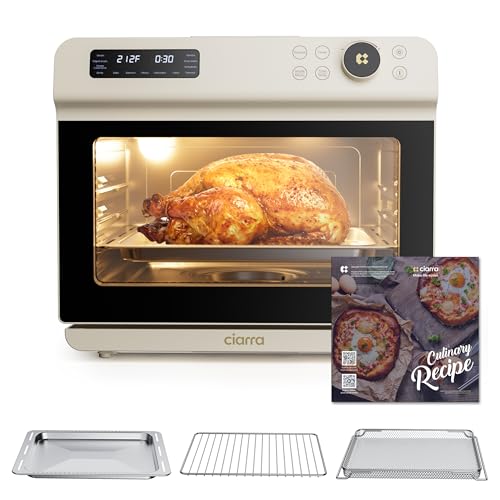
CIARRA 12-in-1 Countertop Steam Oven with Air Fryer, 25.4QT Steam Air Fryer Combo Nosh Oven Pro - Convection Toaster, Bake, Self-Clean, Dehydrate, Ferment, White
All-Round Cooking for Every Craving: This 25.4QT convection oven is a kitchen workhorse, boasting 11 cooking modes—including convection,...
As an affiliate, we earn on qualifying purchases.
Conclusion
So, whether you choose a pizza steel or a stone, you’re aiming for that perfect, crispy crust. Both tools have their perks—steel heats faster, stone retains heat longer. But which one will turn your home oven into a pizzeria? Imagine biting into a slice with a crackly crust that’s just the right amount of char—can you picture that moment? Whichever you pick, you’re just one step closer to pizza perfection.
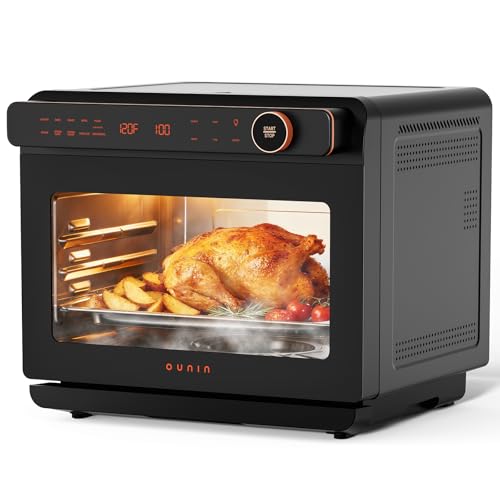
OUNIN 24L Steam and Air Fryer Combo Countertop Oven,11-in-1 Convection Baking and Steam,Bake,Broil,Dehydrate,304 Stainless Steel,Fast Cooking with Precise Electronic Temperature Control,for Gifting
【11-IN-1 VERSATILE KITCHEN POWERHOUSE】Replace multiple countertop appliances with one space-saving combo! This all-in-one unit functions as a Convection...
As an affiliate, we earn on qualifying purchases.

Made In Cookware | Seasoned 12" Carbon Pizza Steel - (Like Cast Iron, but Better) | Professional Cookware | Crafted in Sweden | Induction Compatible
Total Diameter: 12.59" | Cooking Surface Diameter: 11.5" | Height (with handle): .25" | Depth: .25"
As an affiliate, we earn on qualifying purchases.