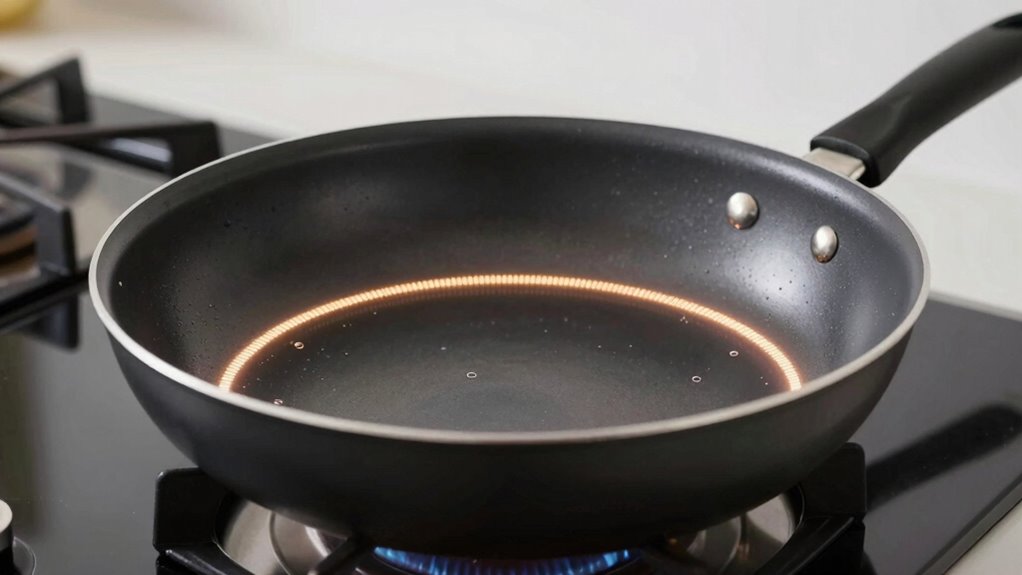
To keep your nonstick pan safe, avoid exceeding about 450°F (232°C), as heat above this damages the coating, releases harmful fumes, and shortens its life. Using high heat can cause peeling, flaking, and reduced nonstick performance, leading to needing a replacement sooner. To extend your cookware’s lifespan and protect the environment, stick with medium or low heat settings. If you want to learn more about safe cooking practices, keep exploring for helpful tips.
Key Takeaways
- Keep the temperature below 450°F (232°C) to prevent damage to the nonstick coating.
- Avoid preheating empty pans, which can quickly raise temperatures beyond safe limits.
- Use medium or low heat settings during cooking to extend cookware lifespan.
- Regularly monitor stove temperature to prevent overheating during use.
- Replacing cookware before coating deterioration occurs reduces health and environmental risks.
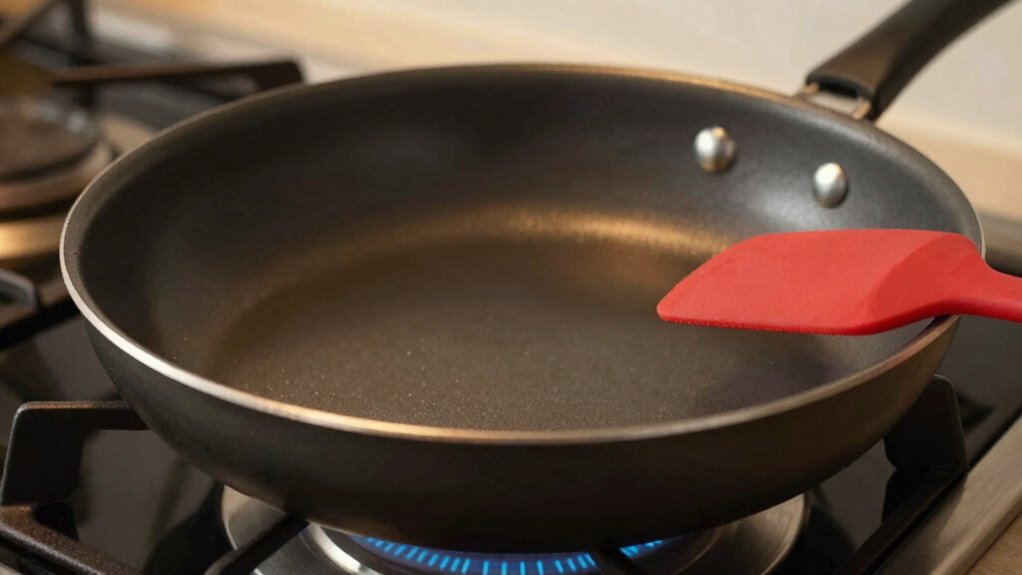
Have you ever wondered if your nonstick pans are safe to use? It’s a common concern, especially with all the information floating around about potential health risks and environmental effects. One of the most important factors to take into account is the temperature at which you cook with these pans. When you heat a nonstick pan beyond recommended temperatures, you risk damaging the cookware’s surface, which can compromise its durability and release harmful fumes. Over time, excessive heat can cause the nonstick coating to break down, leading to peeling or flaking that reduces the pan’s lifespan. This deterioration not only shortens your cookware’s durability but also increases waste, contributing to environmental impact since nonstick pan disposal adds to landfill accumulation.
Sticking to safe temperature guidelines is essential. Most nonstick coatings are designed to withstand temperatures up to around 450°F (232°C). When you go beyond that, the coating can start to emit fumes and degrade. You might not see immediate damage, but repeated overheating accelerates the wear and tear of the cookware. As the coating wears down, it becomes less effective at preventing food from sticking, prompting you to replace your pans more frequently. This cycle affects the environment, as more cookware ends up in landfills. Plus, the manufacturing process for nonstick coatings involves chemicals like PTFE, which can have environmental repercussions if they’re released into ecosystems during manufacturing or disposal.
To maximize your cookware’s lifespan and minimize environmental impact, it’s best to cook at medium or low heat whenever possible. Use your nonstick pans for gentle simmering and sautéing rather than high-temperature searing or frying. When you do need higher heat, ensure your stove’s temperature settings are accurate and avoid preheating the pan for too long. Proper care extends the life of your cookware and helps reduce the frequency of replacements, which is better for the environment. Additionally, understanding the environmental impact of manufacturing and disposing of nonstick cookware encourages more sustainable choices.
Being mindful of the temperature also means paying attention to your cooking habits. Avoid using metal utensils that can scratch the surface, as damage can expose the underlying material and speed up deterioration. Regularly inspecting your pans for signs of wear allows you to replace them before coating breakdown occurs, reducing waste and environmental harm. In the end, understanding the relationship between safe cooking temperatures, cookware durability, and environmental impact encourages more responsible use. By respecting these guidelines, you can ensure your nonstick pans stay safe and effective while helping to protect the planet.
Frequently Asked Questions
Can Nonstick Pans Be Safely Used in Ovens?
Yes, you can safely use nonstick pans in ovens if they’re labeled oven-safe. Always check the manufacturer’s guidelines for heat tolerance to guarantee oven safety. Most nonstick pans can handle up to 450°F, but exceeding that risks damaging the coating. Use oven mitts when handling hot pans, and avoid sudden temperature changes. Following these tips helps you maintain safety and prolongs your pan’s lifespan.
How Long Do Nonstick Coatings Typically Last?
Your nonstick coating typically lasts between 3 to 5 years, depending on how well you care for it. To maximize pan coating longevity and extend the nonstick lifespan, avoid metal utensils and high heat, and hand wash gently. With proper maintenance, you can enjoy your nonstick pan for several years, but eventually, the coating may start to peel or lose its nonstick properties, signaling it’s time for a replacement.
Are There Specific Cleaning Methods to Extend Nonstick Pan Life?
To extend your nonstick pan’s lifespan, use gentle cleaning techniques like hand washing with soft sponges and avoiding abrasive scrubbers. Never use metal utensils, as they can scratch the coating. Always let the pan cool before cleaning, and avoid dishwasher use if possible. Proper care prevents damage, preserving the nonstick surface longer and ensuring your pan stays effective for years.
What Are the Signs of Nonstick Coating Degradation?
Think of your nonstick pan as a trusted friend—if you notice coating peeling or discoloration signs, it’s crying for help. These are clear signs of degradation that can lead to flakes in your food or reduced nonstick performance. Keep an eye out for scratches, dullness, or uneven color, which indicate the coating’s losing its magic. When you see these, it’s time to replace the pan for safe, efficient cooking.
Can Nonstick Pans Be Used on Induction Cooktops?
Yes, nonstick pans can be used on induction cooktops if they’re induction compatible. You’ll need to check for magnetic requirements, as the pan must have a ferrous base to work with induction. Look for a symbol or label indicating induction compatibility. If your pan is magnetic, it’ll activate on the cooktop, allowing you to cook efficiently without damaging the nonstick coating.
Conclusion
To keep your cookware safe and your culinary creations clever, stay sensible and steer clear of scorching temperatures. Avoid overheating your nonstick pan to prevent peeling, pitting, and potential health hazards. By being mindful of the maximum temperature mark, you protect your pan’s integrity and your well-being. Remember, moderation in heat makes for a more manageable, more marvelous, and more maintained kitchen. Stay smart, stay safe, and savor your sizzling, stove-top successes.