To mix cookware materials successfully, consider their thermal expansion and compatibility. Choose layers that balance durability, heat responsiveness, and ease of maintenance, like aluminum cores with stainless steel encasing. Avoid combining incompatible materials that may crack, warp, or delaminate over time. Properly research your options, match materials to your cooking style, and follow specific cleaning requirements. If you want to avoid regrets and maximize your cookware’s performance, keeping these tips in mind will guide you to better choices.

Get your next haul delivered free — and shop member deals
- Fast, free delivery on millions of items
- Access to Prime Big Deal Days deals on October 6–7
- Prime Video, Amazon Music and more included
Key Takeaways
- Choose compatible materials with similar thermal expansion rates to prevent warping or delamination.
- Prioritize layered cookware designed for specific cooking styles and heat responsiveness.
- Match cookware materials to your cooking needs—durability for slow simmering, responsiveness for quick-cooking.
- Follow manufacturer cleaning and maintenance instructions for each material type to preserve integrity.
- Avoid combining brittle ceramics with thin aluminum layers to prevent cracking and damage over time.
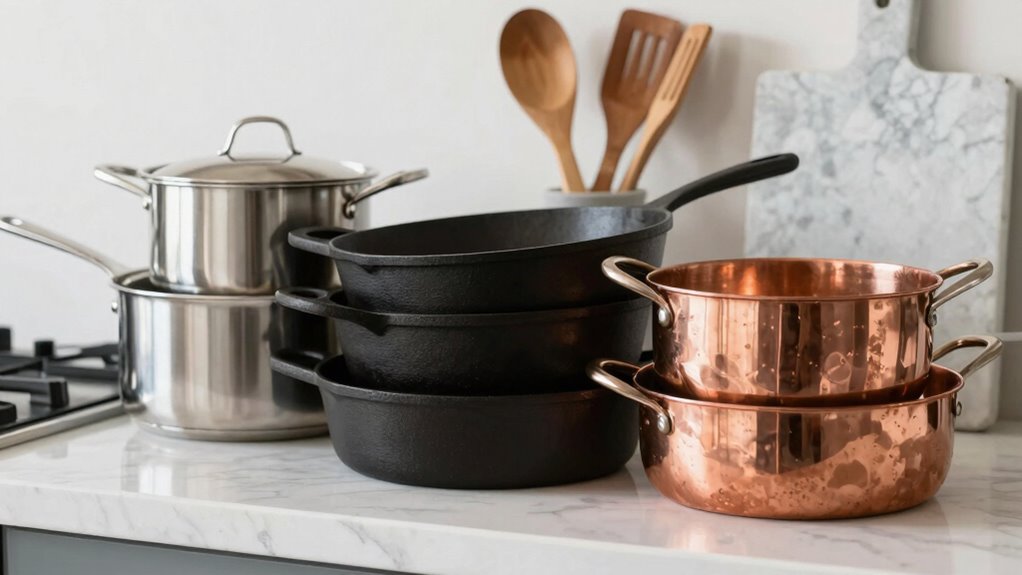
Mixing different cookware materials can be a smart way to optimize your kitchen’s performance and extend the lifespan of your pots and pans. When selecting cookware, understanding how material durability and heat conduction properties influence their function is essential. Combining materials allows you to leverage the strengths of each, but it also requires careful deliberation to avoid pitfalls.
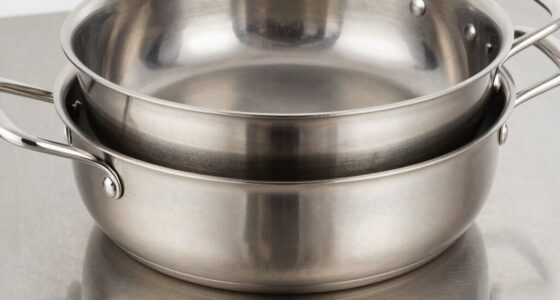
For example, mixing materials like stainless steel and aluminum offers a balance between durability and heat responsiveness. Stainless steel is highly durable, resistant to scratches and warping, making it ideal for everyday use. Aluminum, on the other hand, provides excellent heat conduction, ensuring even cooking. When these are combined—such as an aluminum core encased in stainless steel—you get a piece that’s both resilient and efficient at distributing heat. This dual-material design enhances your cooking precision and prolongs the life of your cookware by protecting the delicate aluminum core from damage.
However, it’s important to weigh how different materials expand and contract with temperature changes. Variations in material durability and thermal expansion can lead to warping or delamination over time if the materials aren’t compatible. For instance, mixing thin aluminum layers with brittle ceramic coatings can cause cracking or separation. To prevent this, choose cookware with well-engineered layers that are designed to work together, ensuring that heat conduction properties are optimized without compromising material integrity. Additionally, understanding thermal expansion helps you select cookware that maintains its shape and performance under different cooking conditions. Recognizing the importance of material compatibility can help prevent long-term issues and preserve your cookware’s integrity. Being aware of material properties can further guide you in selecting the best combinations for your cooking needs.
Another point to keep in mind is the maintenance and cleaning requirements of mixed-material cookware. Some combinations might have surfaces that stain, discolor, or become damaged if cleaned improperly. For example, stainless steel and non-stick coatings require different cleaning approaches. Knowing these differences helps you care for your cookware properly, preserving both material durability and performance.
When mixing materials, avoid the temptation to combine incompatible elements just because they look or seem versatile. Instead, focus on how their heat conduction properties match your cooking style—if you often sauté quickly, you need excellent heat responsiveness. If you’re more into slow simmering, durability might be your priority. The goal is to find a harmony that maximizes the benefits of each material without sacrificing longevity.
aluminum core stainless steel cookware
As an affiliate, we earn on qualifying purchases.
As an affiliate, we earn on qualifying purchases.
Frequently Asked Questions
Can Different Cookware Materials Be Safely Used Together on the Same Stovetop?
Yes, different cookware materials can be safely used together on the same stovetop, but you should consider compatibility concerns. For example, using stainless steel and cast iron together is fine, but avoid mixing materials like aluminum with copper on high heat, as they may react or damage each other. Always check the manufacturer’s guidelines for material compatibility, and guarantee the cookware heats evenly to prevent hotspots or damage.
How Do I Clean Mixed Material Cookware Without Damaging It?
To clean mixed material cookware without damage, start with gentle cleaning solutions like dish soap and warm water. Use soft sponges or non-abrasive scrubbers for scrubbing techniques, avoiding steel wool or harsh abrasives. For stubborn stains, try baking soda paste or vinegar. Always dry thoroughly afterward to prevent corrosion. This approach keeps your cookware in good shape, preventing scratches or damage caused by aggressive cleaning methods.
Are There Health Risks Associated With Mixing Certain Cookware Materials?
Mixing cookware materials can pose health risks like metal leaching, especially if you use reactive metals such as aluminum or copper. This can lead to metal particles leaching into your food, which might cause allergenic reactions in sensitive individuals. To stay safe, avoid combining incompatible materials and use cookware designed for mixed use. Always research each material’s safety and compatibility to prevent potential health issues down the line.
How Does Combining Materials Affect Cooking Performance and Heat Distribution?
Combining cookware materials can enhance cooking performance if you consider material compatibility and heat conduction. When you mix materials like stainless steel and aluminum, you benefit from even heat distribution, preventing hot spots. However, if materials aren’t compatible, you might experience uneven heating or durability issues. To avoid this, choose compatible materials that complement each other’s heat conduction properties, ensuring your cookware performs well and lasts longer.
What Are the Best Storage Practices for Mixed Material Cookware Sets?
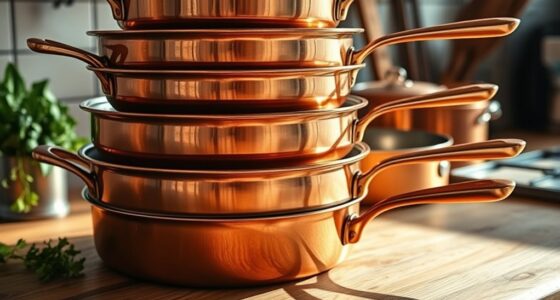
You’ll want to avoid chaos in your kitchen by practicing careful stacking and using appropriate organizers. Always nest your mixed material cookware with soft cloths or padding to prevent scratches and dents. Store heavier pieces on the bottom, lighter ones on top. Keep sets separated in designated spaces or use dividers to prevent scratching. This way, your cookware stays pristine, ready for perfect cooking whenever you need it.
layered cookware for even heat distribution
As an affiliate, we earn on qualifying purchases.
As an affiliate, we earn on qualifying purchases.
Conclusion
Mixing cookware materials can be a smart way to balance performance and budget, but think it through before buying. For example, you might combine a durable cast iron skillet with a sleek stainless steel pot for versatility. Just remember, each material has its quirks, so match them to your cooking style. When you choose wisely, you’ll enjoy a kitchen that’s both functional and satisfying—no regrets, just happy cooking!
As an affiliate, we earn on qualifying purchases.
durable multi-material cookware set
As an affiliate, we earn on qualifying purchases.
As an affiliate, we earn on qualifying purchases.
Halloween Picks
halloween
As an affiliate, we earn on qualifying purchases.