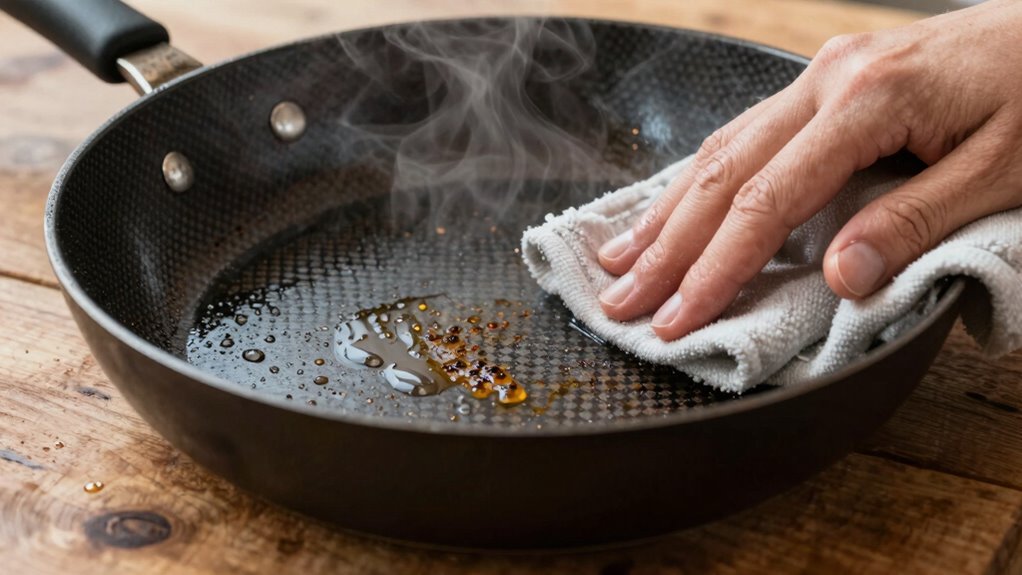

To clean your carbon steel pan without damaging the seasoning, let it cool slightly, then rinse with warm water. Use a stiff brush or non-metal scrub pad to gently remove food, avoiding harsh abrasives like steel wool. For stubborn spots, sprinkle coarse salt and scrub gently. Dry thoroughly over low heat or with a towel, then apply a thin layer of oil and heat until it smokes slightly to reinforce the seasoning. Keep learning how to care for it properly!

Get your next haul delivered free with Prime
- Fast, free delivery on millions of items
- Prime Video, Amazon Music and more included
- Member-only deals all year
Key Takeaways
- Allow the pan to cool before cleaning to prevent thermal shock and preserve seasoning.
- Rinse with warm water and gently scrub using a non-metal scrub pad or stiff brush.
- Skip or use minimal soap, and consider coarse salt as an abrasive for stuck-on food.
- Dry thoroughly over low heat or with a towel to prevent rust formation.
- Reapply a thin layer of oil and heat until it smokes to maintain the seasoning.
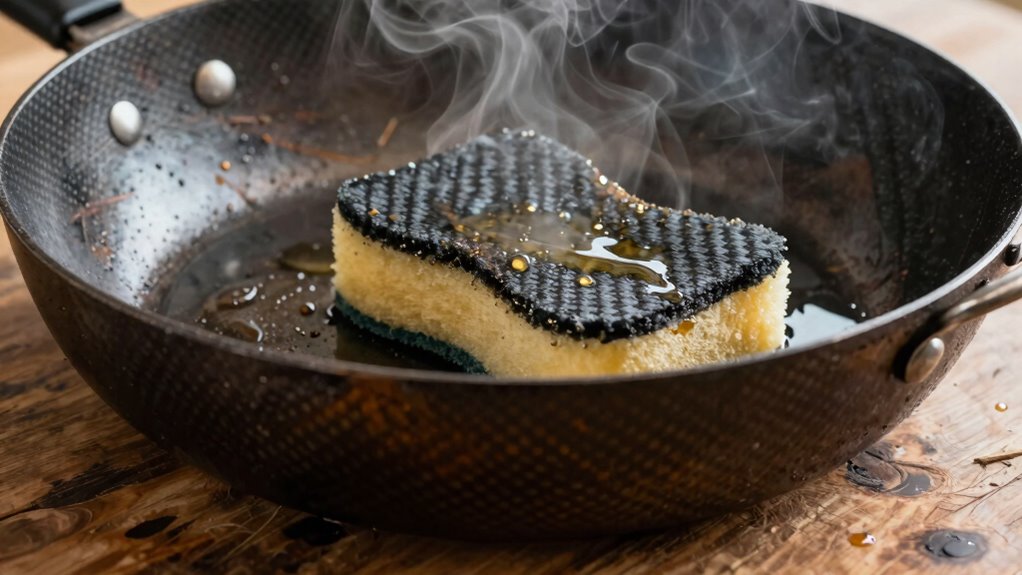
Wondering how to keep your carbon steel cookware in top shape? The key lies in proper cleaning and maintenance to preserve that essential seasoning layer. Unlike non-stick pans, carbon steel requires a bit more care to prevent stripping away its seasoned surface. When it comes to cleaning tools, avoid anything too abrasive. Instead, opt for a stiff brush or a non-metal scrub pad that can remove stuck-on food without damaging your seasoning. Keep a small scraper handy for stubborn bits, but steer clear of steel wool or harsh scouring pads that could scratch or strip the seasoning entirely.
Use gentle tools like a stiff brush or non-metal scrub pad to clean your seasoned carbon steel pan.
After cooking, let your pan cool just enough to handle safely. When it’s time to clean, rinse it with warm water—hot water can sometimes cause warping, and cold water helps avoid thermal shock. Use your chosen cleaning tools to gently scrub away any food residue. If food is stuck, don’t immediately turn to soap. While a tiny amount of mild soap is generally okay, many seasoned cooks prefer to skip it altogether to maintain the seasoning. Instead, you can sprinkle some coarse salt into the pan and scrub with a paper towel or a brush. The salt acts as a gentle abrasive that lifts debris without damaging the seasoned surface. Additionally, understanding the proper cleaning techniques can help prolong the life of your seasoned pan. Regularly conditioning your skillet with a thin layer of oil after cleaning can also reinforce its non-stick qualities and prevent rust. Proper cleaning methods are essential to maintaining the seasoning and ensuring your cookware remains durable over time.
Once cleaned, it’s essential to dry your skillet thoroughly. Moisture is the enemy of seasoned cookware, so dry it over low heat on the stove or with a clean towel. If you notice any dull spots or areas where the seasoning seems to have worn thin, it’s time for a quick touch-up. Lightly apply a thin layer of oil—flaxseed, vegetable, or even shortening—and heat the pan until it smokes slightly. This process helps build and maintain your seasoning, ensuring your pan stays non-stick and rust-free. Proper cleaning methods are crucial for preserving the seasoning layer and extending the life of your cookware.
Seasoning maintenance is an ongoing task, so treat your carbon steel like a prized possession. Regularly check your cookware’s surface and re-season it as needed to keep that slick, durable coating intact. Remember, cleaning tools and techniques should support this goal. Avoid harsh abrasives, and always dry your pan completely to prevent rust. With proper care, your carbon steel skillet will reward you with years of reliable performance, developing a darker, more seasoned patina that improves with age. The effort you put into cleaning and seasoning maintenance will make every dish you cook in it taste even better.
As an affiliate, we earn on qualifying purchases.
Frequently Asked Questions
Can I Use Soap to Clean My Carbon Steel Pan?
Yes, you can use a small amount of dish soap for gentle cleaning of your carbon steel pan, but do so sparingly. Use a soft sponge or brush to scrub away residue, then rinse thoroughly. Avoid soaking the pan for long periods. After washing, dry it completely and apply a thin layer of oil to maintain the seasoning. This method helps keep your pan clean without damaging its seasoned surface.
How Often Should I Re-Season My Carbon Steel Cookware?
You should re-season your carbon steel cookware only when its surface starts to look dull or shows signs of rust—that’s the secret to seasoning maintenance and ensuring cookware longevity. Ironically, overdoing it can strip the seasoning, so don’t obsess. Usually, a light re-seasoning every few months or after extensive cleaning keeps your pan in tip-top shape, preserving its non-stick qualities and extending its lifespan.
Is It Safe to Soak My Pan Overnight?
It’s not safe to soak your carbon steel pan overnight, especially with chemical cleaning agents, as it can strip away the seasoning or cause rust. Instead, if you need a deep clean, use hot water and a gentle scrub brush. Avoid harsh chemicals or prolonged soaking. Proper cleaning helps preserve the seasoning while keeping your pan in good condition, so quick, careful washing is your best bet.
What’s the Best Way to Remove Rust From Carbon Steel?
To remove rust from your carbon steel pan, start by scrubbing it with a mixture of coarse salt and a bit of water or oil. Use a scrub brush or steel wool gently to lift the rust without damaging the seasoning. Afterward, rinse and dry thoroughly. To maintain your seasoning, apply a thin layer of oil and heat the pan. This method guarantees effective rust removal while preserving your pan’s non-stick coating.
Can I Use Metal Scrubbers on My Seasoned Pan?
You can use metal scrubbers on your seasoned pan, but do so carefully to preserve the seasoning. Use a gentle, non-abrasive scrubber to remove stubborn residue without stripping away the seasoned surface. Avoid harsh, aggressive scrubbing that could damage the seasoning layer. After cleaning, reapply a light coat of oil to maintain the seasoning, ensuring your pan stays non-stick and well-seasoned for future use.
non-metal scrub pad for cast iron
As an affiliate, we earn on qualifying purchases.
As an affiliate, we earn on qualifying purchases.
Conclusion
With gentle care, you keep your carbon steel skillet shimmering like a quietly polished mirror, its seasoned surface gleaming with stories of countless meals. Imagine a delicate dance of oil and heat, restoring its natural luster without stripping away the seasoned patina. By respecting its seasoned character, you preserve both its durability and history, ensuring every cooking adventure begins with a surface that’s as resilient and refined as the memories you’ll create.
coarse salt for cookware cleaning
As an affiliate, we earn on qualifying purchases.
As an affiliate, we earn on qualifying purchases.
As an affiliate, we earn on qualifying purchases.
Fall Picks
fall essentials
As an affiliate, we earn on qualifying purchases.