
When choosing mildew stain removers, check the ingredients like bleach, vinegar, hydrogen peroxide, or tea tree oil. Bleach is effective on non-porous surfaces but can cause damage or fumes if not used carefully. Natural options like vinegar and baking soda are safer and eco-friendly. Always follow safety tips, such as wearing gloves and ensuring good ventilation. Want to learn more about safe and effective mildew removal? Keep exploring for expert advice and tips.
Key Takeaways
- Commercial mildew removers often contain bleach or fungicides that effectively kill mold spores but may cause surface damage and require safety precautions.
- Natural remedies like vinegar, hydrogen peroxide, and tea tree oil are safer ingredients that kill mold and reduce health risks.
- Always check product labels and ingredient lists to ensure safety and surface compatibility before use.
- Proper ventilation, gloves, and following instructions are essential safety measures when handling chemical or natural mildew removers.
- Combining ingredients, such as vinegar and baking soda, can enhance effectiveness while maintaining a safer cleaning approach.

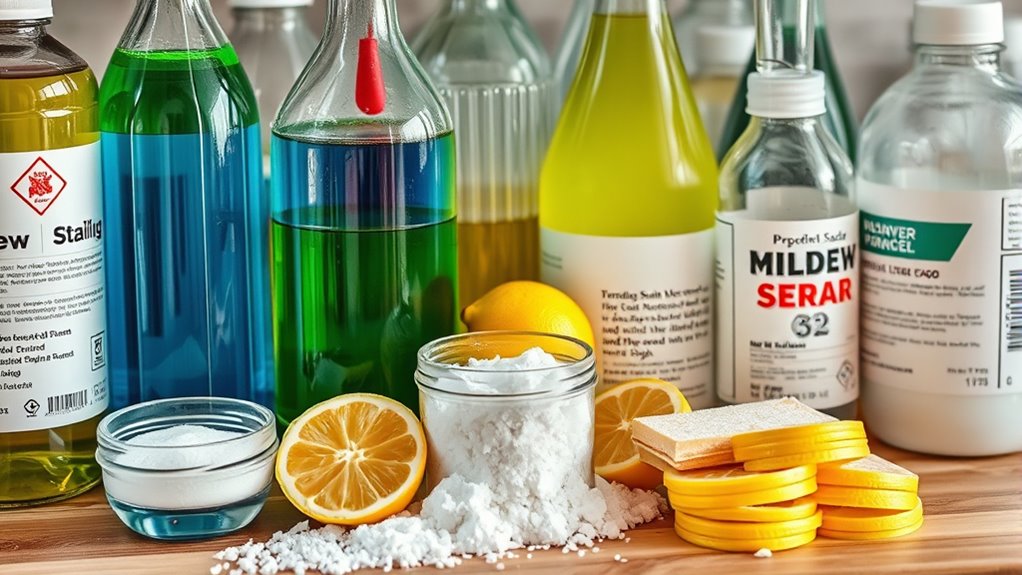
Mildew stains can quickly turn your clean surfaces into unsightly spots, but with the right stain removers, you can effectively eliminate them. When tackling mildew, understanding the different types of cleaners available is essential. Commercial cleaners often contain chemicals like bleach or fungicides designed to kill mold spores and lift stains. These strong products work fast and are effective on tough stains, especially in bathrooms or basements. However, if you prefer a safer or more eco-friendly approach, natural remedies can be just as effective. Vinegar, baking soda, hydrogen peroxide, and tea tree oil are popular natural options that can help you combat mildew without harsh chemicals. Combining these remedies with proper application methods allows you to clean safely and sustainably.
The choice of cleaners depends on the surface you’re treating and your personal preferences. For example, bleach is highly effective against mildew on non-porous surfaces like tiles and glass, but it can cause discoloration or damage delicate materials. Always read the label and test a small area first. Natural remedies, on the other hand, are gentler and less likely to cause damage. Vinegar, with its acidic properties, kills mold and prevents future growth, while baking soda acts as a gentle abrasive that lifts stains and deodorizes. Hydrogen peroxide is another versatile option—it not only kills mold but also helps break down the stain at a cellular level. Tea tree oil, a natural antifungal, can be added to water and sprayed on affected areas, providing ongoing protection without toxic fumes. Additionally, understanding dog names can help in choosing a fun or themed approach to home organization or pet-related cleaning routines.
When using these cleaners, safety should always be a priority. For chemical options like bleach, ensure good ventilation and wear gloves to avoid skin irritation. Natural remedies generally pose fewer risks but still require caution—avoid contact with eyes and keep them out of reach of children. Combining different remedies can sometimes boost their effectiveness; for example, applying vinegar followed by a baking soda paste can help lift stubborn stains. Always follow instructions carefully and avoid mixing chemicals unless you’re sure of the reaction. Proper application and consistent cleaning can prevent mildew from recurring, keeping your surfaces looking fresh and clean. Whether you opt for commercial or natural solutions, knowledge about the ingredients and safety measures guarantees you remove mildew stains effectively without compromising your health or the integrity of your surfaces.
Frequently Asked Questions
Can Mildew Stain Removers Be Used on Delicate Fabrics?
You can’t always use mildew stain removers on delicate fabrics, as they might damage the material. Always check fabric safety guidelines first and look for stain removal techniques suitable for delicate textiles. Test the product on a hidden area before applying it to the stain. If you’re unsure, opt for gentle, natural solutions or consult the care label to avoid ruining your fabric.
Are Natural Ingredients as Effective as Chemical-Based Mildew Removers?
Natural ingredients, like plant-based solutions, can be quite effective against mildew stains, but their chemical efficacy may vary. You might find that some natural options work well for light stains or regular maintenance, while tougher mildew may require stronger, chemical-based removers. It’s best to evaluate the severity of the stain and choose a solution accordingly. Always test on a small area first to ensure safety and effectiveness.
How Long Should I Wait After Applying Mildew Stain Remover Before Washing?
Think of your mildew stain remover as a magic potion—it needs time to work its spell. You should wait at least 10 to 15 minutes after application before washing, giving it enough time to break down the mildew. During this drying process, the solution penetrates the fabric or surface. Rushing the wash can wash away the benefits, so patience guarantees the stain is fully defeated and your surface is thoroughly clean.
Can Mildew Stain Removers Cause Allergic Reactions or Skin Irritation?
Yes, mildew stain removers can cause allergic reactions or skin irritation, especially if you have sensitive skin or allergies. You should always wear gloves and work in a well-ventilated area to minimize risks. If you notice any itching, redness, or breathing issues, rinse the affected area immediately and seek medical advice. Always follow the product instructions carefully to reduce potential skin irritation or allergic responses.
Are There Environmentally Friendly Mildew Stain Remover Options Available?
Did you know that over 60% of cleaning products now feature eco-friendly ingredients? You can find environmentally friendly mildew stain remover options, such as biodegradable formulas and plant-based solutions, which are safe for both your family and the planet. These alternatives effectively eliminate mildew stains without harmful chemicals, helping you maintain a healthy home while reducing environmental impact. Switching to eco-friendly options is a simple step toward greener cleaning habits.
Conclusion
Now that you know the key ingredients and safety tips, you’re armed to tackle mildew stains with confidence. Think of mildew stain removers as your trusty shield, ready to banish stubborn spots and restore your fabrics. Just remember to read labels carefully and test small areas first. With the right approach, you’ll turn your cleaning routine into a breeze—like a gust of fresh air replacing the musty mold. You’ve got this!