
To wash microfiber without killing its grip, always separate it from regular laundry and use a mild, fragrance-free detergent. Wash in warm or cold water on a gentle cycle, avoiding fabric softeners and bleach that can coat fibers. Air dry if possible; if you use a dryer, set it to low heat to prevent damage. Proper care keeps your microfiber effective and long-lasting—keep going to discover more tips for maintaining its cleaning power.
Key Takeaways
- Always separate microfiber from other laundry to prevent lint transfer and maintain cleaning effectiveness.
- Use mild, chemical-free detergents and avoid fabric softeners or bleach to protect fiber integrity.
- Wash in cold or warm water on a gentle cycle to prevent damage and preserve grip.
- Air dry when possible; if using a dryer, select low heat settings to avoid degrading fibers.
- Ensure microfiber is fully dry before storage to extend lifespan and maintain cleaning performance.

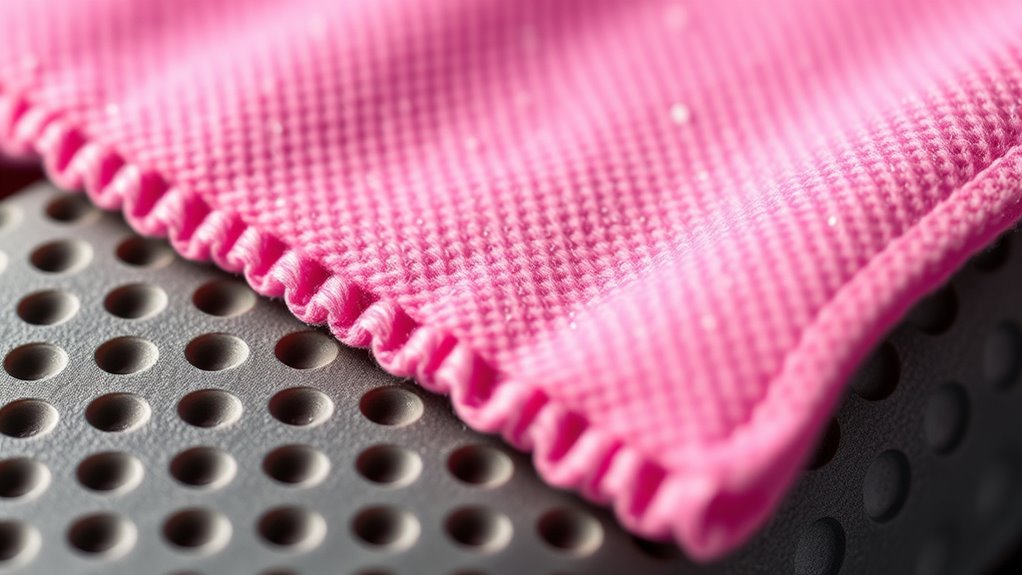
Have you ever wondered what makes microfiber so popular for cleaning and fabric products? It’s because microfiber offers a unique combination of effectiveness, versatility, and gentle care. Microfiber consists of tiny synthetic fibers, usually made from polyester and nylon, that are much finer than human hair. This fineness gives microfiber its incredible ability to trap dust, dirt, and liquids without the need for harsh chemicals. When you use microfiber cloths or mops, you’re leveraging hundreds of thousands of these microscopic fibers working together to lift debris from surfaces. This makes microfiber an efficient and eco-friendly choice for cleaning, as it reduces the need for chemical cleaners and minimizes waste.
However, despite microfiber’s durability and cleaning prowess, improper washing can diminish its effectiveness. To keep microfiber performing at its best, you need to understand how to wash it properly. First, always separate microfiber from regular laundry. Washing microfiber with cotton or other fabrics can cause fibers to trap lint or debris, reducing its ability to clean effectively. When you wash microfiber, avoid fabric softeners and bleach, as these chemicals can coat the fibers, blocking their ability to trap dirt and reducing their absorbency. Instead, opt for a mild detergent, preferably one free of added fragrances or dyes, to preserve the fibers’ integrity.
It’s best to wash microfiber in warm or cold water rather than hot, which can break down the fibers over time. Use a gentle cycle to prevent excessive agitation that might damage the delicate fibers. After washing, air drying is preferable, as high heat from dryers can degrade microfiber fibers and lessen their lifespan. If you must use a dryer, keep the temperature low. Avoid fabric softeners altogether because they leave a film on the fibers, making them less effective at trapping dirt and liquids. Additionally, proper maintenance can extend the lifespan of microfiber products. Instead, allow microfiber cloths to dry thoroughly before storing or using them again.

USANOOKS Microfiber Cleaning Cloth Grey – 12 Pcs (12.5"x12.5") – High Performance – 1200 Washes, Ultra Absorbent Microfiber Towel Weave Grime & Liquid for Streak-Free Mirror Shine – Car Washing Cloth
10x GRIP-ROOT WEAVE – TRAP MORE, WORK LESS: Ultra-absorbent microfiber towels for car Grip Root weave works like…
As an affiliate, we earn on qualifying purchases.
As an affiliate, we earn on qualifying purchases.
Frequently Asked Questions
Can Microfiber Be Used on All Types of Surfaces Safely?
Microfiber can be used safely on most surfaces, but you should always check the manufacturer’s instructions first. For delicate surfaces like screens or polished finishes, use a gentle approach and avoid harsh scrubbing. Test a small area if you’re unsure. Microfiber is versatile and effective, but being cautious guarantees you won’t damage sensitive materials. Proper cleaning techniques help maintain the grip and longevity of your microfiber cloths.
How Often Should Microfiber Cloths Be Replaced?
Think of microfiber cloths like good friends—you’ll want to replace them before they wear out. You should swap yours out after about 100 to 200 uses or when they start to fray, lose lint, or smell musty. Regularly inspect your cloths, and don’t hesitate to dispose of them when they no longer clean effectively. Keeping fresh cloths ensures your surfaces stay spotless without spreading dirt or germs.
Are There Specific Detergents Recommended for Microfiber Cleaning?
You should use mild, gentle detergents specifically designed for microfiber when cleaning your cloths. Avoid bleach, fabric softeners, and harsh chemicals, as they can damage the fibers and reduce their effectiveness. Look for eco-friendly or microfiber-specific detergents that are free of additives. Always wash in cold or warm water, and skip fabric softeners altogether to maintain the grip and cleaning power of your microfiber cloths.
Is Microfiber Environmentally Friendly and Biodegradable?
Microfiber isn’t inherently biodegradable or entirely eco-friendly, but you can make it more sustainable. You should opt for eco-friendly detergents and wash microfiber items gently to extend their lifespan, reducing waste. Avoid fabric softeners and bleach, which can damage fibers and harm the environment. When you care for microfiber properly, you minimize its impact, making it a better choice for eco-conscious users who want effective cleaning without harming the planet.
Can Microfiber Be Recycled After Its Lifespan Ends?
Absolutely, microfiber can be recycled after its lifespan ends, but it’s not as straightforward as tossing it in the recycling bin. You should check with local recycling programs or specialized textile recyclers who accept microfiber materials. Some companies even offer take-back programs, turning old microfiber into new products. Recycling helps reduce waste and environmental impact, so you’re doing your part to promote sustainability and soften the footprint of your favorite cleaning gear.

6-Pack Reusable Mop Pads Compatible with Sweeper Mop – 100% Coral Fleece Washable Refills – Microfiber Dry & Wet Sweeping Cloths for Multi-Surface/Hardwood Floor Cleaning
✔️ Universal Compatibility & Fit Reusable mop pads perfectly fit Sweeper Mops and all 10-12 inch flat mops….
As an affiliate, we earn on qualifying purchases.
As an affiliate, we earn on qualifying purchases.
Conclusion
Now that you know how to wash microfiber without killing its grip, think of your cloth like a loyal dog—gentle care keeps it happy and effective. I once tried cleaning my microfiber towel with harsh chemicals, and it lost its grip just like a dog losing its wag. When you treat your microfiber right, it lasts longer and works better, just like a faithful companion. Keep it clean and gentle, and your microfiber will serve you well for years.

Eco-Fused Microfiber Cleaning Cloths – 5 Pack – Double-Sided Cleaning Cloths – Microfiber and Suede Cloth for Smartphones, LCD TV, Tablets, Laptop Screens, Camera Lenses and Delicate Surfaces
HIGH QUALITY MICROFIBER CLOTHS ⭆ The pack includes 5 double-sided cleaning cloths (6.6 inch x 6.2 inch) Black…
As an affiliate, we earn on qualifying purchases.
As an affiliate, we earn on qualifying purchases.

Shoe Washing Machine Bag,Laundry Shoe Bag for Washer and Dryer,Reusable Shoe Cleaning Bag for Sneakers,Tennis Shoes,With Self-locking Zipper, Microfiber Inside,Include Shoe Bag
【Farewell to Noise,Protect Shoes and Washing Machines】The fluffy bristles in laundry shoe bag can reducing noise caused by…
As an affiliate, we earn on qualifying purchases.
As an affiliate, we earn on qualifying purchases.