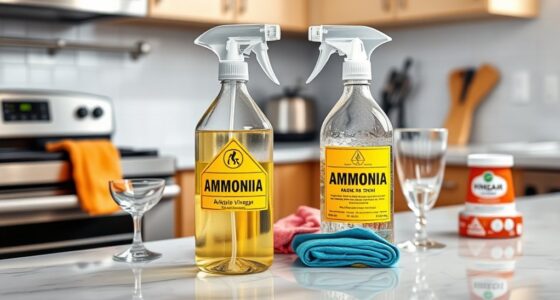
To analyze a cleaning label like a chemist, start by identifying hazard symbols such as flames or exclamation marks to understand risks. Check the ingredients list to recognize chemicals and prevent dangerous mixes. Follow the instructions carefully for proper use and safety precautions, noting any warnings. Store products properly and note expiration dates to maintain effectiveness. Mastering these steps helps ensure safe, effective cleaning—keep exploring to uncover more tips for using household chemicals confidently.
Key Takeaways
- Identify hazard symbols (e.g., flame, exclamation mark) to understand risks and necessary precautions.
- Review ingredients list to recognize chemicals and avoid dangerous combinations.
- Follow instructions carefully, noting dilution ratios, surface compatibility, and application methods.
- Check storage instructions and expiration dates to ensure safety and product efficacy.
- Apply scientific principles by understanding labels to prevent accidents and optimize cleaning results.

Understanding cleaning labels can seem intimidating, but with a few key tips, you can become just as skilled as a chemist at deciphering them. Labels contain essential information about how to safely and effectively use cleaning products, and knowing how to read them helps prevent accidents and guarantees you get the best results. The first thing to notice is the symbols and icons. These are standardized pictograms that quickly communicate hazards or precautions. For example, a flame symbol indicates flammability, while an exclamation mark suggests irritant properties. Recognizing these symbols helps you decide whether to wear gloves, guarantee proper ventilation, or keep the product away from children or pets.
Recognize symbols to ensure safe, effective use of cleaning products and prevent hazards.
Next, pay attention to the ingredients list, usually found on the back or side of the label. Here, you’ll find chemicals listed by their common or chemical names. Familiarity with common ingredients like sodium hypochlorite (bleach), ammonia, or alcohol can guide your understanding of how the product works and what precautions to take. For instance, mixing bleach with ammonia creates toxic chloramine vapors, so knowing the ingredients prevents dangerous combinations. If you see unfamiliar chemicals, look them up to understand their properties and potential health effects. This knowledge helps you handle products responsibly and avoid unintended reactions.
Reading the instructions carefully is essential. They often specify how much to use, whether to dilute the product, and which surfaces it’s safe for. For example, some cleaners are concentrated and require dilution for safe use, while others are ready to spray. Follow these instructions precisely; using too much might damage surfaces or cause fumes, while using too little might make the product ineffective. Also, note any warnings or first-aid instructions. If the label advises rinsing with water after use or avoiding contact with eyes, adhere strictly to these directions. They are there for your safety.
Finally, check the storage recommendations. Proper storage—such as keeping chemicals in original containers, away from heat, or out of reach of children—prevents accidents. Labels may also include expiration dates, reminding you to discard expired products, which could be less effective or potentially hazardous. Additionally, understanding the importance of chemical safety and the correct handling procedures can prevent dangerous incidents. By taking the time to read and understand every part of a cleaning label, you’re not just following instructions—you’re applying scientific principles to guarantee safety and maximize the product’s effectiveness. With practice, you’ll develop an intuitive sense for what labels mean, making cleaning both safer and more efficient.
Frequently Asked Questions
How Can I Tell if a Cleaning Product Is Safe for Children?
You can tell if a cleaning product is safe for children by checking the label for child-safe icons or phrases like “non-toxic” or “kid-friendly.” Always read the ingredients list for harmful chemicals such as ammonia or bleach. Look for certifications from reputable organizations. Keep products out of reach of children and follow the usage instructions carefully. When in doubt, choose products specifically labeled as safe for children.
Are Natural Ingredients Always Safer Than Synthetic Chemicals?
Did you know that a 2020 study found natural ingredients account for just 20% of household product recalls? Natural ingredients aren’t always safer than synthetic chemicals. While they can be less irritating, some natural substances cause allergies or toxicity. Always check labels carefully and research ingredients. You’re better off understanding how each component affects health rather than assuming natural equals safe. Stay informed and choose products wisely for your family’s safety.
How Do I Identify Allergens in Cleaning Labels?
You identify allergens on cleaning labels by carefully reading the ingredient list for common irritants like fragrances, preservatives, or enzymes. Look for words like “parfum,” “phenoxyethanol,” or “ammonia.” If you’re sensitive, check for allergen warnings or symbols. When in doubt, research unfamiliar ingredients online or select products labeled “hypoallergenic” to reduce allergy risks. Always test a small area first to guarantee safety.
What Do I Do if I’M Allergic to a Listed Chemical?
If you’re allergic to a listed chemical, avoid using products containing it. Check labels carefully, and look for alternative brands or formulations that don’t include the allergen. Wear gloves and protective gear when handling cleaning products, and make certain good ventilation. If you accidentally come into contact or experience a reaction, rinse the area immediately and seek medical advice. Always read labels thoroughly to prevent allergic reactions and stay safe.
Can Cleaning Labels Indicate Environmental Impact?
Cleaning labels can reveal their environmental impact like a window into a secret garden. Look for symbols or words like “biodegradable,” “eco-friendly,” or “sustainable,” which indicate fewer harmful effects. Certifications such as Green Seal or EPA’s Safer Choice are also clues to products that respect the environment. Reading these indicators helps you choose cleaning supplies that protect both your home and the planet, making your cleaning routine greener with confidence.
Conclusion
By mastering how to read cleaning labels like a chemist, you become a smart, confident user of cleaning products. Think of it as decoding a secret recipe that keeps your home safe and spotless. When you understand the symbols and instructions, you control the cleaning process instead of letting it control you. With this knowledge, you’re like a skilled scientist, mixing the perfect solution to make your space shine without any surprises.