
Eco labels show you that a product meets certain environmental standards, focusing on responsible sourcing and sustainable practices. They are designed to verify claims about eco-friendliness, though not all labels are equally trustworthy. Genuine certifications come from recognized organizations that set clear criteria, helping you avoid misleading claims. By understanding what these labels truly represent, you can make better choices for the planet—and if you keep exploring, you’ll discover even more about what ‘green’ really means.
Key Takeaways
- Eco labels indicate a product meets specific environmental and sustainability standards, but not all are equally reliable.
- They promote responsible sourcing, ensuring raw materials are harvested sustainably and without harming ecosystems.
- Verified eco certifications are based on rigorous standards, providing trust in the product’s environmental claims.
- The trustworthiness of labels depends on third-party verification; self-declared labels are less credible.
- Supporting genuine eco labels encourages environmentally responsible practices and helps protect ecosystems and communities.
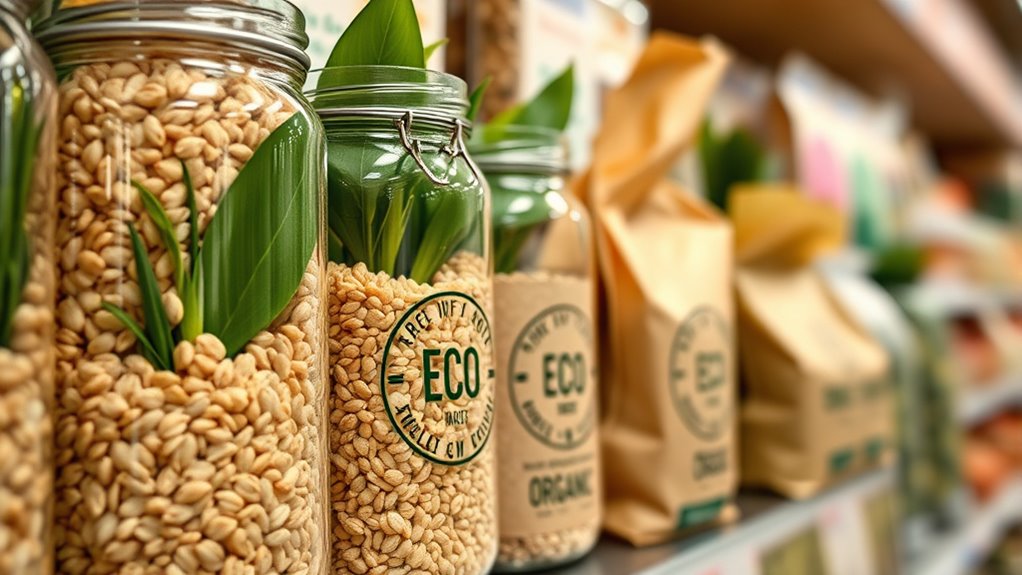
Have you ever wondered what those eco labels on products really mean? It’s easy to see a label and assume it guarantees the product is environmentally friendly, but the truth is, not all labels are created equal. Some are backed by rigorous standards, while others can be more misleading. When you see an eco label, it often signifies that the product meets certain criteria related to sustainable sourcing and eco certification standards. These standards are designed to ensure that resources are harvested responsibly, minimizing environmental impact and supporting fair labor practices.
Eco labels indicate responsible sourcing and rigorous standards, but verifying authenticity ensures genuine environmental support.
Sustainable sourcing is a key element behind many eco labels. It means that the raw materials used in the product were obtained in a way that preserves ecosystems, respects local communities, and avoids overexploitation. For example, a sustainably sourced wood product isn’t just about choosing wood from trees that are managed responsibly; it’s about ensuring that the harvesting process doesn’t harm surrounding forests or wildlife. This approach helps maintain biodiversity and forest health for future generations. When a product carries an eco label emphasizing sustainable sourcing, you’re fundamentally getting a guarantee that the materials used come from responsible and transparent supply chains.
However, not all eco labels are equally trustworthy. That’s where eco certification standards come into play. These are the benchmarks and regulations that organizations or certifying bodies enforce to verify a product’s claims. Reputable standards set clear, measurable criteria—such as limits on pesticide use, carbon emissions, or water consumption—that a product must meet to earn the label. These standards are often developed through rigorous processes involving scientists, industry experts, and environmental groups to ensure they’re credible and meaningful. When a product bears a certification aligned with recognized standards, you can be more confident that it truly adheres to eco-friendly practices.
It’s important to remember that some labels are self-declared or lack third-party verification, which can make their claims less reliable. That’s why understanding the difference between a genuine eco certification and a marketing gimmick matters. By paying attention to the specifics behind the label—like the certifying organization and the standards it uses—you can make more informed choices. Additionally, knowing that some eco labels are associated with dog breeds that are known for their loyalty and gentle nature can help in choosing products that align with values of responsibility and care. Ultimately, eco labels serve as a guide to help you identify products that support sustainable sourcing and meet rigorous eco certification standards, but always dig a little deeper to ensure those labels are legitimate. When you do, you’re not just buying a product—you’re supporting practices that protect the environment and promote responsible resource use.
Frequently Asked Questions
How Can Consumers Verify Eco Label Authenticity?
You can verify eco label authenticity by checking the certification processes behind them. Look for labels issued by reputable organizations that follow strict standards and regularly audit products. Research the certifying body to ensure it’s recognized and credible. Be cautious of potential fraud prevention issues by avoiding labels that lack transparent information or third-party verification. Doing this helps you confidently select genuinely eco-friendly products.
Do Eco Labels Significantly Influence Purchasing Decisions?
You might find eco labels sway your choices more than you realize, despite common eco label misconceptions. These labels can build consumer trust, subtly guiding you toward greener options, though their influence varies. While they often play a role in decision-making, other factors like price and quality also matter. Ultimately, eco labels do impact purchasing decisions, but their true power depends on your awareness and confidence in their authenticity.
Are There Regional Differences in Eco Label Standards?
Yes, regional variations in eco label standards exist due to cultural perceptions and regulatory differences. You’ll find that certain labels are more trusted or recognized in some regions, influencing your purchasing choices. For example, European standards might be more rigorous than those in other areas, shaping how you interpret eco claims. Understanding these regional differences helps you make more informed decisions and guarantees you’re genuinely supporting sustainable products aligned with local standards.
What Are the Costs for Companies to Obtain Eco Labels?
You’ll face certification costs, compliance challenges, and ongoing monitoring when obtaining eco labels. These expenses include fees for assessments, audits, and documentation, which can fluctuate depending on your product and region. While the process promotes sustainability, it also demands resources, time, and effort to meet standards. Preparing for these costs and challenges upfront helps ensure successful certification and demonstrates your commitment to genuine environmental responsibility.
How Often Are Eco Label Criteria Updated or Revised?
You’ll find that eco label criteria are usually updated annually or every few years to stay current with advancements like renewable energy and sustainable packaging. These revisions guarantee standards reflect the latest environmental practices, encouraging companies to innovate and improve. By adhering to these evolving guidelines, you demonstrate your commitment to genuine sustainability, helping consumers trust your eco-friendly claims and stay aligned with the most recent industry benchmarks.
Conclusion
Remember, actions speak louder than words. While eco labels aim to guide you toward greener choices, they can sometimes be misleading. By staying informed and scrutinizing labels carefully, you guarantee your purchases truly support sustainability. Don’t just take labels at face value—do your homework. As the saying goes, “The proof of the pudding is in the eating.” Your mindful choices can make a real difference for the planet, one step at a time.