To match a cleaning product to your problem, consider the pH level needed for the task. Use acidic cleaners (pH below 7) for mineral deposits, rust, or hard water stains, while alkaline cleaners (pH above 7) work best on grease, oils, and organic stains. Neutral cleaners (around pH 7) suit delicate surfaces and everyday cleaning. Understanding these pH differences helps you pick the right product for effective, safe cleaning—if you continue, you’ll discover how to choose the ideal solution for any situation.
Key Takeaways
- Match acidic cleaners (pH below 7) for mineral deposits, rust, and hard water stains.
- Use alkaline cleaners (pH above 7) for grease, fats, oils, and organic stains.
- Select neutral cleaners (pH near 7) for delicate surfaces and routine cleaning.
- Always read product labels to verify pH and ensure compatibility with the surface and stain type.
- Properly matching cleaning product pH to the problem enhances effectiveness and prevents surface damage.
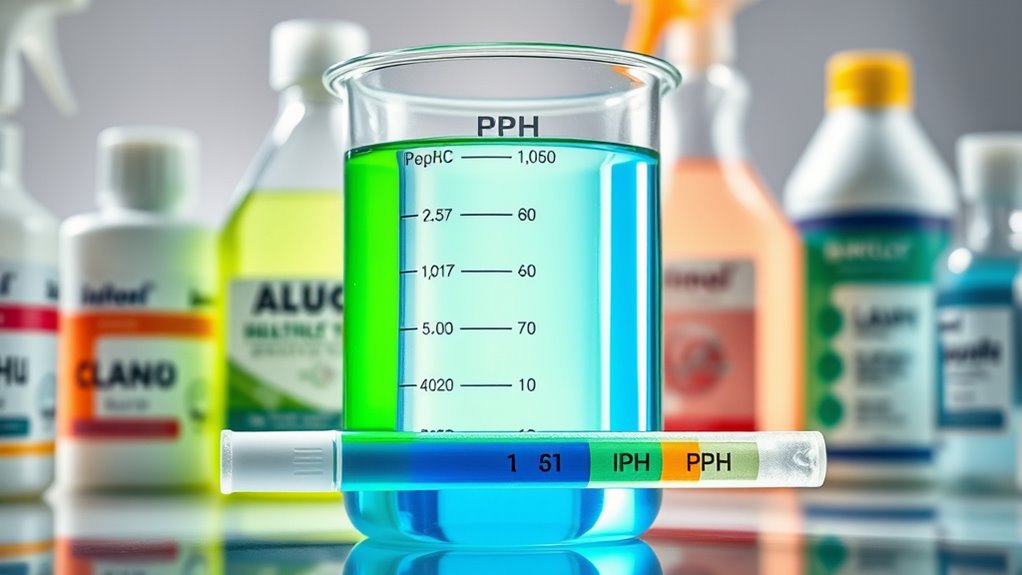
Have you ever wondered how the pH level of a cleaning solution affects its effectiveness? Understanding the pH scale and how it interacts with different cleaning agents is key to choosing the right product for your specific cleaning needs. The pH scale measures how acidic or alkaline a solution is, ranging from 0 to 14. Substances with a pH below 7 are acidic, while those above are alkaline or basic. Neutral solutions, like pure water, sit at pH 7. This scale isn’t just a number; it directly impacts how well cleaning agents perform against various stains, soils, and residues.
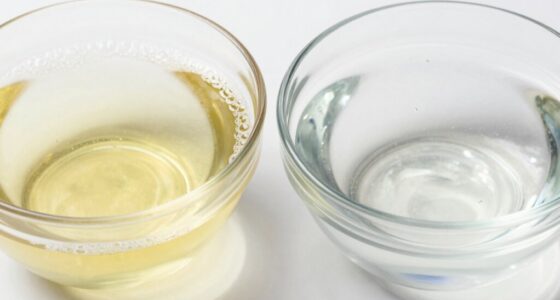
Different cleaning agents are formulated to target specific types of dirt, grease, or mineral deposits, and their effectiveness depends heavily on their pH level. Acidic cleaners, with a pH below 7, excel at removing mineral deposits, rust, and hard water stains. For example, vinegar or citric acid-based products are great for descaling kettles or cleaning glass. On the other hand, alkaline cleaning agents, with a pH above 7, are better suited for cutting through grease, oil, and organic matter. Common examples include baking soda and ammonia-based cleaners. They work by breaking down fats and proteins, making them ideal for kitchen and bathroom surfaces.
Acidic cleaners remove mineral deposits; alkaline cleaners cut through grease and organic grime.
Choosing the right cleaning agent isn’t just about what you’re cleaning; it’s also about matching the product’s pH to the task at hand. Using an acidic cleaner on greasy stovetops might not be effective and could even damage certain surfaces. Similarly, applying a highly alkaline cleaner to mineral deposits may be ineffective or cause discoloration. It’s essential to read labels and understand the pH level of your cleaning products to guarantee compatibility with the surface and stain type. This way, you maximize cleaning efficiency while minimizing potential damage.
Additionally, some cleaning agents are formulated as neutral, with a pH close to 7, offering a gentle option suitable for delicate surfaces or general-purpose cleaning. These products are less aggressive and often safer for everyday use. However, they may not be as powerful against stubborn stains or buildup as their more acidic or alkaline counterparts. Knowing the pH of your cleaning products helps you decide when to use them and when to opt for something stronger. It’s about matching the product to the problem, not just the surface, but also the type of dirt you’re tackling. Understanding cleaning agent pH level can help optimize your cleaning routine and prevent surface damage.
Frequently Asked Questions
How Does Ph Affect Cleaning Product Effectiveness?
pH considerably affects cleaning product effectiveness because it influences how well a cleaner can neutralize odors and break down grime. If the pH isn’t balanced, your cleaner might not work properly, leaving odors behind or failing to remove stains. To improve results, you should use pH balancing techniques, adjusting the solution’s pH level as needed. This guarantees your cleaning products perform most effectively, tackling dirt and odors effectively.
Can Ph Levels Damage Certain Surfaces or Materials?
Think of pH levels as a double-edged sword—too harsh, and they can carve into surfaces like a chisel through wood. If your cleaning solution is too acidic or alkaline, it can cause surface corrosion and material discoloration, damaging delicate surfaces over time. Always check the pH compatibility, so you don’t unintentionally turn your cleaning into a destructive force rather than a restorative one.
How Do I Test the Ph of My Cleaning Solution?
To test the pH of your cleaning solution, start with pH measurement using testing methods like pH test strips or a digital pH meter. Dip the strip into the solution or place the probe in it, then compare the color change or read the digital display. This quick, accurate method helps you determine if your cleaning solution is too acidic or alkaline, ensuring you choose the right product for your surface.
What Ph Range Is Best for Removing Stubborn Stains?
For stubborn stains, aim for a cleaning solution with a pH between 9 and 11. This alkaline range is ideal for stain removal because it helps break down tough grime and grease. You can modify the pH by adding appropriate cleaning agents or pH adjusters to enhance stain removal. Just make sure to test your solution’s pH first to ensure it’s safe and effective for your specific stain and surface.
Are There Eco-Friendly Cleaning Products With Neutral Ph?
Yes, you can find eco-friendly cleaning products with neutral pH that promote purity and protect the planet. These products often feature eco-friendly ingredients that are gentle yet effective, ensuring safe surface cleaning without harsh chemicals. Look for labels highlighting pH balancing or neutral pH levels, which help maintain surface integrity while being environmentally conscious. By choosing such products, you support sustainable solutions that don’t compromise cleanliness or the planet’s health.
Conclusion
Remember, a stitch in time saves nine. By matching your cleaning products to the right pH level, you prevent damage and keep surfaces spotless. Whether it’s alkaline for grease or acidic for mineral deposits, using the right pH balance makes all the difference. Don’t just guess—know your product and problem. When you choose wisely, cleaning becomes easier, safer, and more effective. A little knowledge goes a long way in making your home sparkle!