You can use ammonia to clean tough stains, streak-free windows, tile, countertops, and fabric spots. Just remember to work in a well-ventilated space, wear gloves, and test on small areas first. Avoid using it on tinted windows, wood, painted surfaces, or natural stone, as ammonia can cause damage. Never mix ammonia with bleach or chlorine cleaners to prevent toxic fumes. For more tips on safe and effective use, keep exploring this guide.
Key Takeaways
- Use ammonia to clean glass, tiles, countertops, and greasy surfaces; avoid on delicate or porous materials like wood or natural stone.
- Always dilute ammonia properly (1:3 ratio with water) and test on small areas before full application.
- Never mix ammonia with bleach or chlorine cleaners to prevent toxic fumes and chemical hazards.
- Use ammonia in well-ventilated areas, wearing gloves to protect skin from strong fumes and potential irritation.
- Avoid using ammonia on tinted windows, painted surfaces, or surfaces prone to discoloration or damage.
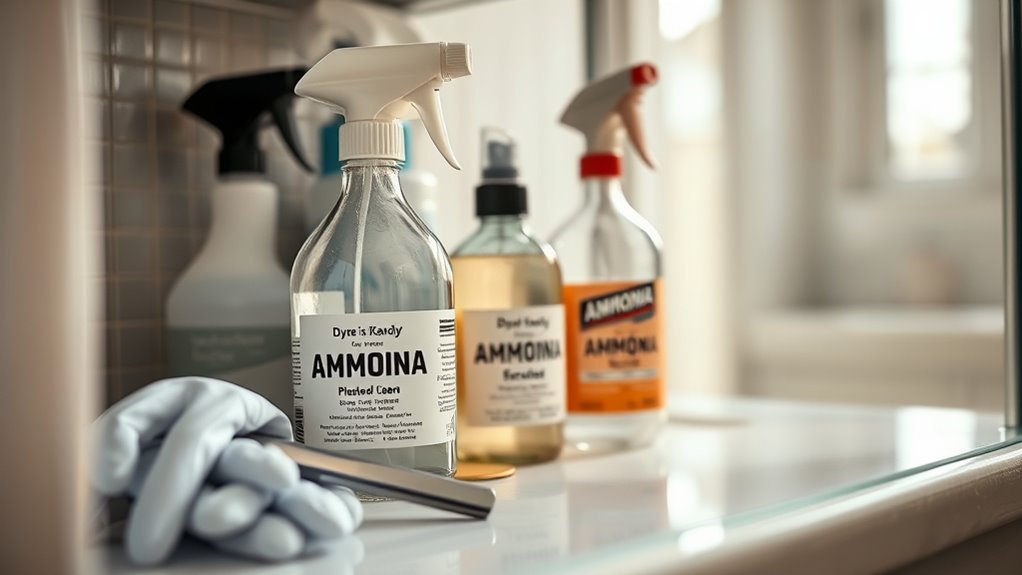
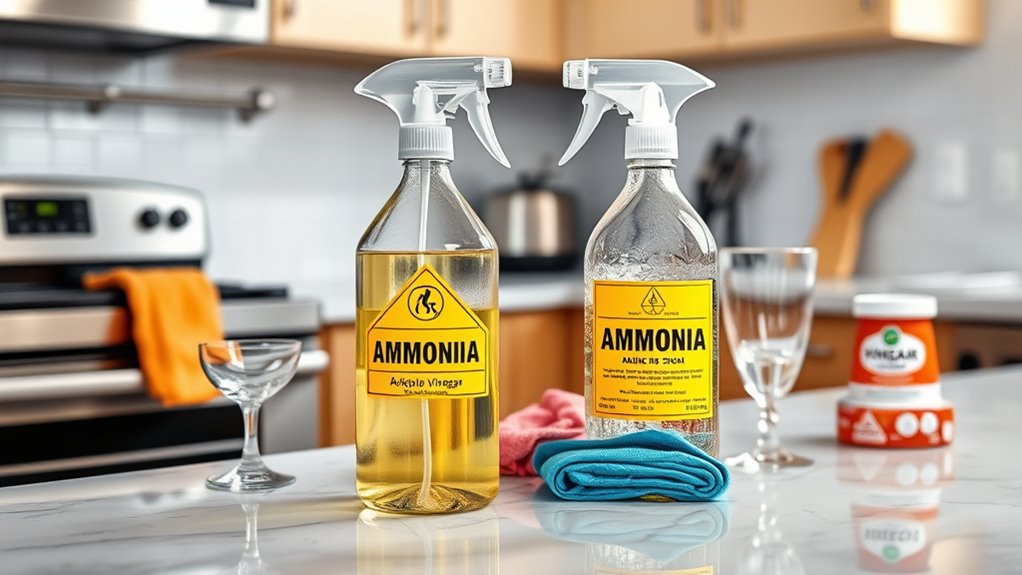
Ammonia is a powerful cleaning agent that can tackle tough stains and grime, but it’s not suitable for every surface or situation. When it comes to cleaning windows, ammonia is especially effective. Its ability to cut through grease and grime makes it a popular choice for achieving streak-free, crystal-clear glass. To use ammonia for cleaning windows, mix a solution of one part ammonia to three parts water. Spray it onto the glass and wipe with a lint-free cloth or squeegee for a sparkling finish. Just make sure you’re working in a well-ventilated area and avoid using ammonia on tinted windows, as it can damage the film or coating. Proper ventilation helps prevent inhalation of toxic fumes, which is essential when working with strong cleaning agents like ammonia. Removing stains is another area where ammonia really shines. Whether you’re dealing with stubborn grease, soap scum, or mildew, ammonia can often break down the build-up and make cleaning easier. For fabric stains, you can dilute ammonia with water and dab it onto the affected area, then rinse thoroughly. For hard surfaces like tile or countertops, apply the ammonia solution directly, let it sit for a few minutes, then scrub and rinse. Keep in mind, ammonia is highly effective but also potent—always test on a small, inconspicuous spot first to guarantee it won’t cause damage or discoloration. However, while ammonia is great for cleaning windows and removing stains, you should be cautious about its use on delicate or porous surfaces. For instance, avoid using ammonia on wood, painted surfaces, or natural stone, as it can cause discoloration or deterioration. It’s also essential never to mix ammonia with bleach or other cleaners containing chlorine, because the combination produces toxic chloramine vapors that can harm your respiratory system. Always use ammonia in a well-ventilated area and wear gloves to protect your skin.
Frequently Asked Questions
Can Ammonia Be Used Safely on Painted Surfaces?
You should avoid using ammonia on painted surfaces, as it can damage the paint or cause discoloration, compromising painted surface safety. If you need to clean painted areas, opt for gentle, ammonia-free cleaners. If you choose to use ammonia for residue removal, dilute it properly and test a small, inconspicuous area first. Always rinse thoroughly to prevent ammonia residue buildup, which could harm the finish over time.
Is Ammonia Effective for Cleaning Glass Streaks?
Sure, ammonia’s your hero for glass cleaning and streak removal—if you enjoy streaky, cloudy windows that make your reflection look suspicious. It’s effective at cutting through grime, but beware, it can leave streaks if not used properly. Spray, wipe, and buff for that crystal-clear shine you crave. Just don’t forget to ventilate; ammonia’s not exactly a subtle scent, and streak-free perfection demands a little finesse.
How Should Ammonia Be Stored to Ensure Safety?
You should store ammonia in a well-ventilated, cool, and dry area away from direct sunlight and heat sources. Use a tightly sealed container, preferably made of plastic or glass, to prevent leaks. Keep it separate from other chemicals, especially acids and oxidizers, to guarantee chemical safety. Label the container clearly, and always handle with gloves and eye protection. Proper ammonia storage minimizes risks and keeps your environment safe.
Can Ammonia Be Mixed With Other Household Cleaners?
Imagine mixing oil and water—dangerous chemical reactions unfold. You should never combine ammonia with other household cleaners, especially bleach, as it creates toxic fumes. This household hazardous mistake can cause severe health risks. Keep ammonia isolated, like a guarded fortress, to prevent hazardous reactions. Always read labels carefully, and remember: mixing chemicals is like releasing a storm—unpredictable and unsafe. Stay safe by keeping ammonia separate from other cleaning agents.
What Are the Signs of Ammonia Poisoning?
If you suspect ammonia poisoning, watch for household safety signs like difficulty breathing, coughing, or chest tightness. You might experience toxicity symptoms such as nausea, dizziness, or a burning sensation in your eyes or throat. If these occur after exposure, get fresh air immediately and seek medical attention. Always handle ammonia carefully to prevent accidental poisoning, and keep it out of reach of children and pets to guarantee household safety.
Conclusion
Knowing what to clean with ammonia and what to avoid keeps you safe and effective. Just remember, ammonia is powerful—so use it wisely. Did you know that improper use causes over 10,000 emergency room visits each year? That’s a stark reminder to handle ammonia with care. Stick to recommended surfaces, ventilate well, and always read labels. By doing so, you protect yourself and get the best results from this versatile cleaner.