
Your shower water temperature affects your skin’s comfort by controlling moisture and oil levels. Hot water strips natural oils, leading to dryness and irritation, while cooler water helps retain these oils, keeping your skin hydrated and refreshed. The temperature also influences humidity, which can cause pores to clog or skin to feel tight if not managed properly. If you want to understand how to optimize your shower routine for better skin, there’s more to discover here.

Get your next haul delivered free with Prime
- Fast, free delivery on millions of items
- Prime Video, Amazon Music and more included
- Member-only deals all year
Key Takeaways
- Hot water strips natural skin oils, causing dryness and irritation, while cooler water helps preserve moisture for comfort.
- Elevated bathroom humidity from hot showers can temporarily soften skin but may promote pore clogging and fungal growth.
- Hard water minerals react with skin oils, leading to dryness, roughness, and decreased hydration.
- Cooler water reduces steam and humidity, preventing excess moisture buildup and potential skin issues.
- Proper ventilation and water quality management enhance skin comfort regardless of water temperature.
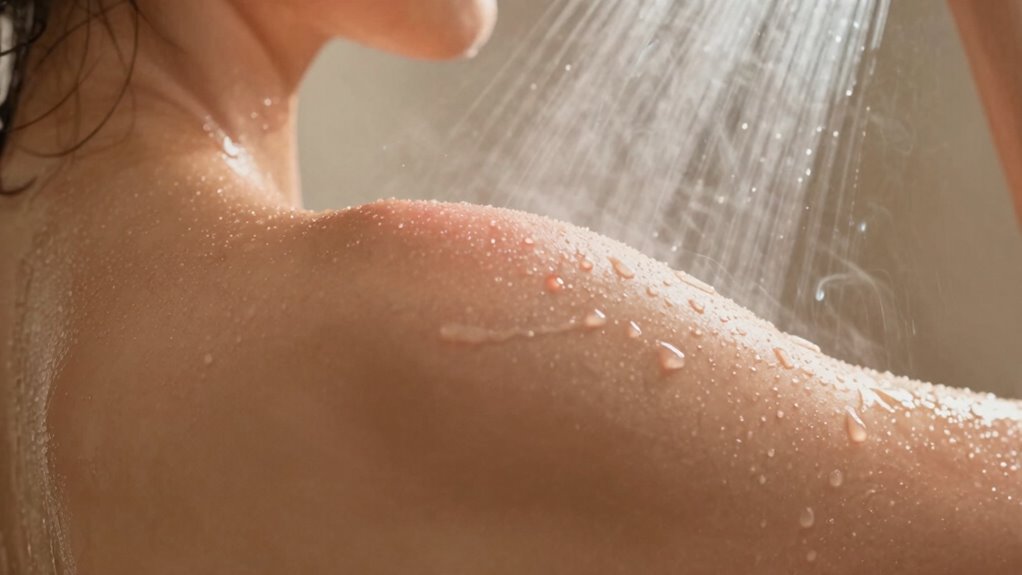
Have you ever noticed how your skin feels different after a hot shower compared to a cool one? That sensation isn’t just in your head; it’s influenced by the temperature of the water and how it interacts with your skin. When you turn the tap to a hotter setting, your skin is exposed to water that can strip away natural oils, leading to dryness and irritation. Conversely, cooler water tends to preserve those oils, leaving your skin feeling more refreshed and less tight. But the effects go beyond just your skin’s immediate response; they’re also affected by environmental factors like bathroom humidity and the mineral content of your water.
Bathroom humidity plays a significant role in how your skin reacts to showering. When you take a hot shower, the warm, moist air increases the humidity in your bathroom. This heightened humidity can temporarily boost your skin’s moisture levels, giving you a feeling of softness. However, if the humidity remains high after your shower, it can also contribute to problems like clogged pores or fungal growth. On the other hand, cooler showers produce less steam, resulting in lower bathroom humidity. This drier environment can make your skin feel tighter and more prone to dryness, especially if you’re already dealing with sensitive or dry skin. Managing bathroom humidity with good ventilation can help balance these effects, ensuring your skin stays comfortable regardless of water temperature. Additionally, proper ventilation can prevent excess moisture buildup and protect your skin’s health.
The mineral content of your water is another *essential* factor that influences how your skin feels after a shower. Water with high mineral content—often called hard water—contains minerals like calcium and magnesium. These minerals can interact with your skin’s natural oils, making it harder for your skin to retain moisture. When you shower with hard water, especially at higher temperatures, it can leave mineral deposits on your skin that contribute to dryness, irritation, or a rough feeling. Additionally, mineral buildup from hard water can exacerbate skin issues and make cleansing more challenging. Conversely, softer water with fewer minerals tends to be gentler on your skin, helping it stay hydrated and smooth. If you notice your skin feels particularly dry or itchy after showering, the mineral content of your water could be a contributing factor. Installing a water softener or using gentle skincare products can help mitigate these effects. Furthermore, water mineral content can influence how your skin reacts, highlighting the importance of understanding your local water quality.
In essence, your skin’s comfort during and after a shower depends on a combination of water temperature, bathroom humidity, and water mineral content. Hot water may feel soothing initially but can lead to dryness and irritation over time, especially if the environment is humid or the water is hard. Cooler water, while less immediately relaxing, is gentler on your skin’s natural oils and can help maintain hydration. Paying attention to these factors allows you to tailor your shower routine to keep your skin feeling comfortable and healthy.
shower water temperature control valve
As an affiliate, we earn on qualifying purchases.
As an affiliate, we earn on qualifying purchases.
Frequently Asked Questions
Can Water Temperature Affect Skin Hydration Levels?
Yes, water temperature can affect your skin hydration levels. Hot water strips away natural oils, leaving your skin dry and dehydrated, while lukewarm or cool water helps maintain moisture. When you shower with very hot water, your skin loses hydration faster, leading to irritation and dryness. To keep your skin hydrated, opt for a comfortable, moderate water temperature, and consider moisturizing afterward to lock in moisture.
How Does Shower Water Temperature Impact Skin Aging?
Shower temperature profoundly influences skin aging by impacting your skin barrier and collagen. Hot water hastens collagen breakdown, weakening your skin’s structure and causing premature aging signs like wrinkles. Cooler showers preserve your skin barrier, preventing moisture loss and skin damage. Consistently hot showers can cause skin to sag and age faster, while gentle, lukewarm water helps maintain elasticity and youthful firmness, promoting healthier, happier skin over time.
Are There Specific Skin Conditions Worsened by Temperature Changes?
Yes, temperature changes can worsen skin conditions like eczema and psoriasis. Humidity fluctuations cause your skin to dry out or become overly moist, which irritates sensitive skin. When you expose yourself to hot water, it strips natural oils, increasing skin sensitivity and flare-ups. To avoid worsening these conditions, keep shower water lukewarm and maintain consistent humidity levels, helping your skin stay balanced and less prone to irritation.
Does Water Temperature Influence Skin Bacteria or Infections?
Yes, water temperature can influence bacterial growth and infection risk. Hot water creates a warm, moist environment that promotes bacterial proliferation, potentially increasing your chance of skin infections. Conversely, cold water may slow bacterial growth, reducing infection risk. To protect your skin, avoid extremely hot showers, especially if you have cuts or sensitive skin, and keep shower surfaces clean to minimize bacterial presence.
Can Adjusting Shower Temperature Prevent Skin Irritation?
Yes, adjusting your shower temperature can prevent skin irritation. When you regulate the temperature, you help maintain your skin barrier, preventing it from becoming too dry or inflamed. Hot water strips natural oils, weakening the barrier and causing irritation, while cooler water preserves moisture and reduces sensitivity. By finding the right temperature, you support healthy skin, reduce irritation, and keep your skin comfortable during and after your shower.
As an affiliate, we earn on qualifying purchases.
Conclusion
Remember, while a hot shower can soothe your muscles, it might strip away your skin’s natural oils, leaving it dry and irritated. Conversely, cooler water can refresh and hydrate, but may not provide the same relaxing experience. So, striking the right balance is key—like finding harmony between comfort and care. When you control your water temperature, you can enjoy a shower that refreshes your body without sacrificing your skin’s health.
hard water mineral remover for skin
As an affiliate, we earn on qualifying purchases.
As an affiliate, we earn on qualifying purchases.
As an affiliate, we earn on qualifying purchases.
Halloween Picks
halloween
As an affiliate, we earn on qualifying purchases.