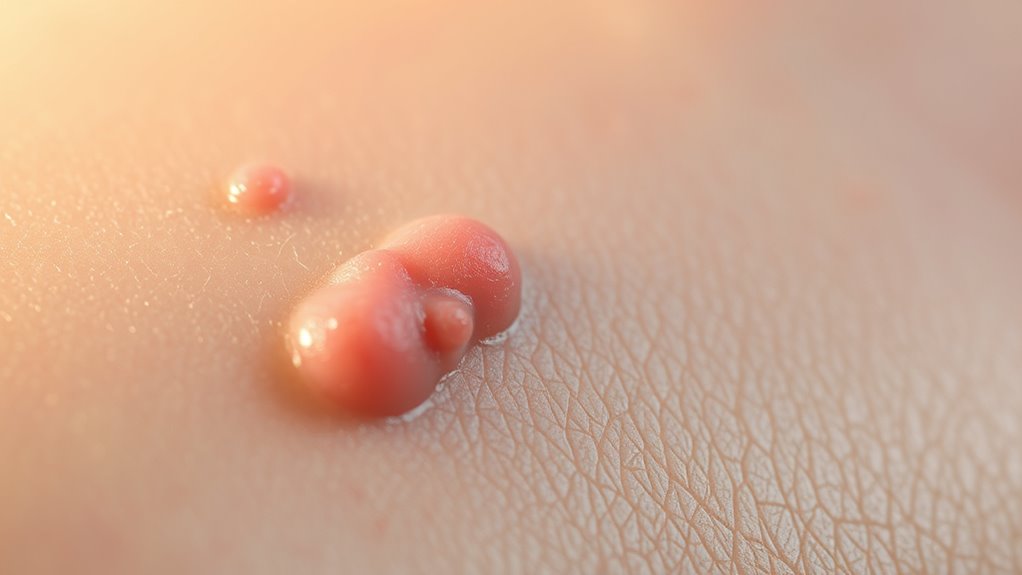

To prevent and care for ingrown hairs, make sure to exfoliate regularly with gentle scrubs or chemical exfoliants to remove dead skin that can clog follicles. Shave in the direction of hair growth using a sharp razor and apply soothing moisturizers afterward. Consider laser hair removal to reduce hair growth long-term. If inflamed or infected hairs appear, consult a dermatologist and avoid irritation-causing products. Discover more techniques to keep your skin smooth and healthy.
Key Takeaways
- Exfoliate skin regularly with gentle scrubs or chemical exfoliants to prevent clogged hair follicles.
- Use proper shaving techniques: shave in the direction of hair growth and apply shaving gel or cream.
- Keep skin moisturized with soothing products like aloe vera or hyaluronic acid to reduce irritation.
- Consider laser hair removal to reduce hair growth and minimize the risk of ingrown hairs.
- Avoid tight clothing and avoid shaving or waxing affected areas until inflammation or infection subsides.
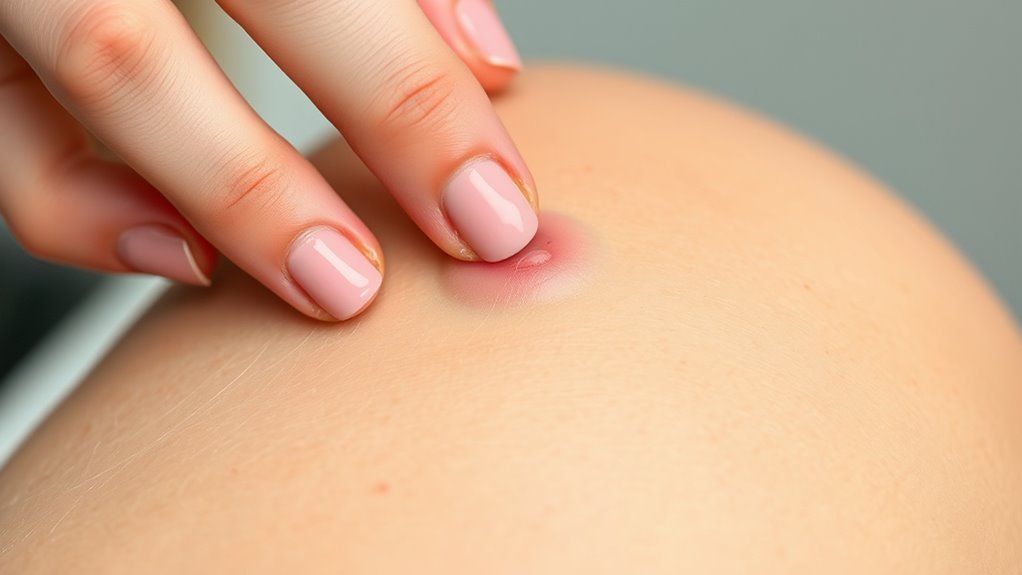
Have you ever noticed a bump or redness after shaving or waxing? That’s often a sign of an ingrown hair, which happens when a hair grows back into your skin instead of outward. It can cause irritation, inflammation, and sometimes even infection. While these bumps are common, especially in areas where hair removal is frequent, there are effective ways to prevent and care for them. One approach gaining popularity is laser hair removal. Unlike shaving or waxing, laser treatments target hair follicles directly, reducing hair growth over time. With less hair to grow back, the chances of ingrown hairs diminish considerably. Plus, laser hair removal can smooth your skin, making it less prone to irritation and bumps after hair removal sessions.
Laser hair removal reduces ingrown hairs by targeting hair follicles and smoothing skin.
Another essential step in preventing ingrown hairs is regular skin exfoliation. When you exfoliate, you help remove dead skin cells that can clog pores and trap hairs beneath the surface. This process keeps your hair follicles clear, allowing hairs to grow out naturally and reducing the likelihood of them curling back into your skin. Use a gentle scrub or chemical exfoliant suited for your skin type a few times a week to maintain smooth, healthy skin. Be cautious not to over-exfoliate, as that can irritate your skin and worsen the problem. Incorporate exfoliation into your routine along with proper shaving techniques, like using a sharp razor and shaving in the direction of hair growth, to minimize skin trauma.
Keeping your skin well-hydrated is also essential. Dry, flaky skin increases the risk of hairs becoming trapped beneath the surface. Moisturize daily with products that contain soothing ingredients like aloe vera or hyaluronic acid. This helps maintain skin elasticity and prevents irritation. If you notice persistent ingrown hairs, avoid tight clothing that can rub or irritate the skin, and try to avoid shaving or waxing those areas until your skin heals. When you do shave, consider using a shaving gel or cream to reduce friction and skin trauma. Additionally, understanding hair removal methods can help you choose the most suitable technique to prevent ingrown hairs from developing.
In some cases, if ingrown hairs become infected or inflamed, it’s best to consult a dermatologist. They may recommend topical treatments or procedures like laser hair removal to permanently reduce hair growth and prevent future problems. Remember, patience and consistent skincare are key to managing ingrown hairs. By incorporating laser hair removal and regular skin exfoliation into your routine, you can considerably reduce their occurrence and keep your skin smooth, clear, and free from bothersome bumps.
Frequently Asked Questions
Can Ingrown Hairs Cause Permanent Skin Damage?
Yes, ingrown hairs can cause permanent skin damage if not properly treated. They may lead to scarring risks and skin discoloration, especially if they become infected or inflamed over time. You should avoid picking at ingrown hairs and keep the area clean to minimize these risks. If you notice persistent bumps or discoloration, consider consulting a dermatologist to prevent long-term damage and explore effective treatment options.
Are There Specific Products to Prevent Ingrown Hairs?
Yes, there are specific products to prevent ingrown hairs. Look for skincare routines that include products with ingredients like salicylic acid, glycolic acid, or lactic acid, which help exfoliate dead skin and prevent hair from curling back into the skin. Using these regularly can keep your pores clear and reduce ingrown hairs. Choose gentle exfoliating creams or serums designed for your skin type to enhance your prevention efforts.
How Long Do Ingrown Hairs Typically Take to Heal?
Ingrown hairs usually take about a few days to a week to heal, depending on your hair removal methods and skincare routines. If you avoid picking at them and keep the area clean, healing speeds up. Using gentle exfoliation and moisturizing helps prevent inflammation. Remember, consistency with your skincare routine and choosing the right hair removal method can substantially reduce healing time and minimize future ingrown hairs.
Do Ingrown Hairs Lead to Infections?
Just like a hidden threat lurking behind your smooth skin, ingrown hairs can lead to infections if left untreated. Pseudofolliculitis barbae, common after certain hair removal methods, may cause redness, swelling, or pus. You should avoid picking at them and keep the area clean. If an infection develops, see a dermatologist promptly to prevent complications and make certain of proper healing.
Are Certain Skin Types More Prone to Ingrown Hairs?
Yes, certain skin types are more prone to ingrown hairs. If you have sensitive skin or coarse, curly hair, you’re more likely to experience them because your hair tends to grow back into the skin more easily. People with thicker or textured hair also face higher risks. To reduce ingrown hairs, keep your skin exfoliated and moisturized, and avoid shaving too closely or frequently.
Conclusion
Taking steps to prevent and care for ingrown hairs can make a real difference in your skin’s health. Did you know that up to 60% of people experience ingrown hairs at some point? By following proper exfoliation, moisturization, and shaving techniques, you can reduce their occurrence and discomfort. Remember, consistent care not only keeps your skin smooth but also boosts your confidence. So, stay diligent, and enjoy healthier, bump-free skin every day!