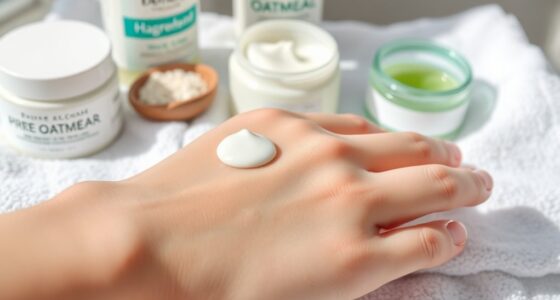
Fragrance in body care products can enhance your experience and add a touch of luxury, but it may also trigger sensitivities or allergic reactions, especially if you have sensitive skin. Synthetics tend to be harsher, so opting for natural or fragrance-free options can help reduce irritation. If you’re concerned about sensitivities, learning about alternatives and how to identify safe products can make a big difference. Keep exploring to discover more about protecting your skin while enjoying your favorites.
Key Takeaways
- Fragrances can trigger irritation or allergic reactions, especially in sensitive skin individuals.
- Synthetic fragrances tend to be harsher and more likely to cause sensitivities than natural ones.
- Fragrance-free or natural-scented products help reduce the risk of skin reactions and irritation.
- Checking ingredient labels for artificial fragrances, alcohol, and preservatives is essential for sensitive skin.
- Transitioning gradually and conducting patch tests can help sensitive individuals safely adapt to new body care products.

Have you ever wondered why fragrance plays such an essential role in body care products? Fragrance enhances the overall experience, making products feel more luxurious and enjoyable to use. It’s often what draws people in at the store or influences their choice online. But for many, the scent isn’t just about aroma—it’s about comfort and safety. If you have sensitive skin or allergies, fragrance can sometimes trigger reactions, leading to irritation or even more serious health concerns. That’s why more people are turning to natural alternatives and fragrance-free products to avoid these issues. Natural alternatives typically use plant-based extracts and essential oils instead of synthetic fragrances, which tend to be gentler on the skin. These options often provide a more subtle, authentic scent, or sometimes no scent at all, giving you control over what you’re exposing your body to. Fragrance-free products have gained popularity for a simple reason: they eliminate the risk of allergic reactions caused by added fragrances. When you choose fragrance-free, you’re opting for a straightforward formulation that focuses on hydration, nourishment, and skin health without any unnecessary chemicals or scents. For those with sensitivities, this can make a significant difference in how their skin responds to daily care routines. Many brands now offer a variety of fragrance-free options, making it easier to find products suited to your needs, whether it’s lotion, body wash, or moisturizer. These products often use soothing ingredients like aloe vera, oatmeal, or chamomile to support sensitive skin while avoiding potential irritants. If you’re considering switching, start by replacing heavily scented items with fragrance-free or natural alternatives. Look for labels that specify “unscented” or “fragrance-free,” and check ingredient lists for common irritants like artificial fragrances, alcohol, or harsh preservatives. Shifting gradually helps your skin adapt without shock or irritation. It’s also worth noting that some natural alternatives contain essential oils, which can be potent and might cause reactions for highly sensitive individuals. Always do a patch test before fully switching over. Additionally, incorporating mindful practices such as mindfulness techniques can help you become more aware of how your skin reacts and support overall well-being. Ultimately, understanding your skin’s unique needs allows you to make smarter choices when selecting body care products. Whether you prefer natural alternatives or fragrance-free options, the goal is to find products that nourish your skin without compromising your comfort or health. By being mindful of ingredients and focusing on gentle, effective formulations, you can enjoy body care routines that prioritize your well-being while still feeling pampering and enjoyable.
Frequently Asked Questions
Can Fragrance Allergies Develop Over Time?
Yes, fragrance allergies can develop over time. You might notice a gradual sensitivity emergence after repeated exposure to scented products. Your immune system can become more reactive, leading to fragrance allergy development even if you previously tolerated certain scents. It’s important to pay attention to any skin reactions or irritation, and consider switching to fragrance-free products to prevent worsening symptoms or new allergies from forming.
Are Natural Fragrances Safer Than Synthetic Ones?
Natural fragrances, like essential oils, are often safer than synthetic ones because they’re derived from plants and contain fewer chemicals. They also offer benefits such as soothing effects and aromatherapeutic properties. However, they can still cause sensitivities in some people. To reduce irritation, use scent masking techniques, like diluting essential oils properly. Always patch-test new products to guarantee you enjoy the benefits without adverse reactions.
How Can I Identify Fragrance-Free Body Care Products?
You can identify fragrance-free body care products by checking the labeling standards on the packaging. Look for clear labels that specify “fragrance-free” or “unscented,” and read the ingredient list for transparency. Reputable brands often provide ingredient transparency, making it easier to avoid hidden fragrances. Always double-check the label, especially if you have sensitivities, to verify the product truly contains no added fragrances or masking scents.
Do Fragrance Sensitivities Vary by Age or Gender?
You might notice that your skin’s response to fragrances can vary with age or gender. Age-related sensitivities often shift as your skin matures, making some scents more or less irritating over time. Gender-specific reactions also influence how your skin perceives certain fragrances, with hormonal differences potentially playing a role. Staying attentive to your body’s signals helps you choose products that suit your unique sensitivities, ensuring comfort and skin health.
What Are the Best Alternatives for Fragrance-Sensitive Skin?
If your skin is fragrance-sensitive, opt for products with essential oils or fragrance masking ingredients. Look for labels that specify “fragrance-free” or “unscented,” and avoid added perfumes. Essential oils can provide natural scent without irritation, but test small patches first. Fragrance masking helps hide scent without harsh chemicals. Always choose gentle, dermatologist-approved options to protect your skin and minimize reactions.
Conclusion
As you navigate your body care routine, remember that subtle scents can be like gentle whispers of a morning breeze, offering comfort without overwhelming your senses. Choosing fragrance-free or lightly scented products allows your skin to breathe freely, creating a delicate harmony that nurtures your well-being. Embrace the soft, unobtrusive touch of mindful choices, and let your skin bloom naturally, wrapped in a quiet serenity that speaks volumes beyond the scent.