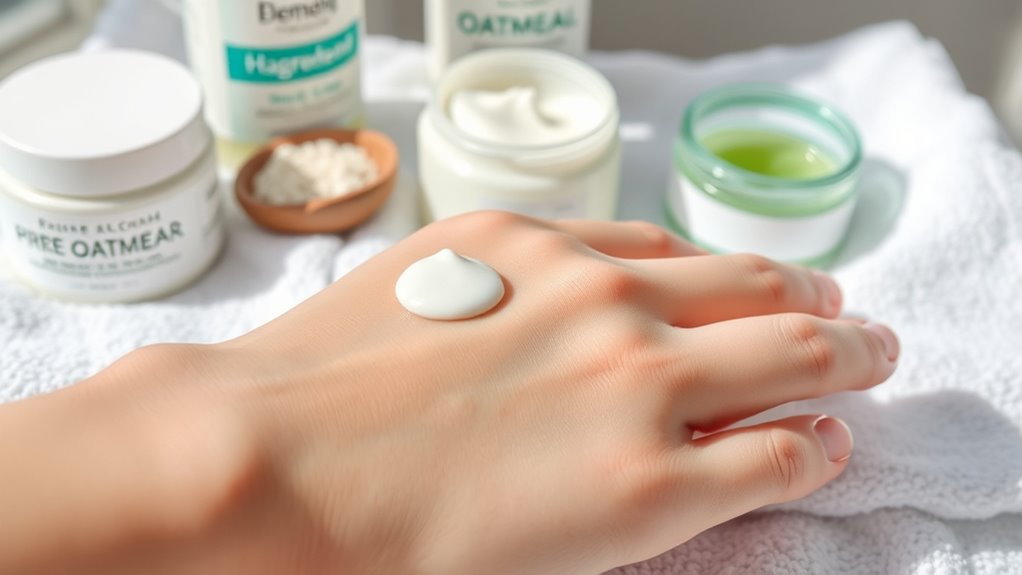

To care for eczema-prone skin, choose gentle, fragrance-free cleansers that don’t strip natural oils, and pat your skin dry gently. Regularly moisturize with hypoallergenic products containing ceramides or hyaluronic acid to strengthen your skin barrier. Opt for natural, eczema-friendly ingredients like oatmeal, aloe vera, or coconut oil to soothe irritation. Avoid harsh chemicals or fragrances, and patch-test new products to prevent flare-ups. Continue exploring these practices to help keep your skin calm and healthy.
Key Takeaways
- Choose natural, fragrance-free, hypoallergenic body care products that avoid irritants and synthetic chemicals.
- Use gentle, non-stripping cleansers and pat skin dry to preserve moisture and skin barrier integrity.
- Regularly moisturize with products containing ceramides or hyaluronic acid to lock in hydration and protect sensitive skin.
- Incorporate soothing remedies like cooled oatmeal baths or aloe vera gel to calm irritated skin.
- Patch-test new products and discontinue use if irritation occurs, consulting a dermatologist for personalized guidance.
If you have eczema, choosing the right body care products can make a notable difference in managing your symptoms. One of the best ways to do this is by exploring natural remedies that soothe your skin without causing irritation. Natural remedies often include ingredients like oatmeal, coconut oil, or aloe vera, which have calming properties and help restore your skin’s barrier. These options are gentle and less likely to contain harsh chemicals that can exacerbate eczema. When shopping for products, look for labels that highlight their natural ingredients and avoid anything with synthetic fragrances or irritants. Fragrance-free products are especially beneficial because added fragrances are common triggers for eczema flare-ups. They can irritate your skin even if you don’t have sensitive skin generally, so sticking to fragrance-free options helps minimize this risk.
Choosing fragrance-free, natural products can help soothe eczema and reduce flare-ups effectively.
Your daily routine should prioritize gentle cleansing. Use a mild, fragrance-free cleanser that doesn’t strip away your skin’s natural oils. Avoid harsh soaps or body washes with sulfates, as they can dry out your skin further. After cleansing, pat your skin dry gently—never rub—and immediately apply a rich, fragrance-free moisturizer. Moisturizing regularly helps lock in moisture and creates a protective barrier that shields your skin from irritants and environmental triggers. Look for products containing ceramides or hyaluronic acid, which aid in maintaining hydration and repairing the skin’s barrier. Incorporating these into your routine can markedly reduce the frequency and severity of eczema flare-ups. Additionally, choosing hypoallergenic body care products reduces the risk of irritation and allergic reactions, further supporting your skin’s health.
When it comes to body care products, always opt for those labeled as hypoallergenic and suitable for sensitive skin. Many eczema-friendly products are specifically formulated to be free of common irritants, including dyes, synthetic preservatives, and fragrances. Using fragrance-free products consistently prevents the introduction of unnecessary chemicals that could upset your skin. Remember, even natural remedies can sometimes cause reactions, so patch-test new products before applying them widely. If you notice any irritation, discontinue use and consult your dermatologist for tailored recommendations.
In addition to topical products, consider integrating natural remedies into your skincare routine, like applying cooled oatmeal baths or aloe vera gel, which can soothe irritated skin. These remedies are generally safe, gentle, and effective at reducing inflammation and discomfort. By prioritizing fragrance-free products and embracing natural remedies, you can better control your eczema symptoms, reduce flare-ups, and support your skin’s health in the long run. Consistency and gentle care are key, and with the right products and practices, managing eczema becomes more achievable and less burdensome.
Frequently Asked Questions
Can I Use Essential Oils on Eczema-Prone Skin?
You can use essential oils on eczema-prone skin, but you must prioritize essential oil safety. Always dilute oils with a carrier oil to reduce the risk of skin irritation, as undiluted oils can cause irritation or worsen eczema. Before applying, do a patch test to check for reactions. If you notice redness, itching, or burning, discontinue use immediately. Consulting a dermatologist is also a good idea before incorporating essential oils into your routine.
How Often Should I Shower if I Have Eczema?
Think of your skin as a delicate garden that needs just the right amount of watering. You should shower no more than once a day, using lukewarm water to protect your skin’s moisture. Over-showering can strip away natural oils, causing dryness and irritation. Keep your skin hydrated by applying a gentle moisturizer immediately after showering. Finding this balance helps soothe eczema and keeps your skin healthy and happy.
Are Natural Skincare Products Safer for Eczema?
Natural skincare products can be safer for eczema, but you should still check for chemical preservatives and synthetic fragrances. These ingredients can irritate sensitive skin and trigger flare-ups. Look for products labeled fragrance-free and preservative-free, and always do a patch test before full use. While natural options may reduce irritation, it is crucial to choose products carefully and avoid known irritants to keep your eczema under control.
What Fabrics Are Best for Eczema-Prone Skin?
You should choose fabrics with superior softness and hypoallergenic properties, like organic cotton or silk, to soothe eczema-prone skin. These textiles reduce irritation and allow your skin to breathe, which can prevent flare-ups. Many believe synthetic fabrics are fine, but they often cause discomfort. Instead, prioritize natural, breathable materials that minimize friction and keep your skin calm, making your daily routine more comfortable and less prone to eczema outbreaks.
Can Diet Influence Eczema Flare-Ups?
Yes, your diet can influence eczema flare-ups. Certain diet triggers, like spicy foods or dairy, may worsen symptoms. Food allergies also play a role, as they can cause immune responses that trigger eczema. Pay attention to how your skin reacts after eating specific foods, and consider eliminating potential triggers. Consulting with a healthcare provider or allergist can help identify and manage food allergies, reducing flare-ups and improving your skin health.
Conclusion
By choosing eczema-friendly body care practices, you protect your skin and reduce flare-ups. Imagine knowing that over 10% of adults worldwide suffer from eczema—you’re not alone in this journey. Embracing gentle, moisturizing routines can make a real difference, helping you feel more comfortable and confident daily. Remember, small changes in your skincare habits can lead to big improvements, so stay consistent and listen to your skin’s needs.