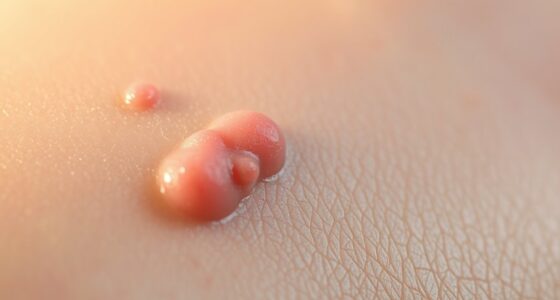
To prevent and treat body acne, focus on good hygiene—shower promptly after sweating, use gentle, non-comedogenic body washes, and wear loose, breathable clothing. Incorporate natural remedies like tea tree oil or aloe vera to reduce inflammation and bacteria. Keep your bedding and towels clean and stay hydrated with a balanced diet. Consistency and patience are key; if you stick to these tips, you’ll find it easier to manage breakouts and enjoy healthier skin.
Key Takeaways
- Maintain good hygiene by showering promptly after sweating and using gentle, non-comedogenic body washes.
- Use natural remedies like tea tree oil, aloe vera, or witch hazel to reduce inflammation and bacteria.
- Wear loose, breathable clothing to minimize friction and sweat buildup on the skin.
- Incorporate gentle exfoliation and keep bedding and towels clean to prevent clogged pores.
- Adopt a healthy lifestyle with a balanced diet, proper hydration, and consistent skincare routines for long-term prevention.
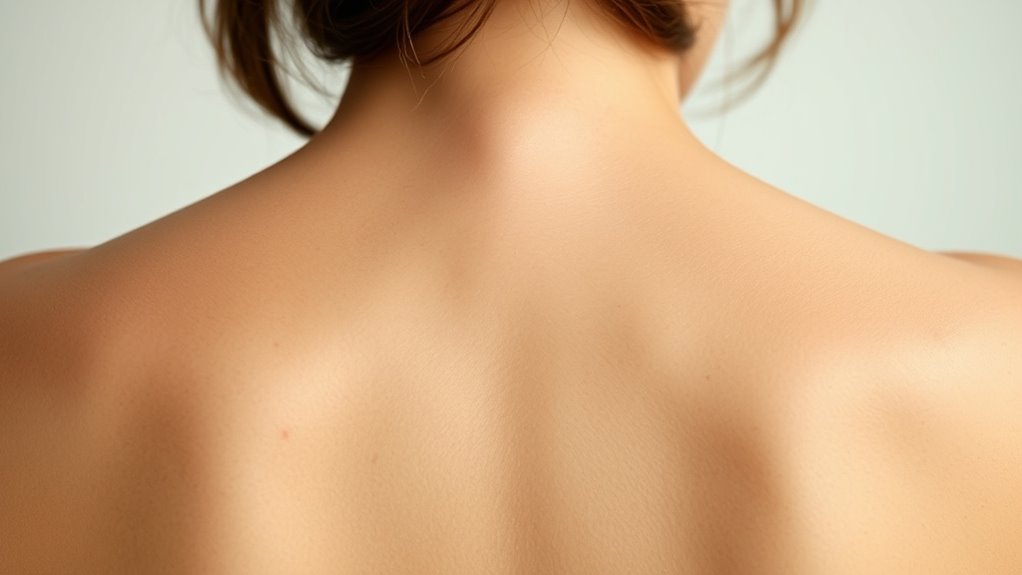
Have you ever wondered why acne appears on your body just like on your face? It’s a common question, and understanding the pimple causes can help you take better control of your skin. Body acne develops for many reasons—hormonal fluctuations, excess oil production, clogged pores, bacteria, and even certain clothing choices. When sweat, dirt, and oils combine with dead skin cells, they clog your pores, leading to pimples on your chest, back, shoulders, or other areas. Sometimes, friction from tight clothing or sports gear worsens the issue, trapping sweat and bacteria against your skin. Knowing these pimple causes allows you to identify the triggers and adjust your habits accordingly.
Understanding body acne causes helps you control and prevent breakouts effectively.
If you’re looking for natural remedies, there are several effective options you can try. Tea tree oil, for instance, has antibacterial properties that help reduce inflammation and bacteria on your skin. Dilute a few drops with a carrier oil like coconut or jojoba oil before applying to affected areas. Aloe vera is another natural remedy that soothes irritated skin, reduces redness, and promotes healing. Applying pure aloe vera gel directly from the plant or a store-bought product can calm inflamed pimples and prevent scarring. Witch hazel, a natural astringent, can help tighten pores and reduce oiliness, which minimizes the chances of new breakouts. You might also consider incorporating exfoliation with gentle scrubs or natural ingredients like sugar or oatmeal to remove dead skin cells that clog pores.
In addition to natural remedies, lifestyle habits play a critical role in preventing body acne. Shower promptly after sweating, especially after workouts, to wash away sweat, oils, and bacteria that contribute to pimples. Use a gentle, non-comedogenic body wash formulated for acne-prone skin, avoiding harsh soaps that can strip your skin and cause more oil production. Wearing loose, breathable clothing made from natural fabrics like cotton can prevent excess friction and moisture buildup. Keep your bedding and towels clean, and change into fresh clothes regularly. Staying hydrated and maintaining a balanced diet rich in fruits, vegetables, and lean proteins can also improve your skin’s overall health, reducing the likelihood of breakouts. Recognizing how skincare products impact your skin’s health can further enhance your routine and prevent future breakouts.
Ultimately, managing body acne involves understanding its causes and adopting a consistent routine that includes natural remedies, proper hygiene, and lifestyle adjustments. By paying attention to your skin’s needs and avoiding common triggers, you can markedly reduce the appearance of pimples and enjoy clearer, healthier skin over time. Remember, patience is key—improving your skin’s condition doesn’t happen overnight, but with persistence, you’ll see positive results.
Frequently Asked Questions
Can Diet Influence Body Acne Severity?
Your diet can definitely impact body acne severity. Nutritional habits that include high-glycemic foods, dairy, and processed sugars may trigger breakouts by increasing inflammation and oil production. By reducing these foods and focusing on a balanced diet rich in fruits, vegetables, and lean proteins, you can help manage acne. Staying mindful of your diet’s impact allows you to take control and potentially see clearer, healthier skin over time.
Are There Natural Remedies Effective for Body Acne?
Imagine a gentle breeze soothing your skin’s storm—herbal remedies and essential oils can be surprisingly effective for body acne. Tea tree oil, lavender, and witch hazel act like natural warriors, calming inflammation and fighting bacteria. These remedies, when used consistently, can help clear your skin without harsh chemicals. Embrace nature’s touch, and let these soothing oils be your allies on your journey to smoother, healthier skin.
How Long Does It Take to See Improvement?
You’ll usually see visible results within 4 to 6 weeks of consistent treatment, but it varies based on your skin’s response. The treatment timeline depends on factors like the severity of your body acne and the remedies you’re using. Stay patient and stick to your routine—improvement can take time, but with persistence, you’ll notice clearer, healthier skin as your body responds to the treatment.
Is Body Acne Linked to Hormonal Imbalances?
Yes, body acne can be linked to hormonal imbalances. When hormonal fluctuations occur, they increase sebaceous activity, which leads to more oil production and clogged pores. This excess oil creates an ideal environment for acne-causing bacteria to thrive. If you notice breakouts aligning with hormonal changes, it’s likely connected. Managing hormones through lifestyle, diet, or medical advice can help reduce body acne caused by hormonal imbalances.
Can Stress Worsen Body Acne Symptoms?
Yes, stress triggers can worsen your body acne symptoms. When you’re stressed, your body releases hormones like cortisol, which can increase oil production and lead to acne flare-ups. Managing stress through relaxation techniques, exercise, or adequate sleep helps reduce these triggers. By keeping stress levels in check, you can minimize acne flare-ups and support clearer skin. Don’t underestimate the power of stress management in your acne treatment routine.
Conclusion
Taking proactive steps can make all the difference in managing body acne. Stick to a consistent cleansing routine, wear breathable clothing, and avoid picking at your skin. Remember, patience is a virtue—sometimes, clear skin takes time to emerge. Don’t throw in the towel too soon; with persistence and the right treatments, you’ll be back to feeling confident in your own skin. Keep your chin up, and you’ll see the results you want.