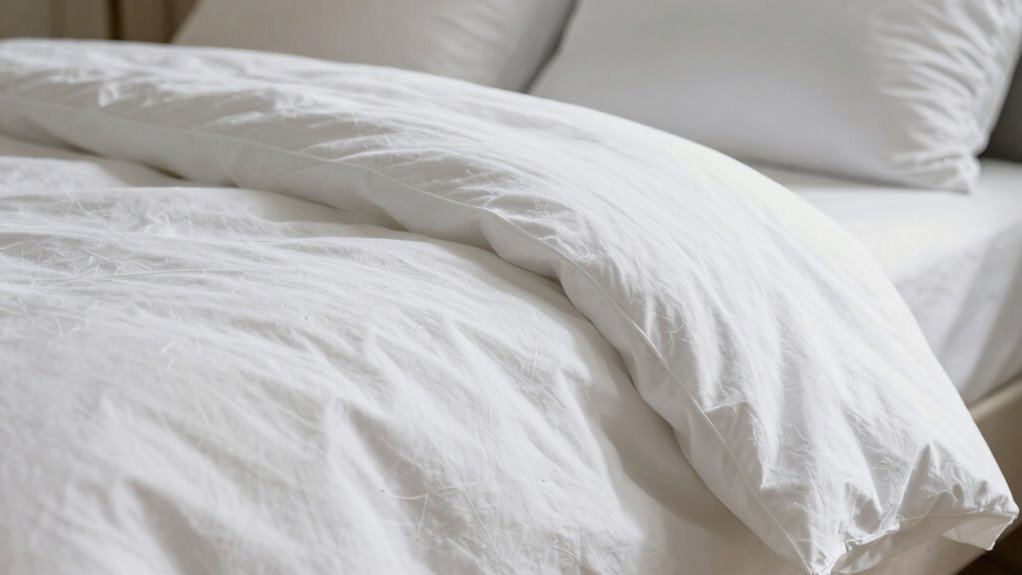

Your sheets may feel rough after washing because of fabric softener buildup, harsh detergents, or using high water temperatures that damage fibers. Overdrying or improper drying methods can also cause roughness by weakening the fabric. Additionally, infrequent maintenance and overloading your washer prevent proper rinsing, leaving residues that stiffen sheets. To keep your bedding soft, it is crucial to understand how washing, drying, and care routines impact texture—learn more to keep your sheets plush and cozy.

Get your next haul delivered free with Prime
- Fast, free delivery on millions of items
- Prime Video, Amazon Music and more included
- Member-only deals all year
Key Takeaways
- Overuse or buildup of fabric softener can cause residue, making sheets feel rough over time.
- Washing in hot water may strip fibers and softening agents, leading to coarser sheets.
- Using harsh detergents or overloading the machine can leave stiff residues on fabrics.
- High heat drying damages fibers, resulting in a rough texture after laundry.
- Infrequent washing or improper rinsing can allow dirt and detergent residue to stiffen sheets.
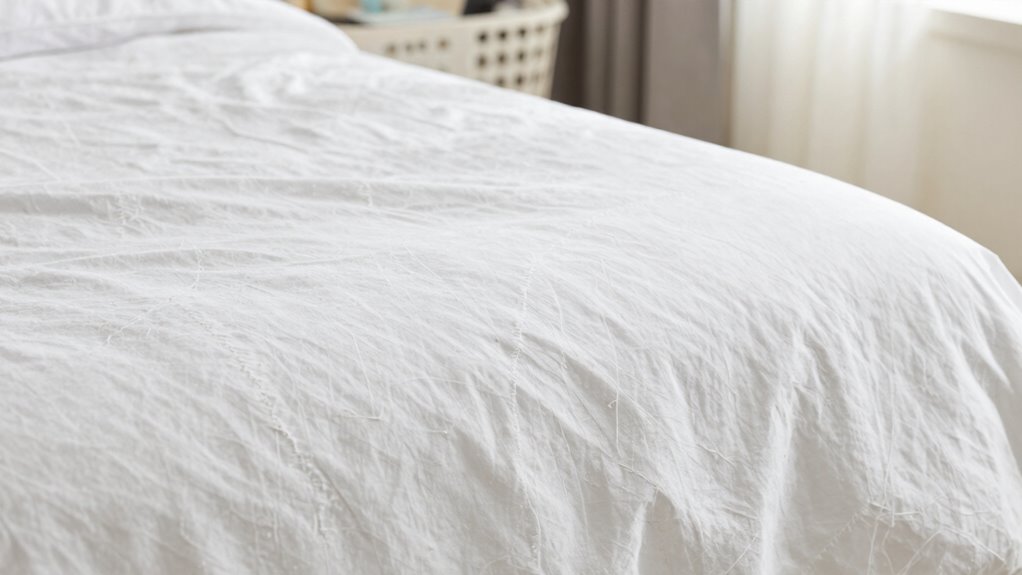
Even after washing, your sheets can still feel rough, leaving you wondering what went wrong. One common culprit is how you’re treating your bedding during the laundry process. Many people assume that washing alone will keep sheets soft, but the way you wash them plays a huge role. Fabric softeners are often overlooked but are key to maintaining that cozy, silky feel. When you add a fabric softener, it coats the fibers, helping to reduce stiffness and static. Without it, detergent alone might leave your sheets feeling stiff or coarse. Just be cautious—using too much fabric softener or doing it too frequently can lead to buildup, which eventually makes sheets feel less soft over time.
Proper laundry care, including using fabric softener, keeps your sheets feeling soft and cozy.
Another essential factor is water temperature. Washing your sheets in water that’s too hot can strip away natural fibers and any residual softening agents, leaving the fabric rougher. Conversely, cold water isn’t very effective at dissolving detergents and removing oils or dirt, which can contribute to a stiff, unrefined texture. The ideal approach is to use warm water—hot enough to clean thoroughly but gentle enough to preserve the softness of your sheets. If your laundry machine allows, selecting a water temperature that’s warm but not scalding can make a noticeable difference in how soft your sheets feel after each wash. Additionally, proper washing techniques can help prevent damage and maintain fabric integrity over time. Using gentle cycle settings may also aid in preserving the softness and longevity of your bedding. Incorporating appropriate laundry practices can further enhance the softness and overall quality of your sheets. Regularly fluffing sheets after drying can also help break up stiffness and restore a plush feel.
Beyond temperature and fabric softeners, the type of detergent you use also impacts the texture of your sheets. Heavy-duty or overly harsh detergents can leave behind residues that stiffen the fabric. Opt for a gentle, hypoallergenic detergent designed for delicate fabrics or bedding, and avoid overloading the washing machine. Overloading prevents proper rinsing, which can cause detergent residues to cling to fibers, making sheets feel rough and uncomfortable. Additionally, using proper washing techniques can further help maintain the softness of your bedding.
Drying methods also matter. Overdrying in high heat can damage the fibers, leading to a coarse feel. Instead, consider tumble drying on a low heat setting or air-drying your sheets. Adding a dryer sheet or a ball of wool during drying can help fluff the fibers and restore softness. Proper drying techniques can also reduce the risk of weakening fibers, which contributes to the rough texture. Finally, regular washing and proper maintenance—such as washing sheets frequently enough to prevent dirt buildup—are vital. Dirty or overly worn sheets tend to feel rough regardless of the washing method. Maintaining a consistent laundry routine and ensuring thorough rinsing can significantly improve the overall softness and comfort of your bedding.
As an affiliate, we earn on qualifying purchases.
Frequently Asked Questions
Can Fabric Softeners Damage My Sheets Over Time?
Yes, fabric softener residues can damage your sheets over time. These residues can build up on the sheet fibers, leading to sheet fiber degradation, which causes roughness and decreased softness. Over repeated washes, this buildup can weaken the fabric, making sheets feel rougher and less comfortable. To protect your sheets, consider using alternative softening methods like vinegar or skipping softeners altogether to maintain their softness and durability.
How Do Hard Water Minerals Affect Sheet Texture?
Hard water minerals like calcium and magnesium cause mineral buildup on your sheets, making them feel rough. Water hardness prevents soap from rinsing out completely, leaving residues that stiffen fabric over time. This buildup clogs fibers, reducing softness and causing discomfort. To improve texture, consider using water softeners or descaling agents, and wash sheets with less mineral-rich water to maintain their smooth, cozy feel.
Are Natural Fibers More Prone to Roughness After Washing?
Natural fibers are like delicate threads in a tapestry—they’re more prone to roughness after washing. You might notice fiber shrinkage and dye fading, which can make sheets feel coarser over time. These fibers absorb water and detergents differently, causing them to become stiffer. To keep your sheets soft, wash them gently, avoid high heat, and use fabric conditioners to reduce roughness caused by fiber damage.
Does Frequent Washing Weaken Sheet Fibers?
Yes, frequent washing can weaken sheet fibers over time. Each wash causes fiber degradation, making them less durable and more prone to roughness. When you wash sheets often, the repeated agitation and exposure to detergents accelerate this process. To maintain softness and prolong the lifespan, consider washing less frequently, using gentle cycles, and avoiding harsh detergents. This helps preserve the integrity of the fibers and keeps your sheets feeling smooth.
What’s the Best Way to Restore Softness to Old Sheets?
Think of your sheets as a canvas that needs revitalizing. To restore softness, wash them with a gentle fabric softener and add half a cup of white vinegar to break down residue. Avoid harsh detergents that cause dye fading and stubborn stains. Occasionally, use baking soda during laundry to remove stains and refresh fibers. These simple steps will make your sheets feel cozy and inviting once again.
gentle hypoallergenic laundry detergent
As an affiliate, we earn on qualifying purchases.
As an affiliate, we earn on qualifying purchases.
Conclusion
So, next time your sheets feel rough, remember they might just be fighting off detergent buildup or mineral deposits like tiny soldiers. Give them a gentle scrub with vinegar or baking soda, and let your linens breathe freely. Think of your sheets as your cozy comfort zone—treat them well, and they’ll return the softness and comfort you crave. After all, your bed should be a cloud, not a sandpaper.
As an affiliate, we earn on qualifying purchases.
bed sheet fluffing and softening tools
As an affiliate, we earn on qualifying purchases.
As an affiliate, we earn on qualifying purchases.
Halloween Picks
halloween
As an affiliate, we earn on qualifying purchases.