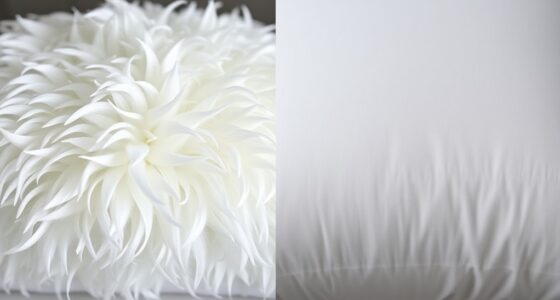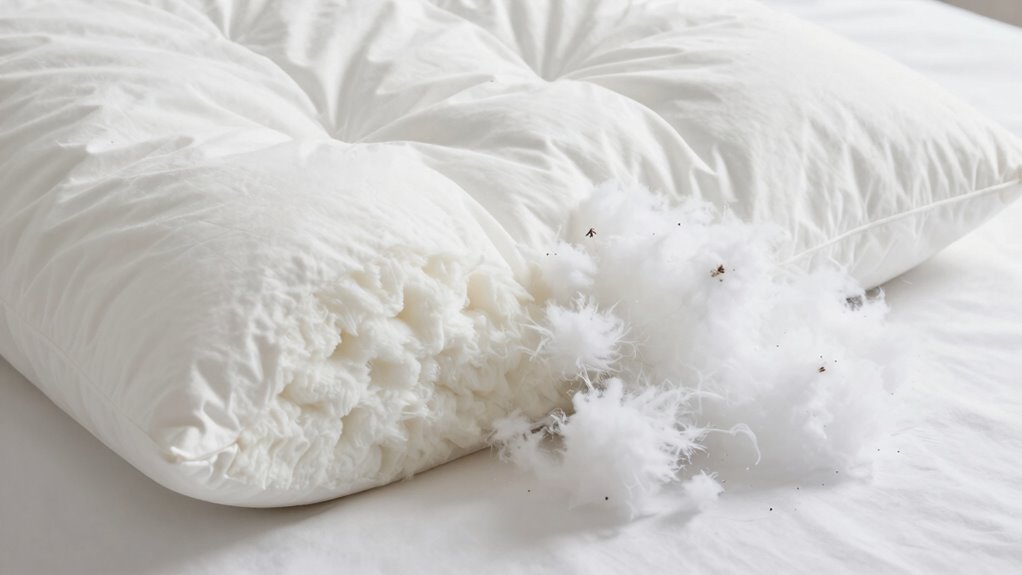

The loft of your pillow drops faster depending on its fill material. Natural fills like down tend to compress easily under pressure, leading to quicker flattening, while memory foam resists compression, maintaining shape longer. Memory foam’s dense structure helps it keep loft over time, whereas feathers and other soft fills tend to lose fluffiness faster. Understanding how different materials react to pressure and use can help you choose a pillow that stays supportive longer—keep exploring to find out more.

Get your next haul delivered free — and shop member deals
- Fast, free delivery on millions of items
- Access to Prime Big Deal Days deals on October 6–7
- Prime Video, Amazon Music and more included
Key Takeaways
- Natural fills like down tend to compress and lose loft faster than denser materials like memory foam.
- Memory foam’s viscoelastic structure resists compression, maintaining loft over time.
- Pillow materials that clump or settle, such as down feathers, experience quicker loft reduction.
- The ability of a fill to recover shape after pressure influences how quickly loft drops.
- Maintenance practices and usage frequency can accelerate loft loss in softer or less resilient fills.
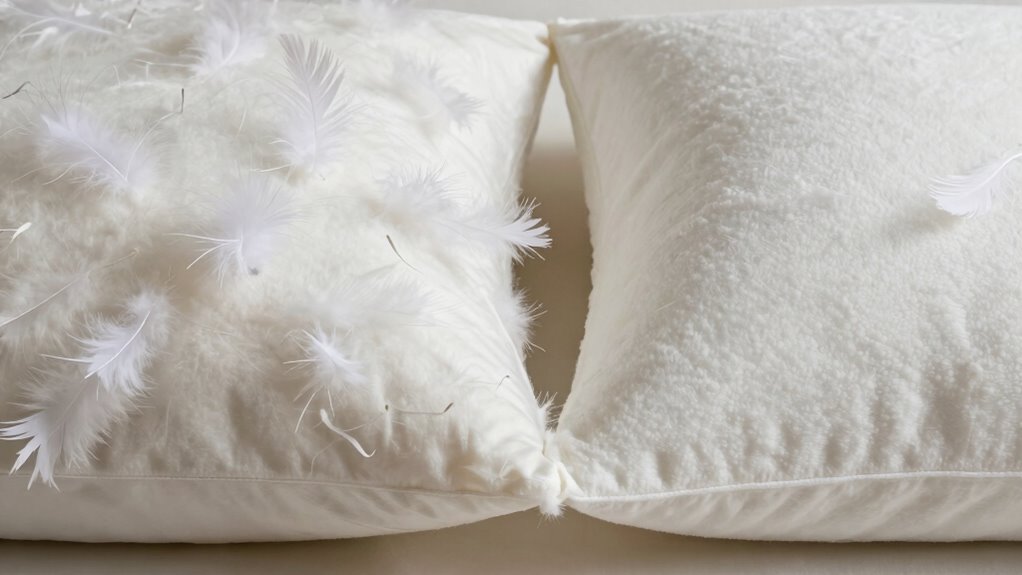
Choosing the right pillow fill is essential for a good night’s sleep, as it directly affects comfort and support. When selecting a pillow, you might notice that some materials lose their loft more quickly than others, which can impact your sleep quality over time. Different fills have unique properties that influence how well they retain their shape and support, especially after extended use. The structure of the fill material also influences how well it can withstand repeated compression and maintain durability over time. Memory foam is popular because it molds to your head and neck, providing customized support. However, it’s also known for maintaining its loft longer than many other fillings. Its dense composition resists flattening, so your pillow keeps its shape even after months of use. That said, memory foam can sometimes feel firm or retain heat, so it’s best if you’re looking for long-lasting support and don’t mind a slightly warmer sleep experience. Down feathers, on the other hand, are prized for their softness and luxurious feel. They create a plush, lightweight pillow that feels cozy and inviting. But down feathers tend to lose their loft more quickly than memory foam. They compress easily under pressure, which can lead to a flatter appearance over time. To combat this, pillows filled with down often require regular fluffing to restore their shape. If you prefer a pillow that feels soft and airy initially, but are okay with re-fluffing it periodically, down feathers could be a good choice. However, if you want a pillow that maintains its height and support longer without much effort, down might not be ideal. The rate at which loft drops depends on the material’s structure and how it reacts to pressure and use. Memory foam’s dense, viscoelastic structure resists compression, helping it keep its loft longer. Meanwhile, natural fills like down feathers are more susceptible to compression because they rely on the fluffiness of individual filaments, which can settle or clump over time. This means that your pillow’s appearance and support might diminish faster with down, especially if you tend to sleep on one side or toss frequently during the night. Understanding the material properties of pillow fills can help you make a more informed choice based on your sleeping habits and preferences. Additionally, the breathability of the fill material can influence comfort, especially in warmer climates or for those who tend to sleep hot. It’s also important to consider the maintenance requirements of different fills, as some may need more frequent fluffing or replacement than others. The longevity of pillow fills varies significantly based on their structural qualities and how well they resist compression over time. Ultimately, your choice hinges on your preferences for comfort, support, and maintenance. If you want a pillow that stays plump and supportive for years with minimal fuss, memory foam is a solid option. If you prefer a softer, more luxurious feel and don’t mind occasional fluffing, down feathers could work well. Knowing how these materials behave over time helps you pick a pillow that keeps you comfortable night after night.
As an affiliate, we earn on qualifying purchases.
Frequently Asked Questions
Which Pillow Fill Type Is Best for Allergy Sufferers?
If you’re an allergy sufferer, a pillow filled with hypoallergenic materials is your best choice. These pillows are designed to reduce allergens, dust mites, and mold, making them ideal for those with chemical sensitivities. Look for options with synthetic fills like polyester or memory foam, which are less likely to trigger allergies compared to natural fillings. This way, you can enjoy a comfortable sleep without worrying about allergy flare-ups.
How Often Should I Replace My Pillow?
You should replace your pillow every 1 to 2 years to guarantee pillow firmness and filling durability. Over time, pillows collect dust mites, allergens, and lose their loft, making sleep less supportive. Regularly inspect your pillow for lumps, flattening, or an unpleasant odor. If it feels flat or uncomfortable sooner, don’t hesitate—upgrading keeps your sleep environment safe, sound, and supportive. Proper pillow care promotes healthier, happier nights.
Can Pillow Fill Types Affect Sleep Quality?
Yes, pillow fill types can affect your sleep quality. For example, memory foam provides better support and molds to your head, promoting restful sleep. Silk fill offers a luxurious, breathable surface that keeps you cool. Choosing the right fill, like memory foam for support or silk fill for comfort, can improve your sleep by reducing discomfort and ensuring better spinal alignment throughout the night.
Are There Eco-Friendly Pillow Fill Options?
Imagine your pillow made from a lush meadow or a recycled plastic bottle—just as eco-friendly as it gets. Yes, there are eco-friendly pillow fill options, like natural fibers and recycled materials. You get the cozy comfort without guilt, and your conscience can rest easy too. These sustainable choices not only help the planet but also provide breathable, hypoallergenic support—proof that caring for Earth can be as soft as your pillow.
How Do Temperature Changes Impact Pillow Loft?
Temperature fluctuations can considerably impact your pillow’s loft retention. When it gets warmer, your pillow’s fill material may become softer or more compressed, causing the loft to drop faster. Conversely, cooler temperatures can help the fill stay fluffy longer. Stay mindful of temperature changes in your sleeping environment, as they influence how well your pillow maintains its loft, ensuring you enjoy comfortable, supportive sleep throughout the night.
As an affiliate, we earn on qualifying purchases.
Conclusion
Choosing the right pillow fill is like selecting the perfect melody—some notes linger longer, while others fade quickly. Foam and latex hold their loft like steadfast sentinels, whereas down and fiber fill can resemble fleeting wisps of cloud. Understanding these differences helps you craft a sleep sanctuary that stays plush and inviting, turning your pillow into a loyal guardian of comfort. With the right choice, your restful nights will dance softly like a symphony that lingers in the quiet dawn.
As an affiliate, we earn on qualifying purchases.
As an affiliate, we earn on qualifying purchases.
Halloween Picks
halloween
As an affiliate, we earn on qualifying purchases.