To keep your home hygienic and prevent bed bugs, wash your sheets weekly and towels at least every three days. Use hot water to kill germs, bacteria, and pests, and dry everything thoroughly on high heat. Regular washing also prevents dirt buildup and keeps linens fresh. Picking the right fabrics and care methods can boost cleanliness and longevity. Want to know more tips for maintaining your linens effectively? Keep exploring for expert advice.
Key Takeaways
- Wash sheets weekly to maintain hygiene and prevent bed bug infestations.
- Towels should be washed at least every three days to reduce bacteria and mold buildup.
- Use hot water when washing to effectively kill germs, bacteria, and pests.
- Ensure linens are thoroughly dried on high heat to prevent mold and eliminate residual pests.
- Regular laundry and proper fabric care help preserve linen cleanliness and overall home hygiene.
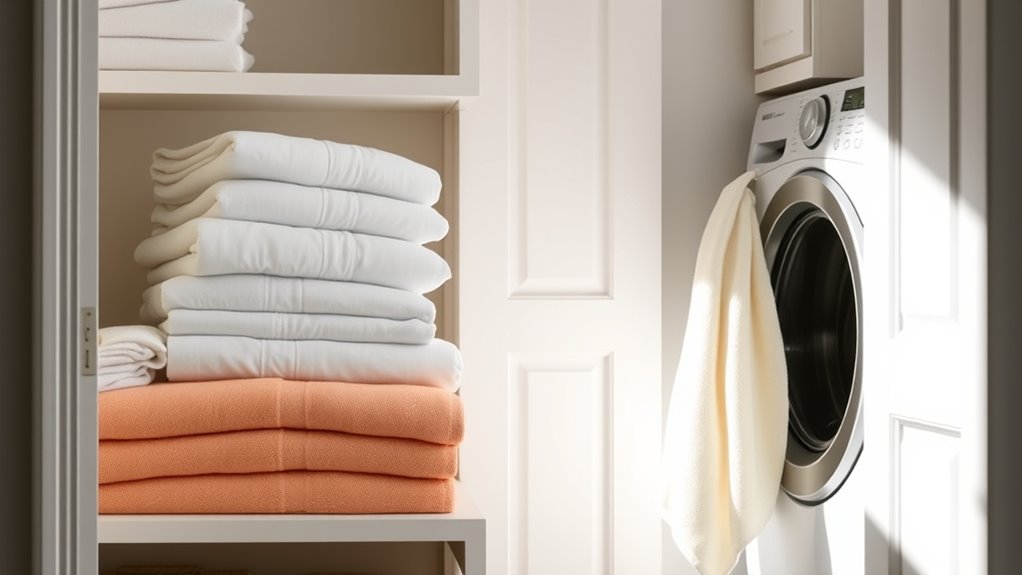
Knowing how often to wash your sheets and towels is essential for maintaining good hygiene and a fresh home. Regular washing helps eliminate dirt, sweat, and bacteria that accumulate over time, but it also plays a critical role in bed bug prevention. Bed bugs thrive in clutter and on fabrics that aren’t cleaned frequently, so sticking to a consistent wash schedule can considerably reduce their chances of infesting your bedding and towels. Washing sheets weekly is generally recommended, especially if you sweat a lot at night or suffer from allergies. Towels should be washed at least every three days, as they tend to harbor more moisture and bacteria, making them ideal breeding grounds for germs and mold.
Washing sheets weekly and towels every three days prevents bacteria buildup and bed bug infestations.
When it comes to laundry, using the right techniques can make a big difference. For example, hot water kills most germs, bacteria, and bed bugs, so opt for the highest safe temperature setting for your sheets and towels. If you want to reinforce bed bug prevention, consider washing bedding in hot water regularly or using specialized mattress covers. It’s also wise to wash pillows, pillowcases, and mattress protectors periodically, as these are often overlooked but can harbor pests and allergens. Additionally, understanding the importance of fabric choice can help you select linens that are easier to keep clean and hygienic.
Many people wonder about fabric softener effects on linens. While fabric softeners make clothes feel softer and smell fresh, they can create a residue that builds up over time, potentially reducing the fabric’s breathability and absorbency. This residue can also trap dirt and bacteria, making it slightly harder to keep your bedding and towels truly clean. If you’re concerned about maintaining maximum hygiene, it’s best to use fabric softener sparingly or opt for natural alternatives like vinegar. This not only reduces buildup but also preserves the fabric’s natural properties, ensuring your linens stay fresh longer.
In addition to washing frequency and choosing the right products, drying methods matter. Drying your sheets and towels thoroughly on high heat can help eliminate any remaining bacteria and pests. Be sure to dry sheets completely before remaking your bed, as dampness encourages mold and dust mites. Towels should be fully dried and ideally aired out outside when possible, to prevent mildew and keep them smelling fresh.
Frequently Asked Questions
Can I Wash Sheets and Towels Together?
Yes, you can wash sheets and towels together, but consider their fabric types and color. Use fabric softeners sparingly, as they can diminish absorbency in towels. To guarantee they dry properly, follow recommended drying techniques—high heat for towels and lower heat for sheets if needed. Mixing them saves time, but always sort by color and fabric to keep everything fresh and in good condition.
What’s the Best Water Temperature for Cleaning Sheets?
You should wash sheets at the hottest water temperature safe for your fabric to effectively remove dirt, bacteria, and allergens. Use hot water for whites and heavily soiled sheets, and warm or cold for delicate fabrics. Avoid fabric softeners during washing, as they can reduce absorbency. For drying, opt for tumble drying on high heat if the fabric allows, or line dry to preserve quality. Proper temperature and drying methods keep your sheets fresh and clean.
How Do I Prevent Towels From Developing Odors?
To keep your towels fresh and odor-free, think of them as your skin’s best friends—deserving of extra care. Regularly wash with hot water, and avoid overusing fabric softeners, which can coat fibers and trap odors. Use proper drying techniques—air-dry or tumble dry thoroughly—to prevent dampness. This routine guarantees your towels stay soft, fragrant, and inviting, turning every towel into a cozy, fresh-smelling embrace after each use.
Are There Special Detergents for Sensitive Skin?
Yes, there are special detergents for sensitive skin. You should look for hypoallergenic detergents and fragrance-free cleansers, which are gentle and avoid irritating your skin. These products are formulated without harsh chemicals, making them ideal for washing sheets and towels that contact your skin daily. Using them helps reduce allergic reactions and skin irritation, ensuring a comfortable and safe laundry routine for sensitive skin.
Should I Wash Pillowcases More Often Than Sheets?
A stitch in time saves nine, so wash your pillowcases more often than sheets to keep bedding hygiene essential. Pillowcase maintenance is vital because they contact your face and hair daily, trapping oils and bacteria. Washing them weekly or even more frequently prevents breakouts and allergies. This simple habit ensures your sleeping environment stays fresh and clean, supporting your skin health and comfort.
Conclusion
Just like a garden needs regular tending, your sheets and towels need consistent washing to stay fresh. Think of them as your personal oasis, where cleanliness is the secret to comfort and health. By washing sheets weekly and towels every three to four uses, you keep bacteria at bay and maintain a cozy sanctuary. Keep this routine in mind, and your home will always feel like a peaceful retreat—clean, inviting, and beautifully maintained.