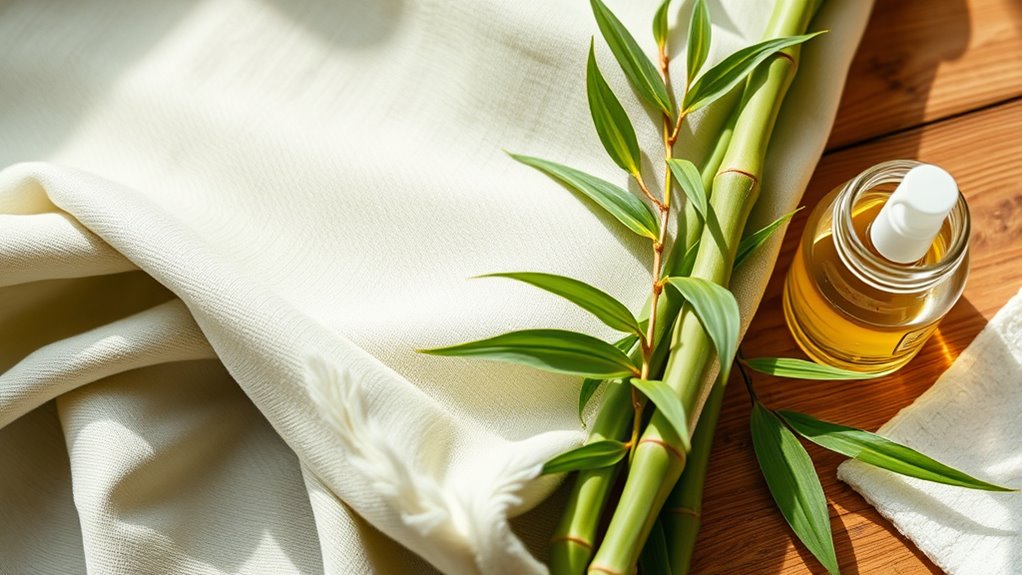

Bamboo fabrics are a sustainable choice because they grow quickly, need minimal water, and avoid pesticides. They’re durable, resist pilling, and stay soft wash after wash, making them great for everyday use. However, some bamboo textiles involve chemical-heavy production, so choosing eco-friendly methods is key. To keep your bamboo fabrics lasting longer, wash in cold water and avoid harsh detergents. If you want to discover more about caring for and selecting the best bamboo fabrics, keep exploring.
Key Takeaways
- Bamboo fabrics are eco-friendly, sustainable, and naturally resistant to pests, making them a responsible choice for environmentally conscious consumers.
- They are durable, soft, and resistant to pilling, ensuring long-lasting comfort with proper care.
- Production methods vary; eco-friendly processes are preferred to maintain sustainability and fabric quality.
- To care for bamboo fabrics, wash in cold water, avoid harsh detergents, and air dry or tumble dry on low heat.
- Not all bamboo fabrics are chemical-free; check sourcing and manufacturing details for true eco-friendly options.
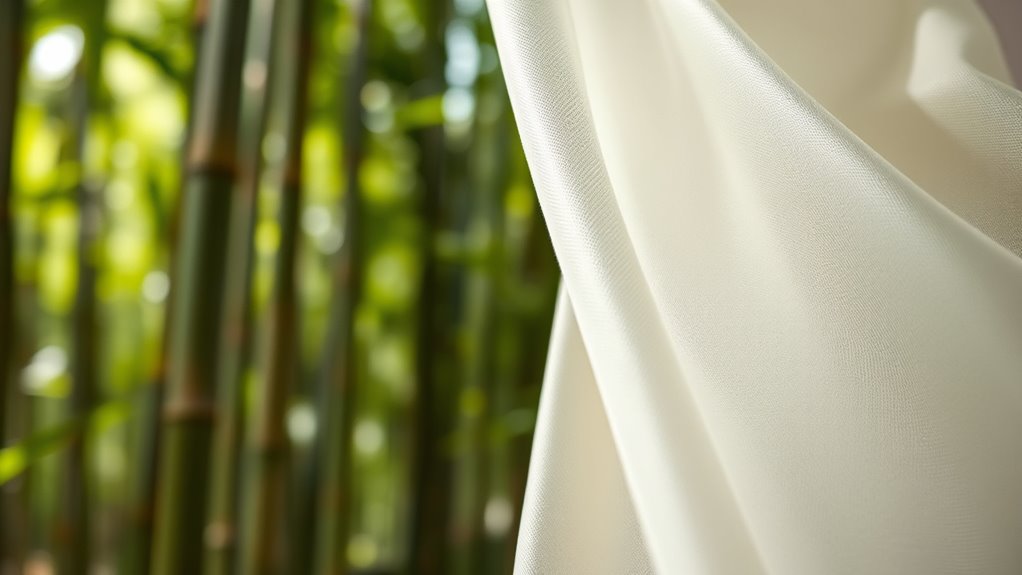
Have you ever wondered why bamboo fabrics are gaining popularity? It’s not just because they feel soft and luxurious, but also because of their eco-friendly appeal. Bamboo is considered a highly sustainable sourcing option because it grows quickly, requires minimal water, and doesn’t need pesticides or fertilizers. This rapid growth means that harvesting bamboo doesn’t deplete resources or harm the environment, making it a responsible choice for conscious consumers. When you choose bamboo fabrics, you’re supporting a material that’s renewable and less damaging to ecosystems.
Bamboo fabrics are eco-friendly, sustainable, and gentle on the environment.
In addition to its sustainability, fabric durability is another key factor that attracts people to bamboo textiles. Unlike some natural fibers that wear out quickly, bamboo fabrics tend to hold up well over time, especially when properly cared for. They resist pilling, maintain their shape, and stay soft wash after wash. This durability means your investment in bamboo clothing or linens will last longer, reducing the need for frequent replacements and minimizing waste. Such resilience makes bamboo a practical choice for everyday wear, active lifestyles, or home textiles that need to stand the test of time.
However, it’s important to note that not all bamboo fabrics are created equally. The process used to transform bamboo into fabric can influence its sustainability and durability. Some methods involve chemical-intensive processes, which might diminish the eco-friendly credentials of the fabric. When shopping, look for brands that use eco-friendly manufacturing techniques, ensuring that the sustainable sourcing isn’t compromised during production. This way, you can enjoy the durability and softness of bamboo while staying true to environmental principles.
Proper care can also help maintain the personality of bamboo fabrics, ensuring they stay soft and durable over time. Caring for bamboo fabrics properly can help maximize their lifespan. Typically, washing in cold water and avoiding harsh detergents will keep the fabric looking its best. While they’re generally resistant to wrinkles and shrinking, following the manufacturer’s care instructions can prevent unnecessary wear. Air drying is often recommended to maintain fabric integrity, though some bamboo textiles can be tumble-dried on low heat. Proper maintenance not only preserves the fabric’s durability but also ensures that its eco-friendly benefits are long-lasting.
Frequently Asked Questions
How Sustainable Is Bamboo Farming Compared to Other Textiles?
You’ll find that bamboo farming sustainability is generally better than synthetic textiles because bamboo grows quickly without needing pesticides or fertilizers, reducing environmental impact. Compared to other natural fibers, it requires less water and land. In a comparison with synthetic textiles, bamboo is eco-friendlier since it’s biodegradable and renewable. Overall, bamboo farming offers a more sustainable option, helping you reduce your carbon footprint and support eco-conscious choices.
Are Bamboo Fabrics Suitable for Sensitive Skin?
If you have sensitive skin, bamboo fabrics are a great choice because they’re hypoallergenic and gentle. Imagine slipping into soft, breathable material that reduces irritation and itching. Their natural properties help minimize skin sensitivity reactions, making them comfortable for everyday wear. You’ll appreciate how bamboo fabric feels against your skin—smooth, cool, and soothing—helping you stay comfortable and confident all day long.
What Are the Environmental Impacts of Bamboo Fabric Production?
You should know that bamboo fabric production has both positive and negative environmental impacts. Bamboo cultivation is eco-friendly because it grows quickly and requires minimal pesticides. However, the process often involves chemical treatments that can pollute water sources. Plus, it typically consumes a lot of water during manufacturing. While bamboo is renewable, you should consider these factors when evaluating its overall environmental footprint.
How Does Bamboo Fabric Compare in Durability to Cotton?
Ever wonder if bamboo fabric can stand up to cotton? In regards to fabric tensile strength and wear resistance, bamboo is quite comparable, but generally, cotton tends to be more durable over time. While bamboo offers a soft feel and eco-friendly appeal, it may not be as resilient for heavy-duty use. So, if durability is your priority, cotton might be the better choice for long-lasting wear.
Can Bamboo Fabrics Be Recycled or Composted After Use?
You might wonder if bamboo fabrics can be recycled or composted. While bamboo is biodegradable, concerns about biodegradability and recycling challenges exist because many bamboo textiles are blended with synthetic fibers or treated with chemicals. These factors complicate composting and recycling efforts. To minimize environmental impact, choose bamboo fabrics that are pure and unprocessed, but be aware that recycling options may still be limited due to current processing methods.
Conclusion
Bamboo fabrics offer comfort, eco-friendliness, and durability, making them a smart choice for your wardrobe. They feel soft against your skin, help protect the environment, and stand the test of time. By choosing bamboo, you’re embracing sustainability, enjoying softness, and prioritizing longevity. So, whether you’re dressing up or relaxing, bamboo fabrics bring balance to your style, conscience, and comfort. Embrace bamboo—feel good, look good, do good.