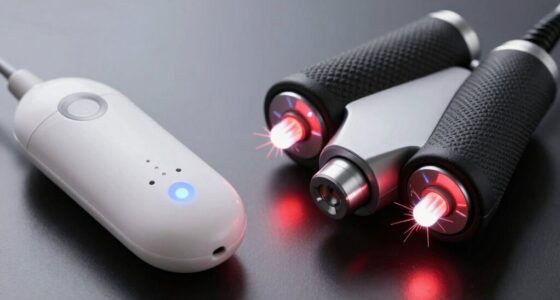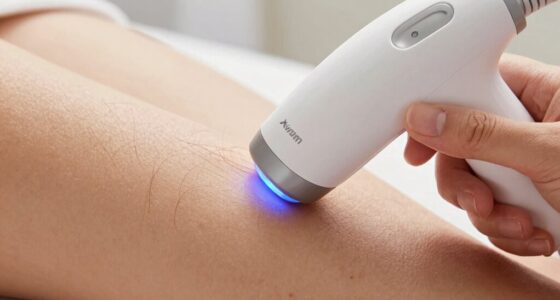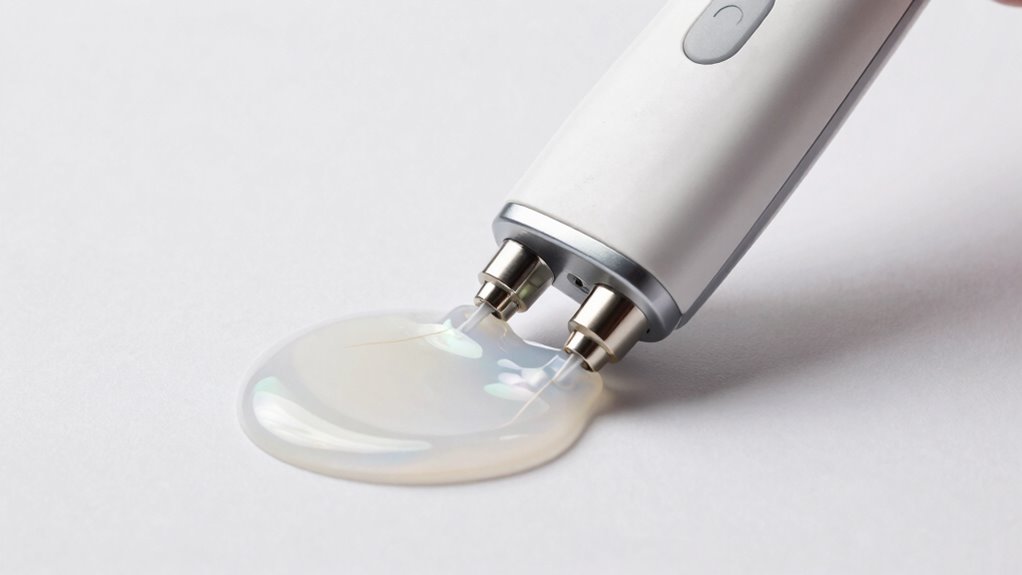

You need to use conductive gel with your microcurrent device because it acts as a crucial bridge, ensuring electrical currents penetrate your skin effectively. Without it, the treatment won’t work well, and your skin can become dry or uncomfortable. The right amount of gel improves conductivity, enhances skin hydration, and helps your device operate smoothly. If you want to get the best results and avoid common mistakes, keep going to discover more essential tips.

Get your next haul delivered free with Prime
- Fast, free delivery on millions of items
- Prime Video, Amazon Music and more included
- Member-only deals all year
Key Takeaways
- Conductive gel facilitates efficient electrical current transfer from the device to the skin, essential for effective treatment.
- Proper gel application maintains skin hydration, improving skin tone, firmness, and elasticity during microcurrent sessions.
- Using high-quality, compatible gel ensures maximum conductivity and prevents impedance that can hinder device performance.
- Without conductive gel, electrical energy may not reach target tissues, reducing treatment efficacy.
- Regular device cleaning and proper gel use prevent damage and ensure consistent, reliable results.

When using microcurrent devices, conductive gel isn’t just an optional accessory—it’s an essential component for effective treatment. This gel acts as a bridge, guaranteeing the electrical currents penetrate your skin efficiently. Without it, the device’s energy can’t travel smoothly through your skin, reducing the effectiveness of your treatment. Proper application of conductive gel also helps maintain skin hydration, which is indispensable for best results. Hydrated skin allows the microcurrent to move more freely, enhancing overall skin tone, firmness, and elasticity. If your skin is dry or flaky, the currents may not distribute evenly, leading to inconsistent outcomes. Consequently, keeping your skin well-hydrated before and after treatments is necessary. Using the right amount of conductive gel is equally important. Too little, and you risk poor conductivity, which diminishes the device’s effectiveness. Too much, and it can create a mess or cause slipping during treatment. Applying a generous but controlled layer ensures consistent contact between the device and your skin. It also prevents unnecessary friction or discomfort, making the experience more pleasant. Remember, the quality of the gel matters too. Opt for a high-quality, compatible conductive gel designed for microcurrent devices to maximize skin hydration benefits and device performance. Additionally, understanding the importance of conductive gel can help optimize your treatment results. Using the correct application technique ensures the gel is evenly distributed and enhances overall efficacy. Proper device maintenance goes hand in hand with proper gel use. Regular cleaning of your device is essential for maintaining optimal conductivity, as residual gel and debris can impair its performance. Ensuring the device is stored correctly in a cool and dry environment also helps maintain its long-term functionality. After each session, you should thoroughly clean your device to remove residual gel, which can clog the delicate components and impact future performance. Use a gentle, non-abrasive cleaner recommended by the manufacturer to preserve the device’s integrity. Regular cleaning not only prolongs the lifespan of your device but also maintains best conductivity when you use it again. Inspect the device for any damage or wear, and store it in a cool, dry place to prevent deterioration. Proper maintenance ensures your device functions effectively over the long term and continues to deliver consistent results.
microcurrent device conductive gel
As an affiliate, we earn on qualifying purchases.
As an affiliate, we earn on qualifying purchases.
Frequently Asked Questions
Can I Use Any Gel With Microcurrent Devices?
You can’t use just any gel with microcurrent devices because of compatibility concerns. Regular gels or gel substitutes often lack the conductivity needed for effective results and may cause skin irritation. Always opt for the manufacturer-recommended conductive gel to guarantee safety and peak performance. Using incompatible gels can reduce effectiveness and even damage your device, so it’s best to stick with the proper, compatible conductive gel provided or suggested by the device maker.
How Often Should I Replace Conductive Gel?
Your conductive gel, like a loyal sidekick, needs regular replacement—usually every 3 to 6 months, depending on usage. To maximize gel longevity, store it in a cool, dry place away from sunlight and extreme temperatures. If the gel becomes dry, clumpy, or develops an off smell, it’s time to replace it. Proper storage and attentive maintenance guarantee peak conductivity and safe, effective microcurrent treatments.
Are There Skin Types That Shouldn’T Use Conductive Gel?
If you have sensitive skin or skin conditions like eczema or psoriasis, you should avoid traditional conductive gels, as they might cause irritation. Instead, consider gentle gel alternatives like aloe vera gel or hyaluronic acid. Always perform a patch test before using any new product. If you experience redness or discomfort, stop use and consult a dermatologist to find the best option for your skin type.
What Ingredients Should I Look for in Conductive Gels?
Think of conductive gel as the bridge connecting your skin to the device. Look for ingredients like aloe vera, glycerin, or hyaluronic acid for natural gel options, and avoid harsh chemicals. These ingredients guarantee smooth alternative application methods while maintaining skin hydration. A good gel should be lightweight, non-irritating, and free from alcohol or synthetic fragrances, making your microcurrent session both effective and comfortable.
Can Conductive Gel Cause Skin Irritation or Allergies?
Yes, conductive gel can cause skin irritation or allergic reactions, especially if you have sensitive skin or allergies. Always check the ingredient list for potential allergens like fragrances or preservatives. Conductive gels with natural, hypoallergenic ingredients decrease the risk of skin sensitivity issues. Before use, do a patch test on a small skin area to ensure you won’t experience adverse reactions during your microcurrent treatment.
best conductive gel for microcurrent therapy
As an affiliate, we earn on qualifying purchases.
As an affiliate, we earn on qualifying purchases.
Conclusion
Now that you know the vital role conductive gel plays, will you be tempted to skip it? Think again. Without it, your microcurrent device might not work as effectively—or at all. The gel isn’t just a luxury; it’s the secret to revealing the full potential of your treatment. Are you ready to experience the real benefits? Don’t leave it to chance—your skin deserves the best. The choice is yours, but the results depend on what you decide next.
microcurrent facial device accessories
As an affiliate, we earn on qualifying purchases.
As an affiliate, we earn on qualifying purchases.
As an affiliate, we earn on qualifying purchases.
Halloween Picks
halloween
As an affiliate, we earn on qualifying purchases.