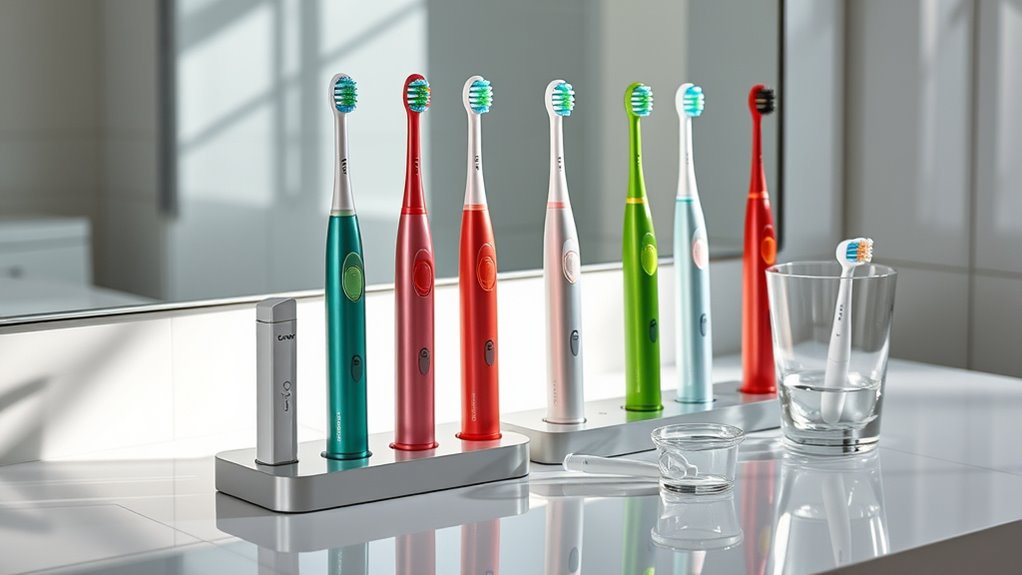

Sonic toothbrushes are proven to remove plaque more effectively than manual brushes, thanks to high-frequency vibrations that reach hard-to-clean areas. To keep yours working well, rinse the brush head after each use, replace it every three to four months, and store it properly. Use timers and proper techniques for peak results. Staying on top of maintenance and device features can greatly improve your oral health—continue exploring to get the full scoop on care and benefits.
Key Takeaways
- Scientific studies support sonic toothbrushes’ effectiveness in reducing plaque and improving gum health compared to manual brushes.
- Proper brushing technique, including gentle pressure and circular motions, enhances sonic toothbrush performance.
- Regular maintenance, such as replacing brush heads every 3-4 months and rinsing after use, extends device lifespan.
- Using built-in timers and following recommended routines ensures optimal cleaning and oral health benefits.
- Consistent use and care of sonic toothbrushes help prevent cavities, gum disease, and promote overall oral hygiene.
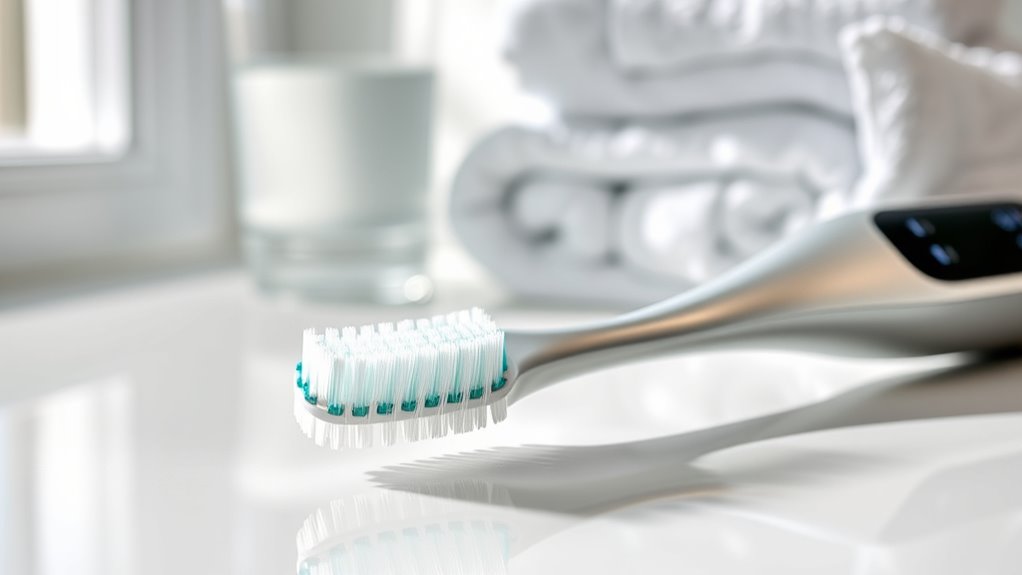
Sonic toothbrushes have revolutionized oral hygiene by delivering rapid, high-frequency brush movements that clean more effectively than traditional manual brushes. Their powerful vibrations generate a dynamic cleaning action that reaches beyond the surface, disrupting plaque and bacteria even in hard-to-reach areas. To maximize these benefits, you need to pay close attention to your brushing techniques and toothbrush maintenance. Proper brushing techniques involve gentle, circular motions rather than aggressive scrubbing, which can damage your gums and enamel. With a sonic toothbrush, you don’t need to press hard; let the device’s vibrations do the work. Holding the brush at a 45-degree angle toward your gum line allows the bristles to effectively clean along the gum tissue and between teeth. It’s best to divide your mouth into quadrants and spend about 30 seconds on each, ensuring a thorough clean. Don’t forget to brush your tongue and the roof of your mouth to remove bacteria and freshen your breath. Additionally, choosing a high-performance model can enhance your overall oral care routine by providing more consistent and effective cleaning.
Maintaining your sonic toothbrush is just as important as using it correctly. Regular toothbrush maintenance involves rinsing the brush head thoroughly after each use to remove toothpaste, debris, and bacteria. Most sonic brushes have replaceable heads—changing them every three to four months keeps your brush performing at its best and prevents bacteria buildup. If you notice the bristles fraying or splaying, it’s time for a new head. Additionally, keep the brush handle dry and store it upright in an open area to prevent mold and bacterial growth. Avoid sharing your toothbrush with others, as this can transfer germs and compromise oral health. Periodically, check the device’s charging port and battery life to ensure consistent performance. If your sonic toothbrush has a timer feature, use it to keep track of your brushing time and ensure you’re brushing long enough to achieve maximum cleanliness.
Incorporating proper brushing techniques and diligent toothbrush maintenance will help you get the most out of your sonic toothbrush. These devices are designed to make brushing more effective and less time-consuming, but their effectiveness depends on how you use and care for them. Remember, a well-maintained sonic toothbrush not only improves your oral health but also extends the lifespan of the device itself. By staying consistent with your routine—brushing twice a day, replacing heads regularly, and handling your toothbrush properly—you’ll enjoy a healthier, cleaner smile and reduce the risk of cavities and gum disease. Sonic toothbrushes are an investment in your oral health, and with proper technique and maintenance, they can deliver professional-level cleaning every day.
Frequently Asked Questions
Are Sonic Toothbrushes Suitable for Children Under Age 6?
Sonic toothbrushes aren’t recommended for children under age 6 because of child safety concerns and developmental readiness. Young kids may struggle to handle the brush properly, risking injury or ineffective cleaning. For children this age, it’s better to use a soft-bristled, age-appropriate manual toothbrush and supervise their brushing to guarantee safety. As they grow, they can gradually learn to use sonic toothbrushes safely when they’re developmentally ready.
How Often Should I Replace the Brush Head on a Sonic Toothbrush?
You might wonder when your sonic toothbrush’s brush head needs replacing, and the answer is essential for your dental health. Typically, the brush head lifespan is about three months, but if the bristles fray or wear unevenly, it’s time for a replacement. Ignoring this can compromise cleaning effectiveness. To keep your smile shining, follow the recommended replacement frequency and swap out the brush head regularly—your teeth will thank you.
Can Sonic Toothbrushes Help With Sensitive Teeth?
Yes, sonic toothbrushes can help with sensitive teeth by promoting sensitivity reduction and improving gum health. Their gentle yet effective brushing action reduces plaque buildup without causing irritation, making them suitable for sensitive areas. Regular use helps strengthen gums and minimizes discomfort. Remember to use a soft brush head and avoid applying too much pressure, ensuring your oral care routine supports comfort and overall gum health.
Do Sonic Toothbrushes Require Special Toothpaste?
Imagine gentle waves caressing your teeth—sonic toothbrushes don’t need special toothpaste, but you should consider toothpaste compatibility. You can use fluoride or non-fluoride formulas, depending on your dental needs. Just verify the toothpaste is mild and doesn’t contain abrasive ingredients that could harm sensitive areas. Using the right toothpaste helps protect your enamel while maximizing the sonic vibrations’ cleaning power, leaving your smile fresh and healthy.
Are Sonic Toothbrushes Safe for Dental Implants and Braces?
Yes, sonic toothbrushes are safe for dental implants and braces. They offer excellent braces cleaning effectiveness by reaching around brackets and wires effectively. Plus, their gentle yet thorough cleaning helps maintain dental implant compatibility, reducing plaque buildup and preventing complications. Just guarantee you use the appropriate brushing mode and avoid applying excessive pressure. Regular use keeps your dental work clean and healthy, making sonic toothbrushes a smart choice for your oral health.
Conclusion
Now that you know the facts, it’s clear sonic toothbrushes can boost your dental care routine. They’re effective, gentle, and easy to use—almost like having your own personal dentist in your bathroom. Just remember, even the most advanced tech can’t replace good habits. So, keep brushing, flossing, and visiting your dentist regularly. And who knows? Maybe someday, your sonic toothbrush will be as essential as a trusty ol’ knight’s sword—ready to keep your smile shining bright through any age.