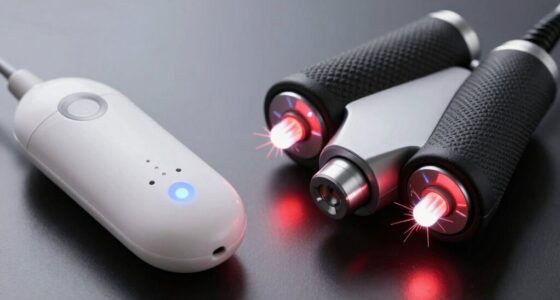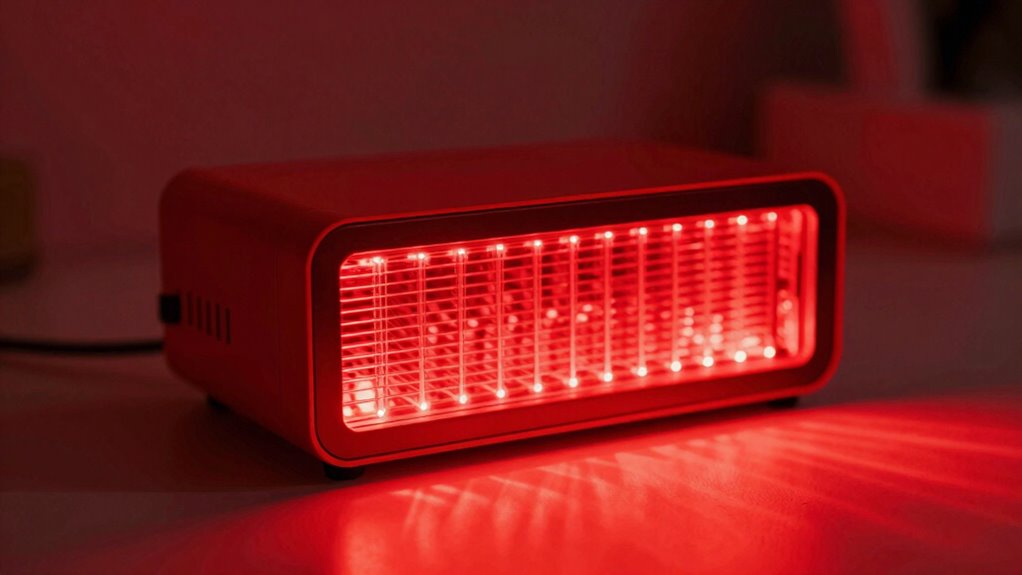

For effective red light therapy, position your device about 6 to 12 inches from your skin, depending on your device’s instructions, and maintain this distance throughout each session. Aim for sessions lasting 10 to 20 minutes, ensuring the light covers the target area evenly. Always follow your device’s recommended guidelines to avoid overexposure or underdosing. If you stick with proper distance and timing, you’ll optimize results safely—more tips await if you continue exploring this guide.
Key Takeaways
- Maintain the recommended distance of 6-12 inches from the device for optimal light intensity.
- Typical treatment duration ranges from 10 to 20 minutes per session, depending on device and target area.
- Use manufacturer guidelines to determine specific session times and distances based on device power and application.
- Adjust distance and duration based on skin response and comfort, avoiding overheating or overstimulation.
- Consistently follow prescribed protocols to ensure effective, safe dosing without guesswork.

Determining the right dose of red light therapy is essential to maximizing its benefits and minimizing any risks. One of the most important factors you need to consider is the optimal wavelength of the light. Different wavelengths penetrate the skin to varying depths and target different tissues. For most skin rejuvenation, pain relief, and healing purposes, wavelengths between 620-750 nanometers are effective. If you’re aiming for deeper tissue therapy, wavelengths around 800-880 nanometers are more suitable. Selecting the correct wavelength ensures you’re delivering the most effective light energy to your target area, which enhances results and reduces the chance of adverse effects. Additionally, understanding light penetration depth can help you choose the appropriate wavelength for your specific condition. In addition to choosing the optimal wavelength, paying attention to session frequency is key. Too few sessions may yield minimal benefits, while too many could cause overstimulation or unnecessary exposure. Usually, a typical protocol involves 3 to 5 sessions per week for the first few weeks, then tapering to 2 to 3 sessions weekly as you notice improvements. Consistency is vital, so sticking to a regular schedule helps your body adapt and respond effectively. It’s also important to give your skin adequate recovery time between sessions, especially when treating sensitive areas.
The optimal wavelength and session frequency are interconnected. For instance, if you’re using a device with an optimal wavelength for your specific condition, you might find that fewer sessions are needed to achieve results. Conversely, if you’re targeting superficial skin issues, a shorter wavelength might require more frequent sessions to build up the desired effect. Adjusting the session frequency based on your response and the device’s specifications is crucial. Manufacturers often provide guidelines, but listening to your body and monitoring your progress will help you fine-tune your schedule.
Frequently Asked Questions
Can I Use Red Light Therapy While Wearing Makeup?
Yes, you can use red light therapy while wearing makeup, but makeup interference might reduce its effectiveness. Makeup can block the light from reaching your skin properly, so it’s best to remove it beforehand for ideal results. Incorporate red light therapy into your skincare routines by cleansing thoroughly, ensuring your skin is clean and makeup-free. This way, you maximize benefits and avoid any interference that makeup might cause.
How Does Skin Tone Affect Red Light Therapy Effectiveness?
Your skin tone can influence red light therapy effectiveness because pigmentation varies with skin color, affecting light absorption. Those with darker skin may absorb more light due to increased melanin, potentially requiring adjustments in treatment duration or intensity. Additionally, if you have heightened UV sensitivity, you should be cautious, as red light therapy can sometimes cause skin reactions. Always follow recommended guidelines and consult a professional for personalized advice.
Is Red Light Therapy Safe for Children or Pregnant Women?
Think of red light therapy as a gentle river—calm and safe when you follow the right path. For children and pregnant women, it’s vital to prioritize safety precautions. Always consult a healthcare professional before starting, as medical advice guarantees safety. While red light therapy is generally safe, avoiding unverified treatments protects both mother and child from potential risks. Your best move: seek medical consultation for personalized guidance.
How Often Should I Replace My Red Light Device?
You should substitute your red light device based on its lifespan and replacement frequency recommendations. Typically, LED bulbs last around 20,000 to 50,000 hours of use, but it’s best to follow the manufacturer’s guidance. Check for signs like dimming, reduced effectiveness, or visible damage, and replace the device promptly to ensure safe and effective therapy. Regular maintenance and monitoring help maximize your device’s lifespan and benefits.
Can Red Light Therapy Help With Deep Tissue Injuries?
Yes, red light therapy can aid in deep tissue recovery and injury healing. It stimulates cellular activity, promotes blood flow, and reduces inflammation, which accelerates the healing process. You should use it consistently, targeting the affected area with appropriate distance and duration. While it’s not a substitute for medical treatment, many find it helpful in speeding up recovery from deep tissue injuries, supporting overall healing efforts.
Conclusion
Now that you know the right distance and duration for red light therapy, you’re almost ready to access its full potential. But here’s the catch—your unique skin and goals might need some tweaks. Will you find the perfect balance that transforms your skincare routine? Keep experimenting, stay observant, and don’t rush the process. The key to truly harnessing red light therapy’s power is just a few mindful adjustments away. Are you ready to discover what works best for you?