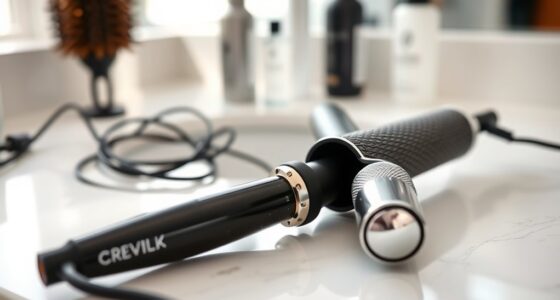

To stay within the safe temperature line for at-home RF skin tightening, aim for 39–42°C (102–108°F). Temperatures above this can cause burns, redness, or blisters, so it’s important to use devices with proper controls and monitor your skin’s response. Start at the lowest setting and gradually increase, stopping treatment if you notice discomfort. For precise tips on maintaining safety during your treatments, keep exploring for more helpful guidance.
Key Takeaways
- Maintain device temperature between 39–42°C (102–107.6°F) to ensure safety during RF treatments.
- Exceeding this temperature range increases the risk of burns, redness, and skin damage.
- Use built-in sensors or temperature controls to monitor and prevent overheating.
- Follow manufacturer instructions carefully, starting at low settings and gradually increasing.
- Stop treatment if skin becomes excessively red, irritated, or uncomfortable.

Are you curious about how to tighten your skin at home without invasive procedures? If so, at-home RF (radiofrequency) devices might seem like an appealing option. They promise to stimulate collagen production and improve skin firmness from the comfort of your own space. But before you dive in, understanding the importance of device safety and the potential skin reactions is crucial. These devices work by delivering controlled heat to the skin, encouraging collagen remodeling. However, if you don’t use them properly, you risk damaging your skin or causing unwanted reactions. That’s why knowing the safe temperature range is vital.
When using an at-home RF device, the key is to keep the temperature within a safe limit—generally around 39 to 42 degrees Celsius (102 to 107.6 degrees Fahrenheit). Going beyond this range can lead to burns, redness, or even blistering. Many devices come with built-in sensors or temperature controls that help prevent overheating, but it’s still up to you to pay close attention. Always start with the lowest setting, and gradually increase if tolerated, rather than jumping straight to high power. Monitoring your skin’s response is crucial. If you notice excessive redness, persistent swelling, or discomfort, it’s a sign to stop immediately. Ignoring these skin reactions can escalate into more serious issues, so it’s better to err on the side of caution.
Device safety doesn’t just mean avoiding burns; it also involves following the manufacturer’s instructions carefully. Read the user manual thoroughly before beginning treatment, and adhere to recommended treatment times and frequencies. Overuse can overstimulate your skin, causing irritation or even long-term damage. Keeping your skin clean before each session reduces the risk of infection or adverse reactions. Also, avoid using the device on broken or irritated skin, as this can exacerbate reactions and delay healing. Proper use of temperature control features can significantly reduce the risk of overheating and skin injury.
Another aspect to consider is the environment in which you operate the device. Make sure your skin is dry and free from lotions or oils that might interfere with heat absorption or cause uneven heating. If you notice any unusual skin reaction, such as persistent redness or pain, it’s best to consult a dermatologist. They can help determine whether your skin is responding safely or if adjustments are needed. Remember, at-home RF treatments require patience and caution. Proper device safety and attentiveness to skin reactions are your best tools for achieving effective, safe results without risking unnecessary harm.
Frequently Asked Questions
Can I Use RF Devices on All Skin Types Safely?
You can safely use RF devices on most skin types, but you should consider your skin sensitivity and device compatibility first. Always start with a patch test to see how your skin reacts, especially if you have sensitive skin. Make sure the device is suitable for your skin type, and follow the manufacturer’s instructions carefully. If you notice any discomfort or adverse reactions, stop using it and consult a skincare professional.
How Often Should I Perform RF Treatments at Home?
You should perform RF treatments at home about once a week to maintain treatment consistency. Be sure to regularly clean and maintain your device to guarantee safe, effective results. Avoid overusing the device, as excessive treatments can lead to skin irritation or safety risks. Stick to the recommended schedule, monitor your skin’s response, and always follow the manufacturer’s guidelines to achieve ideal skin tightening benefits safely.
What Are the Signs of Overexposure to RF Heat?
You’ll notice signs of overexposure to RF heat like intense skin irritation or a thermal burn that feels fiery and alarming. If your skin becomes painfully red, swollen, or blistered, it’s a clear warning you’ve gone too far. These symptoms are your body’s way of signaling danger. Always stop treatment immediately, as overexposure can cause lasting damage. Listen to your skin, and never push beyond comfort.
Are There Any Medical Conditions That Prevent RF Use?
Certain medical restrictions can prevent you from using RF treatments, especially if you have skin sensitivities or autoimmune conditions. If you’re pregnant, have pacemakers, or suffer from skin infections or open wounds, it’s best to avoid RF devices. Always consult your healthcare provider before starting RF treatments, as they can assess your medical history and determine if your skin sensitivities or underlying conditions make RF unsafe for you.
How Long Does It Take to See Noticeable Results?
Think of your skin like a garden—results bloom over time. You’ll usually notice subtle improvements within 4 to 6 weeks, with more visible changes around 8 to 12 weeks. Keep in mind, skin sensitivity varies, so always monitor how your skin reacts. To get the best results, make certain your device is compatible with your skin type and follow safety guidelines closely. Patience and consistency are your best tools.
Conclusion
Think of the safe temperature as a gentle lighthouse guiding your skin’s journey. When you stay within that glow, you’re nurturing your natural beauty without risking fire or frost. By respecting the line, you’re tending a delicate garden—carefully pruning and nurturing, allowing your confidence to blossom. Remember, your skin’s safety is the beacon that keeps your glow alive—balanced, radiant, and protected on your at-home skincare voyage.