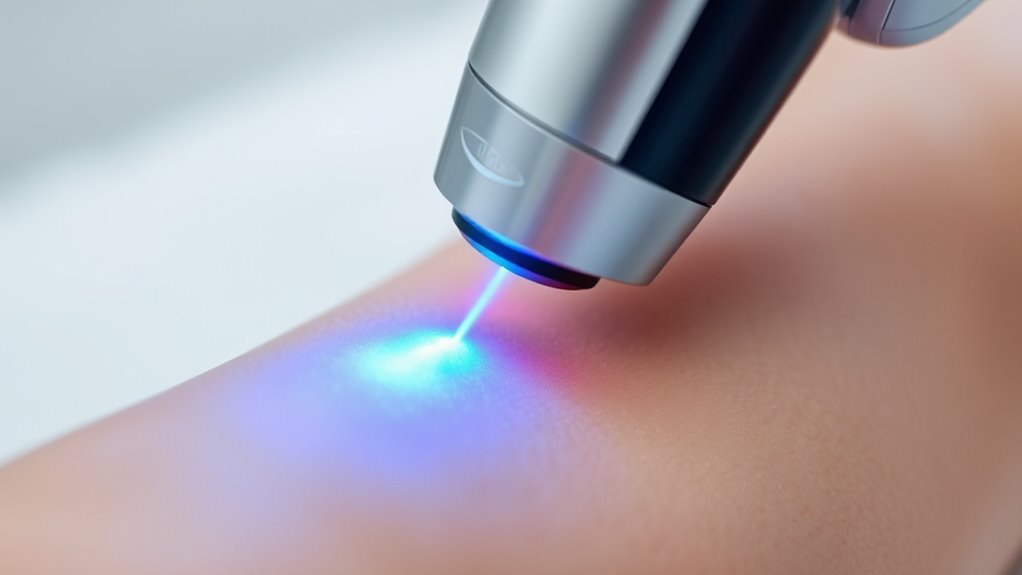

Laser hair removal works by using focused light energy that targets hair follicles beneath your skin. The laser absorbs the pigment in your hair, damaging the follicle to prevent future growth. Since hair grows in cycles, multiple sessions are needed for ideal results. Skin sensitivity, hair color, and follicle maturity all influence how well it works. To learn more about customizing your treatment and achieving the best results, keep exploring how this technology can benefit you.
Key Takeaways
- Laser hair removal targets hair follicles beneath the skin using concentrated light absorbed by melanin.
- The process damages the follicle, inhibiting future hair growth over multiple sessions.
- Different wavelengths are used based on skin tone and hair color for optimal safety and effectiveness.
- Multiple treatments are necessary to target hair in active growth phases for permanent reduction.
- Skin sensitivity varies, so personalized settings and pre-treatment care improve comfort and results.
Are you tired of constantly shaving, waxing, or plucking unwanted hair? If so, laser hair removal might be the solution you’re looking for. This advanced technique targets hair at the root, offering a more permanent reduction compared to traditional methods. But understanding how it works can help you decide if it’s right for you.
One essential factor to consider is your skin sensitivity. Everyone’s skin reacts differently to laser treatments, and sensitive skin can sometimes experience redness, irritation, or swelling after sessions. That’s why it’s important to consult with a professional who can tailor the procedure to your skin type. They might recommend specific laser settings or pre-treatment skincare routines to minimize discomfort and adverse reactions. Knowing your skin’s sensitivity helps guarantee a safer, more comfortable experience and better results.
Another key element is the hair follicle anatomy. Hair grows from follicles, which are tiny sacs located beneath your skin’s surface. These follicles contain the hair root and are responsible for hair growth. Laser hair removal works by emitting concentrated light energy that’s absorbed by the pigment in the hair, called melanin. When the laser targets this pigment, it heats up the follicle, damaging it and disrupting its ability to produce new hair. The effectiveness of the treatment depends heavily on the follicle’s maturity and the hair’s color. Dark, coarse hair with a well-developed follicle absorbs the laser energy more effectively, making the process quicker and more efficient.
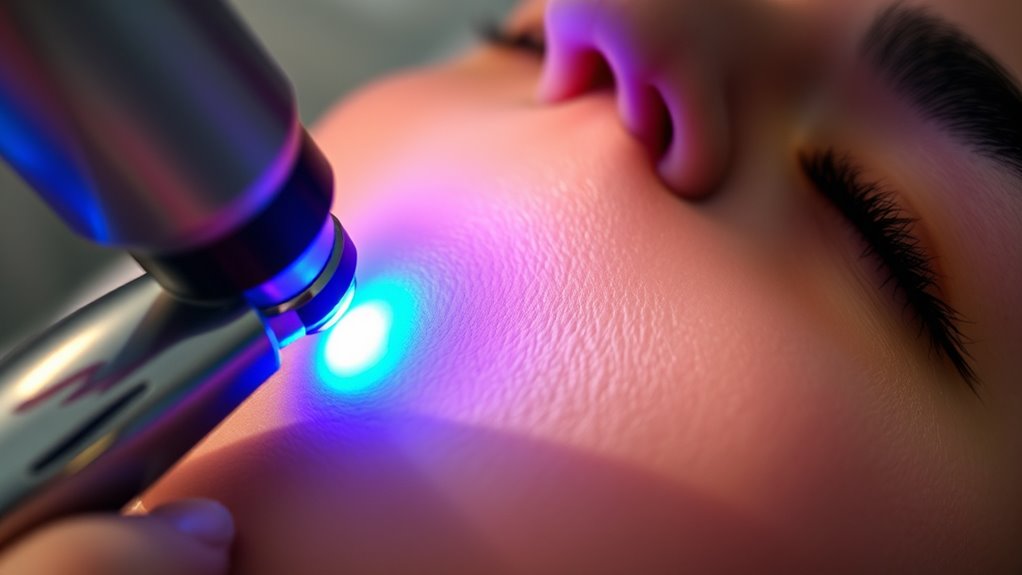
During the procedure, a laser device is carefully aimed at the targeted area. You might feel a sensation similar to a rubber band snapping against your skin or a mild prickling. Because skin sensitivity varies, some areas may require cooling gels or air cooling to keep you comfortable. The laser’s wavelength is selected based on your skin tone and hair color to maximize safety and efficacy. Multiple sessions are usually necessary because hair grows in cycles, and the laser can only target follicles in the active growth phase.
Additionally, ongoing research and monitoring are crucial for improving AI safety measures, ensuring that advancements in laser technology are implemented responsibly and ethically. Ultimately, understanding your skin sensitivity and the anatomy of your hair follicles allows your technician to customize your treatment plan. This personalized approach helps guarantee you get the best possible results while minimizing side effects. Laser hair removal isn’t just about removing hair; it’s about doing so safely, effectively, and comfortably. When done properly, it can give you smooth, hair-free skin that lasts much longer than traditional methods—saving you time and hassle in the long run.
Frequently Asked Questions
Is Laser Hair Removal Painful?
You might feel some discomfort during laser hair removal, but it varies with your pain tolerance. Most people compare the sensation to a rubber band snap or warm tingling. To minimize pain, many clinics use cooling methods like cold gels or airflow devices, which soothe the skin during treatment. Overall, while some discomfort is normal, it’s generally well-tolerated, and cooling techniques help make the experience more comfortable.
How Many Sessions Are Typically Needed?
You usually need about 6 to 8 sessions for effective laser hair reduction, but this can vary based on your hair and skin type. Sessions are typically spaced 4 to 6 weeks apart to target hair during its growth phase. Consistent session frequency maximizes hair reduction results, and most people experience noticeable smoothness and less hair after each treatment. Keep in mind, individual needs may differ, so your provider will tailor your plan.
Can Laser Hair Removal Cause Skin Damage?
Think of laser hair removal as a precise artist working on your skin canvas. While generally safe, it can cause skin damage if not done properly, especially if your skin pigmentation varies or you have darker skin tones. You might experience temporary redness or swelling, and in rare cases, uneven skin tone or hair regrowth. Always select a qualified professional to minimize risks and verify your skin stays healthy and smooth.
Is Laser Treatment Safe for All Skin Types?
Laser treatment is generally safe for most skin types, but your skin pigmentation can influence the results. People with darker skin may face a higher risk of skin damage or uneven hair regrowth if the laser isn’t properly calibrated. It is crucial to consult with a qualified professional who can tailor the treatment to your skin tone, reducing risks and ensuring effective hair removal while minimizing potential skin damage.
What Are the Long-Term Effects?
Think of laser hair removal as planting a seed for smooth skin; its long-term effects are generally positive, but you should stay aware of potential issues. You might face minimal scarring risk, and hormonal effects are usually negligible. Over time, many experience permanent hair reduction, but rare side effects could include pigmentation changes. Regular consultations help make sure the treatment aligns with your skin’s unique needs, making your journey safer and more effective.
Conclusion
So, after all that, laser hair removal promises smooth skin without the fuss—yet, you might find yourself obsessing over the perfect session or the tiny risks involved. Ironically, what’s meant to save you time could turn into a beauty routine in itself. But hey, if you’re willing to brave the process, you might just enjoy saying goodbye to razors—and hello to the glow of hair-free confidence. Who knew laser hair removal could be so unexpectedly addictive?