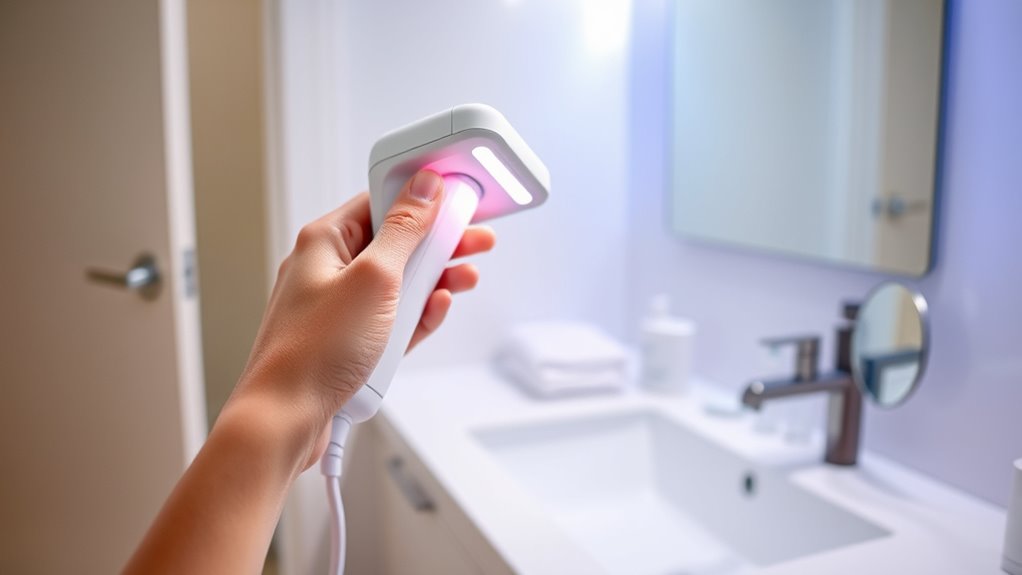

When using an at-home IPL device, follow all safety instructions carefully, such as performing a patch test first and avoiding treatment on irritated or tanned skin. Start with low settings and increase gradually, monitoring how your skin reacts. Keep in mind that results vary, especially depending on your skin tone and hair color. If you notice any severe side effects, stop using the device and seek advice. To learn how to maximize safety and achieve better results, keep exploring these guidelines.
Key Takeaways
- Always read and follow the manufacturer’s instructions carefully before use.
- Perform a patch test to check skin reactions and ensure device suitability for your skin and hair type.
- Use the lowest effective energy setting and monitor skin response during treatment.
- Avoid treatments on damaged, sunburned, or skin conditions; protect skin from sun exposure before and after.
- Cease use and consult a professional if experiencing persistent redness, blistering, or discomfort.
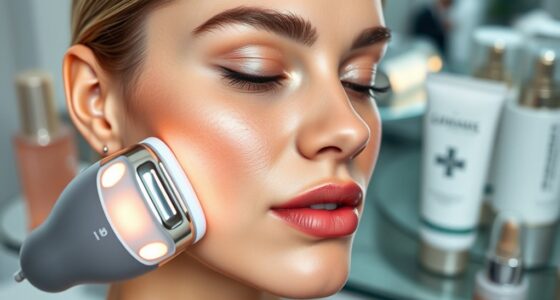
With the rise of at-home IPL devices, achieving smooth, hair-free skin has become more convenient than ever. These devices allow you to perform hair removal treatments in the comfort of your own home, but it’s vital to prioritize laser safety to avoid unwanted skin reactions. Unlike professional treatments, at-home IPL devices emit intense pulses of light that target hair follicles, so understanding how to use them correctly can prevent potential skin damage. Always read the manufacturer’s instructions carefully and confirm your device is suitable for your skin type and hair color. Using the device on the wrong setting or applying it improperly can lead to adverse skin reactions such as redness, swelling, or irritation. It’s imperative to start with the lowest energy setting and gradually increase it as you become more comfortable with the process, always monitoring your skin’s response. Additionally, selecting a device with skin tone compatibility features can help ensure safe and effective treatments tailored to your skin type.
Another important aspect of safe at-home IPL use is avoiding skin reactions. Not all skin types respond the same way to IPL treatments, and certain conditions can heighten the risk of adverse effects. For example, if you have very dark skin, some IPL devices might cause hyperpigmentation or burns because the melanin absorbs the light energy more intensely. Conversely, very light or grey hair may not respond well to IPL at all, making treatments ineffective. To minimize skin reactions, perform a patch test on a small area of skin before starting full treatments. This test helps you gauge how your skin reacts to the light pulses and whether you should proceed or adjust the settings. Additionally, avoid treating areas with open wounds, active infections, or skin conditions like eczema or psoriasis, as these can worsen or cause unpredictable reactions.
Sun exposure before and after IPL treatments can also increase the risk of skin reactions. Sunburned or tanned skin is more sensitive and may react unpredictably to light therapy. Always ensure your skin is clean, dry, and free of lotions or creams before treatment. Wearing protective sunscreen on treated areas afterward can help prevent pigmentation issues caused by UV exposure. While at-home IPL devices are designed to be safe when used correctly, they still require careful attention to laser safety protocols. Avoid looking directly at the light or exposing your eyes to the flashes, and keep the device away from children or pets. If you experience persistent redness, blistering, or discomfort beyond typical side effects, stop treatment immediately and consult a healthcare professional.
Frequently Asked Questions
Can I Use At-Home IPL on All Skin Tones Safely?
You can safely use at-home IPL on most skin tones, but it’s crucial to check your device’s safety features and skin tone compatibility first. Many modern IPL devices include skin sensors to prevent treatment on darker skin tones, reducing risk. Always read the manufacturer’s guidelines, perform a patch test, and avoid using IPL if your skin is too dark or if you have certain skin conditions. Safety comes first.
How Often Should I Perform IPL Treatments at Home?
You should perform IPL treatments at home every 4 to 6 weeks, giving your skin enough time to recover and adapt. This frequency prevents overexposure that could lead to irritation or damage—think of it as giving your skin a gentle, steady rhythm instead of a sprint. Stick to this schedule, and you’ll see steady results while allowing your skin to adapt safely to each treatment.
What Should I Do if I Experience Skin Irritation?
If you experience skin irritation, stop using the IPL device immediately. Apply soothing remedies like aloe vera or cold compresses to calm your skin. Keep the area clean and avoid irritating products. Monitor your symptoms closely; if irritation worsens, persists beyond a few days, or shows signs of infection, seek medical attention promptly. Knowing when to seek medical attention helps prevent complications and guarantees proper care.
Is At-Home IPL Effective for Hair Removal Long-Term?
At-home IPL can be effective for long-term hair removal if you follow the recommended treatment plan consistently. IPL effectiveness varies based on hair color, skin tone, and device quality, but many users see noticeable results after several sessions. While it may not completely eliminate hair permanently, it considerably reduces growth and hair thickness over time. Patience and proper use are key to achieving the best hair removal results with at-home IPL devices.
Are There Any Medical Conditions That Prevent IPL Use?
Think of your skin as a delicate garden; certain medical conditions can be like weeds, preventing IPL from thriving safely. If you have medical contraindications such as active infections, skin sensitivities, or certain autoimmune diseases, IPL might not be suitable. Always consult a healthcare professional before starting at-home IPL, as these conditions can increase risks of adverse reactions or damage, ensuring your skin stays healthy and vibrant.
Conclusion
Remember, using at-home IPL is like tending a delicate garden—you need patience, care, and the right tools. When I started, I was nervous, but consistent use and following safety tips made a difference. Just like watering plants regularly helps them thrive, sticking to your treatment plan ensures better results. Keep safety your priority, and you’ll watch your confidence grow, just like a beautiful bloom. Trust the process, and you’ll see the glow you’re aiming for.