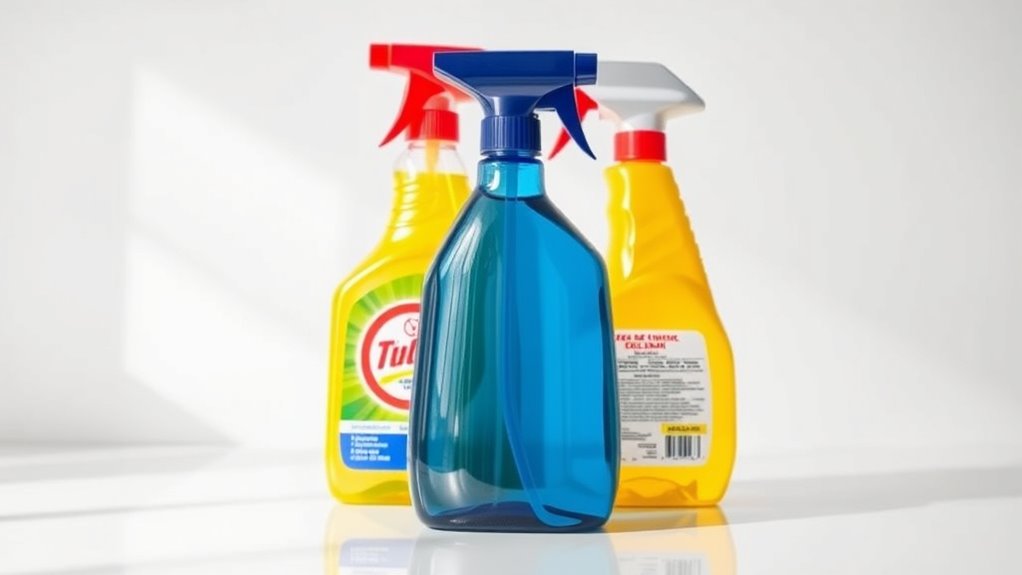

You should never mix bleach with ammonia, acids, or hydrogen peroxide, as these combinations release toxic gases like chloramine or chlorine vapor that can cause severe respiratory issues, coughing, and eye irritation. Mixing drain cleaners with other chemicals can also lead to violent reactions and dangerous fumes. Always follow product instructions carefully and avoid combining different cleaners. Staying safe depends on understanding these risks—continue to explore to learn more about protecting yourself during cleaning.

Get your next haul delivered free with Prime
- Fast, free delivery on millions of items
- Prime Video, Amazon Music and more included
- Member-only deals all year
Key Takeaways
- Never mix bleach with ammonia or cleaners containing ammonia to avoid toxic chloramine vapors and respiratory risks.
- Avoid combining bleach with acids like vinegar or toilet bowl cleaners to prevent dangerous chlorine gas release.
- Do not mix hydrogen peroxide with vinegar unless specifically instructed, as it can produce irritating peracetic acid.
- Refrain from mixing drain cleaners with other chemicals, as reactions can release hazardous gases or cause chemical burns.
- Always read labels and follow manufacturer instructions to prevent unsafe chemical reactions during cleaning.

Many household cleaners can be effective on their own, but mixing certain chemicals can create dangerous reactions. It’s tempting to combine products to tackle stubborn stains or odors, but doing so can result in toxic fumes, chemical burns, or even explosions. Before reaching for multiple cleaners, it’s crucial to understand which combinations are hazardous.
One of the most well-known dangerous mixes involves bleach and ammonia. When these two are combined, they produce chloramine vapors, which can cause chest pain, coughing, shortness of breath, and eye irritation. In higher concentrations, they may lead to pneumonia or even more severe respiratory issues. If you’re cleaning a bathroom or kitchen and think a bleach-based cleaner isn’t enough, resist the urge to add ammonia or other cleaners containing ammonia. Always read labels carefully and use products as directed.
Another risky combination is bleach and acids, such as vinegar or certain toilet bowl cleaners. Mixing bleach with acids releases chlorine gas, which is highly toxic and can cause coughing, breathing difficulties, and burns to your respiratory tract. Chlorine gas was used as a chemical weapon during wartime, so it’s not something to take lightly. If you’re trying to disinfect or remove stains, stick to one type of cleaner at a time and thoroughly rinse surfaces before applying a different product.
Many people don’t realize that mixing hydrogen peroxide with vinegar creates a potent cleaning solution, but it’s best to avoid doing so unless specified by the manufacturer. While this mixture can be effective for certain cleaning tasks, combining them improperly may produce peracetic acid, which can cause skin, eye, and respiratory irritation. Always check instructions before combining cleaners and use separate applications if needed.
Lastly, avoid mixing drain cleaners with any other chemicals. These products often contain strong acids or bases to break down clogs. Combining them with other cleaners can lead to violent reactions, releasing dangerous gases or causing chemical burns. If a drain cleaner doesn’t do the job, wait until the fumes dissipate and use a different method or chemical recommended by the manufacturer.
In essence, your safety depends on understanding what chemicals are in each product and respecting their limits. Never mix cleaners unless explicitly advised by the manufacturer. Taking these precautions keeps your home safe and your cleaning routine effective.
household bleach ammonia cleaner
As an affiliate, we earn on qualifying purchases.
As an affiliate, we earn on qualifying purchases.
Frequently Asked Questions
Are There Any Safe Homemade Cleaning Combinations?
Yes, you can make safe homemade cleaners by mixing vinegar and water for glass and surface cleaning, or baking soda and water for deodorizing and scrubbing. Always test on a small area first, and avoid mixing vinegar with bleach or hydrogen peroxide, as dangerous fumes can form. Use natural ingredients carefully, and keep labels clear to prevent accidental mixing. Stick to simple recipes for safe, effective cleaning.
How Do I Neutralize a Chemical Spill From Mixing Cleaners?
If you’ve mixed cleaners and want to neutralize the spill, first guarantee your safety by ventilating the area. Then, carefully identify the chemicals involved. For acidic spills, you can add a small amount of baking soda slowly to neutralize the acid. For alkaline spills, use vinegar or diluted lemon juice. Always wear gloves and eye protection, and if you’re unsure, contact emergency services or a professional for advice.
Can Mixing Cleaners Cause Long-Term Health Issues?
Mixing cleaners can indeed cause long-term health issues. Studies show that exposure to chemical fumes can increase respiratory problems and even lead to chronic conditions like asthma or lung disease over time. When you mix incompatible cleaners, you risk inhaling toxic gases that may damage your lungs or cause neurological effects. Always prioritize safety by reading labels and avoiding mixing chemicals—your health depends on it.
What Should I Do if I Accidentally Mix Dangerous Cleaners?
If you accidentally mix dangerous cleaners, immediately ventilate the area by opening windows and doors. Wear gloves and a mask to protect yourself from fumes. Do not try to neutralize or clean up the spill yourself unless you’re trained; instead, call your local poison control center or emergency services for guidance. They’ll advise you on the safest way to handle the situation and prevent health risks.
Are There Eco-Friendly Cleaners That Shouldn’T Be Mixed?
You should avoid mixing any eco-friendly cleaners that contain different active ingredients, like vinegar and baking soda, because they can react unpredictably. For example, combining vinegar-based and enzyme-based cleaners might reduce their effectiveness or cause unwanted reactions. Always read labels carefully and stick to one product at a time. If unsure, test on a small area first or consult the manufacturer for guidance to keep your home safe and eco-friendly.
As an affiliate, we earn on qualifying purchases.
Conclusion
Remember, mixing certain cleaners is like summoning a modern-day Pandora’s box—dangerous and unpredictable. Just as Icarus soared too close to the sun, you risk falling victim to harmful fumes and chemical reactions. Keep your home safe by sticking to one cleaner at a time, like a wise sailor steering familiar waters. When in doubt, read the labels—your safety depends on it. Stay cautious, stay smart, and avoid unleashing chaos in your cleaning routine.
As an affiliate, we earn on qualifying purchases.
chemical reaction safety cleaning
As an affiliate, we earn on qualifying purchases.
As an affiliate, we earn on qualifying purchases.
Halloween Picks
halloween
As an affiliate, we earn on qualifying purchases.