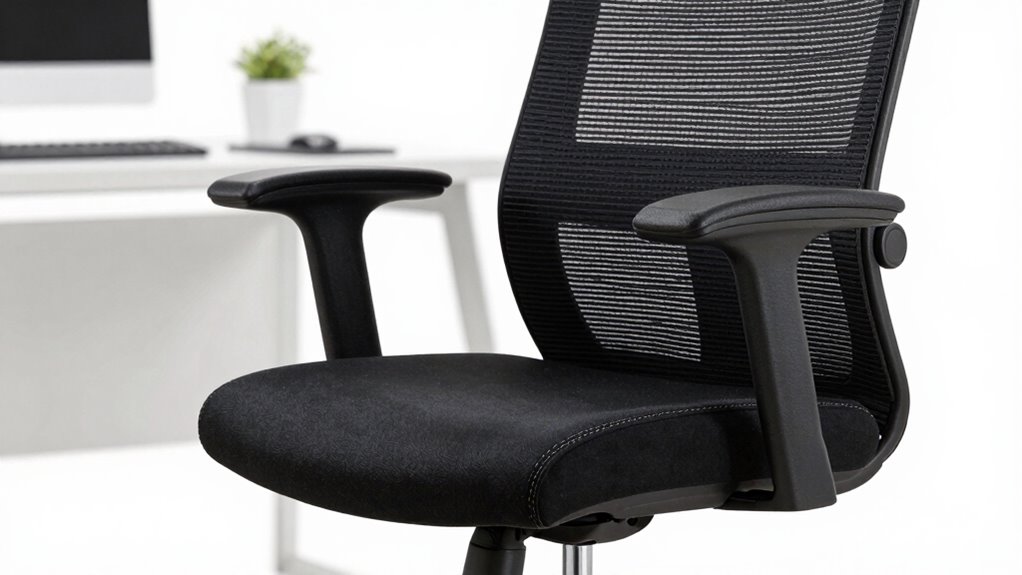

Many people overlook seat depth in ergonomic chairs, but it’s essential for proper posture and comfort. If the seat is too deep, it can press on your knees and reduce blood flow, while a shallow seat leaves your thighs unsupported, causing slouching. Adjusting seat depth ensures your hips are stabilized and your lower back remains in contact with lumbar support. Keep exploring to discover how this small feature can make a big difference in comfort and health.

Get your next haul delivered free with Prime
- Fast, free delivery on millions of items
- Prime Video, Amazon Music and more included
- Member-only deals all year
Key Takeaways
- Proper seat depth supports lower back and promotes correct posture, reducing long-term musculoskeletal issues.
- Incorrect seat depth can cause knee pressure, poor circulation, and discomfort, leading to slouching and back pain.
- Adjustable seat depth is essential for accommodating individual body sizes and ensuring optimal thigh support.
- Correct seat depth enhances interaction with lumbar support, maintaining natural spinal curves and reducing fatigue.
- Many overlook seat depth, but it is crucial for ergonomic comfort and preventing posture-related health problems.
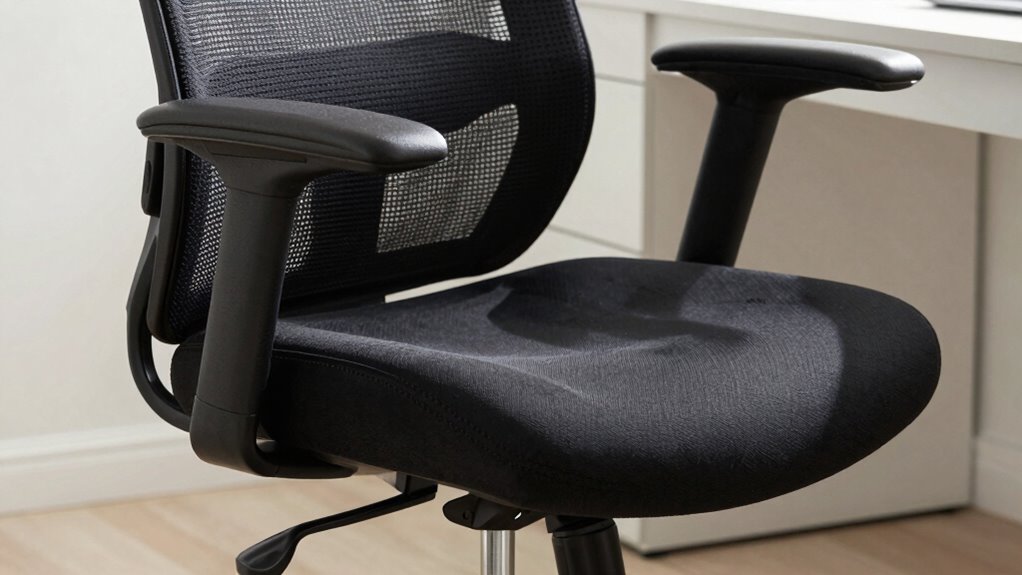
When choosing an ergonomic chair, many overlook the importance of seat depth, even though it plays a crucial role in supporting your lower back and promoting proper posture. Seat depth determines how much your thighs are supported and how well your lower back remains in contact with the backrest. If the seat is too deep, it can put pressure on your knees and reduce blood flow, leading to discomfort. Conversely, if it’s too shallow, your thighs won’t be adequately supported, causing you to slide forward and strain your lower back. Proper seat depth guarantees your hips are positioned correctly, which in turn stabilizes your spine and supports good posture throughout your workday. Additionally, choosing a seat with adjustable features can help cater to different body sizes and preferences for optimal comfort. A well-designed ergonomic chair should allow you to adjust the seat depth easily. This adjustability is essential because it accommodates different body sizes and preferences. When the seat depth is correctly set, you should have about two to four inches of space between the back of your knees and the edge of the seat. This gap promotes circulation, reduces pressure points, and helps you stay comfortable during long periods of sitting. Remember, even the best lumbar support won’t be effective if your seat depth isn’t right since it affects how your lower back interacts with the chair’s lumbar support. Proper seat depth also enhances overall ergonomic design, ensuring that all components work together to support your posture effectively. Making sure the seat depth fits your body helps maintain the natural curve of your lumbar spine, preventing slouching and reducing back pain. Ensuring proper seat depth can also prevent long-term musculoskeletal issues caused by poor sitting habits. To achieve optimal comfort, it’s important to consider the body proportions of the individual using the chair, as this directly impacts the ideal seat depth. Adjustable armrests are also a key feature that complements good seat depth. When armrests are properly set, they support your arms without raising your shoulders or causing strain on your neck. They help distribute your upper body weight evenly, relieving pressure on your lower back and shoulders. If the armrests are too high or too low, they can cause you to adopt awkward postures, which can negate the benefits of correct seat depth and lumbar support. When combined, adjustable armrests and ideal seat depth create a seating environment that encourages proper posture, minimizes fatigue, and enhances overall comfort.
ergonomic adjustable seat depth office chair
As an affiliate, we earn on qualifying purchases.
As an affiliate, we earn on qualifying purchases.
Frequently Asked Questions
How Do I Measure My Ideal Seat Depth?
To measure your ideal seat depth, sit with your back against the chair and slide forward until your knees are comfortably bent at a 90-degree angle. Measure from the back of your buttocks to the back of your knees. Choose a seat depth that allows a small gap (about 1-2 inches) for comfort. Consider material durability and aesthetic design to make sure your chair stays comfortable and stylish over time.
Can Seat Depth Affect Overall Posture?
Did you know that improper seat depth can cause 65% of posture issues? Yes, it affects your overall posture by influencing lumbar support and armrest alignment. When the seat is too deep, you might slouch or strain your lower back, while too shallow can hinder proper support. Ensuring correct seat depth helps maintain natural spinal alignment, reduces discomfort, and promotes better posture throughout your day.
Are Adjustable Seat Depths Better Than Fixed Ones?
Adjustable seat depths are better because they let you customize comfort, improving your posture and reducing strain. While they may have a slightly higher cost, they offer flexibility to suit different body types and preferences. Plus, adjustable designs often feature sleek aesthetic elements that enhance your workspace’s look. Investing in an adjustable seat depth chair can be more cost-effective long-term, as it promotes better ergonomics and reduces discomfort.
What Are Signs of an Incorrect Seat Depth?
If your seat depth is incorrect, you might notice discomfort in your thighs or your lower back feels strained, indicating poor lumbar support. You may also find your armrests are too high or low, causing shoulder tension. An improper seat depth can prevent proper posture, leading to fatigue. Adjust your seat to make certain your back is supported, your thighs are supported without pressure, and your armrest height aligns with your elbows for comfort.
Does Seat Depth Impact Long-Term Comfort?
Absolutely, seat depth impacts long-term comfort more than you’d like to admit. An ergonomic design with proper seat depth guarantees your thighs aren’t hanging or squished, giving your lumbar support a break from the chaos. Ignoring this tiny detail might seem harmless, but over time, it can cause discomfort, poor posture, and even chronic pain. So, prioritize seat depth—your back will thank you, and so will your future self.
ergonomic chair with lumbar support and seat depth adjustment
As an affiliate, we earn on qualifying purchases.
As an affiliate, we earn on qualifying purchases.
Conclusion
Don’t overlook seat depth—it’s the secret ingredient that turns a good chair into a throne of comfort. Think of it as the foundation beneath a sturdy house; neglect it, and everything else might wobble. When you pay attention to this often-forgotten feature, you’re planting the seed for better posture and productivity. So, choose wisely and let your chair cradle you like a gentle wave, supporting every move you make with quiet strength.
office chair for proper posture with thigh support
As an affiliate, we earn on qualifying purchases.
As an affiliate, we earn on qualifying purchases.
ergonomic chair for long hours of sitting
As an affiliate, we earn on qualifying purchases.
As an affiliate, we earn on qualifying purchases.
Halloween Picks
halloween
As an affiliate, we earn on qualifying purchases.