To get the best results from at-home IPL, understanding your hair growth cycles is key. You should time your treatments during the anagen phase when hair contains the most melanin, making the IPL more effective. Tracking your growth patterns helps you schedule sessions at the right times, reducing wasted treatments and minimizing skin irritation. Keep exploring for more tips on how to optimize your IPL routine based on hair cycles for smoother results.
Key Takeaways
- IPL targets hair in the anagen phase, when melanin is most active, ensuring better hair removal results.
- Tracking hair growth cycles helps schedule treatments during optimal phases, increasing effectiveness.
- Multiple sessions are needed to catch all hairs in the anagen stage across different growth cycles.
- Proper timing reduces wasted sessions on telogen and catagen phases, saving time and money.
- Understanding individual growth patterns enhances safety and minimizes skin irritation during at-home IPL treatments.

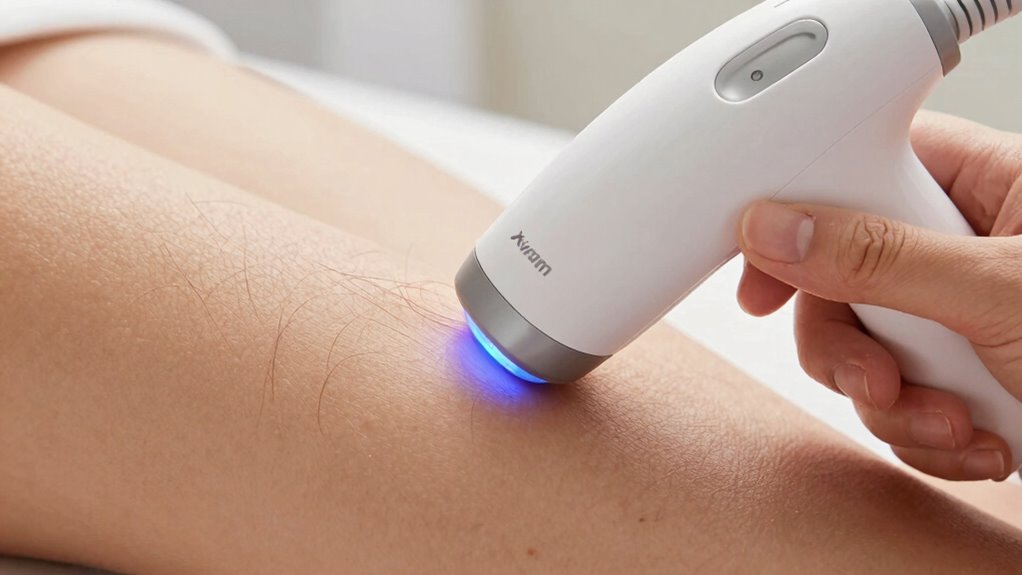
Understanding your hair growth cycles can significantly boost the effectiveness of IPL treatments at home. When you grasp how hair grows and sheds, you can time your sessions better, targeting hairs when they’re most receptive to treatment. Typically, hair has three phases: anagen (growth), catagen (transition), and telogen (resting). IPL works best during the anagen phase, when hair follicles are actively growing and melanin is most concentrated in the hair shaft. Knowing this, you should aim to treat your hair during this phase for ideal results. Since hair doesn’t all grow at once, patience is key—you might need multiple sessions spaced over several weeks to catch all hairs in the anagen stage.
Timing IPL treatments during the anagen phase enhances hair removal effectiveness and reduces the need for multiple sessions.
Being aware of your hair growth cycles also helps you avoid unnecessary exposure to IPL when treatments are less effective. If you treat hairs in the telogen or catagen phases, you’ll likely see minimal results, which can be frustrating. By understanding this, you prevent wasting time and energy on ineffective sessions, saving you money and reducing potential skin irritation. It also emphasizes the importance of tracking your hair’s growth patterns over time, so you can better predict when to schedule treatments. Recognizing the hair growth cycle enables you to optimize your treatment timing and improve results. Additionally, understanding the phases of hair growth can help you develop a more informed and effective hair removal routine.
Tracking your hair growth and understanding these cycles can also help you identify the optimal interval between treatments, which is crucial for maximizing IPL effectiveness. Being aware of your individual hair growth patterns allows you to tailor your treatment schedule for better results. Recognizing your personal hair growth cycle can also boost your confidence in managing your hair removal routine more efficiently. Skin safety becomes a critical factor when using IPL devices at home. Since IPL emits intense pulses of light, it’s essential to follow the manufacturer’s instructions carefully. Proper eye protection is necessary, especially if the device emits bright flashes directly toward your face. Always keep the device at the recommended distance from your skin, and avoid treating areas with tattoos, moles, or skin irritation, as these can increase risks of adverse reactions. Ensuring safety protocols reduces the chance of burns, blisters, or hyperpigmentation.
Skin sensitivity is another aspect you need to think about. Your skin can react differently to IPL depending on its type and condition. If you have sensitive skin, you might experience redness, swelling, or discomfort after treatment. To minimize these effects, perform a patch test before your full session, and avoid treating irritated or broken skin. Using a cooling gel or applying a soothing moisturizer afterward can also help. Adjusting the treatment intensity and spacing sessions further reduces the risk of skin damage. Remember, patience and moderation are key—overdoing IPL can lead to heightened skin sensitivity or even burns.

Braun IPL, Silk·Expert Pro 5, IPL Hair Removal for Women and Men, Permanent Laser Hair Reduction At-Home, 2 Heads, Pouch, IPL5137
- At-Home IPL Hair Removal: Permanent hair reduction for women and men
- Cost-Effective Salon Results: Up to 95% hair reduction in 1 month
- Quick and Easy to Use: Full-body treatment in 10 minutes
As an affiliate, we earn on qualifying purchases.
As an affiliate, we earn on qualifying purchases.
Frequently Asked Questions
How Long Does It Take to See Results With Home IPL Treatments?
You’ll typically see initial hair reduction within 3-4 sessions, but consistent treatments are essential for long-term results. With home IPL, it’s important to take into account your skin sensitivity and hair growth cycles, which can affect how quickly you notice changes. Usually, full results take about 6-8 sessions spaced over several weeks, but patience is key. Regular use helps improve hair removal effectiveness while minimizing skin sensitivity issues.
Can IPL Be Used on All Skin and Hair Types Safely?
Did you know IPL is effective for about 80% of skin and hair types? You should be cautious since IPL works best on lighter skin with dark hair. It’s not safe for all skin pigmentation, especially darker tones, because it can cause burns or pigmentation issues. Hair color matters too — it’s most effective on black or brown hair, but less so on blonde, red, or gray hair. Always follow safety guidelines and consult a professional if unsure.
Is There Any Downtime After At-Home IPL Sessions?
After at-home IPL sessions, you might experience some skin sensitivity, like redness or mild irritation, but there’s usually no significant downtime. To minimize discomfort, follow the device maintenance instructions carefully and avoid sun exposure. If your skin reacts strongly, give it time to recover before the next session. Keep your skin moisturized and protected, and monitor how your skin responds to guarantee safe and effective treatment.
How Often Should I Repeat IPL Treatments for Best Results?
You should repeat IPL treatments every 4 to 6 weeks to target hair during the anagen, or growth phase, which makes up about 85% of hair cycles. This schedule optimizes treatment effectiveness by aligning with hair growth phases. Consistent treatment scheduling guarantees you catch hairs at the right time, reducing regrowth over time. Follow your device’s guidelines and consult a professional for personalized advice to maximize results.
Are There Any Side Effects or Risks With Home IPL Devices?
Yes, there are some risks with home IPL devices, like skin irritation or burns if used improperly. To guarantee device safety, always follow the instructions carefully and perform a patch test first. If you notice redness, swelling, or discomfort, stop using the device immediately. Using it correctly minimizes side effects, so taking precautions helps protect your skin and ensures effective, safe treatments.
As an affiliate, we earn on qualifying purchases.
Conclusion
Understanding your hair growth cycle can make IPL at-home treatments much more effective. Did you know that about 85% of your hair is in the growth phase at any given time? By targeting hair during this period, you’ll see better and faster results. So, take the time to learn your cycle and plan your sessions accordingly. With patience and knowledge, you’ll enjoy smoother skin and impressive results right from home.
As an affiliate, we earn on qualifying purchases.
professional hair growth cycle monitor
As an affiliate, we earn on qualifying purchases.
As an affiliate, we earn on qualifying purchases.