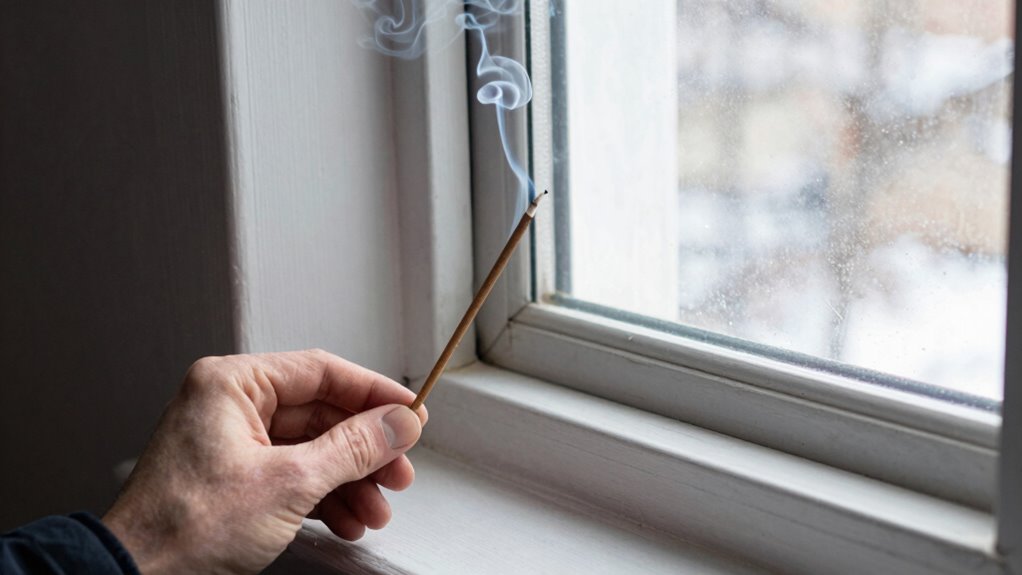

To check for air leaks before winter, turn off your heating and close windows and doors. Use your hand or a tissue to feel for drafts around window frames, doors, and electrical outlets. You can also use incense sticks to spot movement of cool air. Focus on gaps in insulation and where materials meet. Seal any leaks with weatherstripping, caulk, or foam sealant. Want to discover more tips to keep your home warm? Keep going.
Key Takeaways
- Turn off heating, close windows and doors, then feel for drafts around window frames, doors, and other potential leak areas.
- Use an incense stick or tissue to detect cold air infiltration at seams and gaps.
- Conduct a blower door test to identify hidden leaks in hard-to-see areas.
- Inspect and seal gaps around windows, doors, and vents with weatherstripping, caulk, or foam sealant.
- Check attic, walls, and basement insulation for gaps or compression, and add insulation as needed.
As winter approaches, it’s essential to guarantee your home is properly sealed to keep warm air in and cold drafts out. The first step in achieving this is checking the insulation effectiveness throughout your house. Good insulation acts as a barrier, reducing heat transfer and maintaining a cozy indoor temperature. Inspect areas like the attic, walls, and basement for gaps or compressed insulation that might have shifted or deteriorated over time. If you notice areas where insulation is thin or missing, consider adding more to improve overall thermal efficiency. Proper insulation not only increases comfort but also enhances draft prevention, reducing the chances of chilly air slipping inside. Ensuring your home has adequate thermal insulation is crucial for energy efficiency and comfort during the winter months.
Ensure your home is well-insulated to keep warmth in and drafts out all winter long.
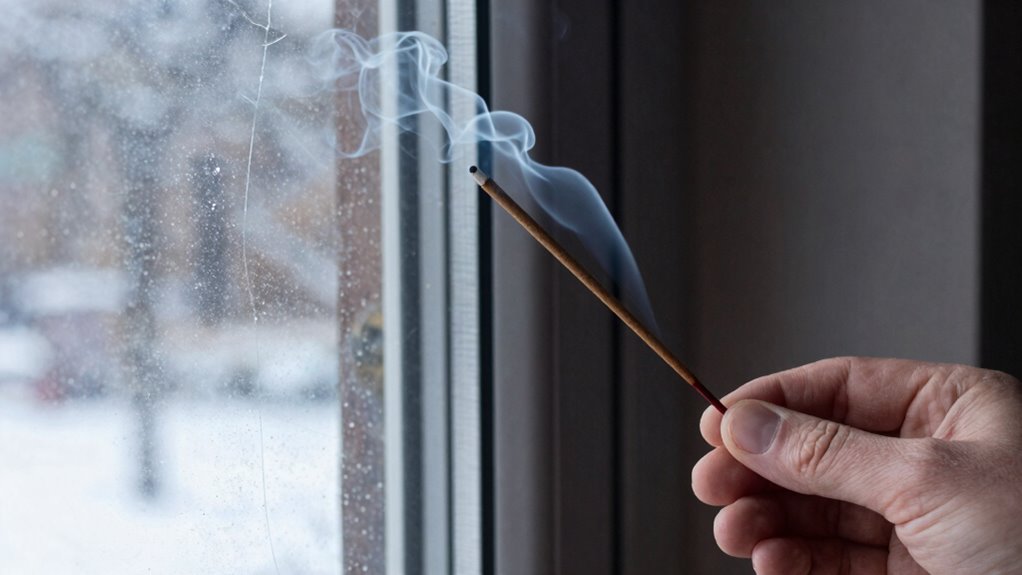
Next, focus on identifying and sealing air leaks. Drafts often originate from small cracks or openings around windows, doors, electrical outlets, and vents. To locate these leaks, you can perform a simple test by turning off your heating system, shutting all windows and doors, and then feeling for cold spots with your hand. Alternatively, hold a lit incense stick or a piece of tissue near potential problem areas; if the smoke or tissue moves or flickers, drafts are likely present. Pay close attention to areas where two building materials meet, like window frames, door jambs, and along baseboards. Once identified, seal these leaks using weatherstripping, caulk, or foam sealant, depending on the location. Draft prevention is vital because even tiny gaps can considerably impact your home’s warmth and energy efficiency. Additionally, understanding building material differences can help you choose the most effective sealing methods for each area. Being aware of how different materials respond to sealing techniques can improve your results and ensure long-lasting protection against drafts. A thorough knowledge of building structures can help you better identify hidden or hard-to-reach leaks that may not be immediately obvious. Using a blower door test can also help detect leaks in hard-to-see areas, providing a comprehensive assessment of your home’s insulation integrity.
Additionally, check the condition of your windows and doors. Single-pane windows are more susceptible to leaks, so consider upgrading or adding storm windows for extra insulation. For existing windows, apply weatherstripping around the frames to block out cold air. Make sure all door sweeps are intact and properly aligned at the bottom of exterior doors. Replacing or repairing damaged seals ensures that warm air stays inside longer and cold drafts are kept at bay. Remember, sealing leaks isn’t just about comfort; it’s about conserving energy and lowering heating costs as well.
Finally, don’t forget to examine ventilation points, such as dryer vents and exhaust fans. These openings can also let in unwanted cold air if not properly sealed. Use vent covers or dampers to close off these areas when they’re not in use. By taking the time to check insulation effectiveness and diligently seal draft-prone spots, you set yourself up for a warmer, more energy-efficient winter. Staying proactive now prevents costly repairs later and keeps your home comfortable all season long. Proper maintenance of these areas helps prevent air leaks from becoming larger problems during the cold months.
weatherstripping for doors and windows
As an affiliate, we earn on qualifying purchases.
As an affiliate, we earn on qualifying purchases.
Frequently Asked Questions
Can I Detect Leaks Without Professional Tools?
Yes, you can detect leaks without professional tools by doing a DIY inspection. Walk around your home on a windy day and hold a lit candle or incense stick near windows, doors, and vents—if the flame flickers or smoke wavers, you’ve found a leak. Once identified, perform DIY sealing with weatherstripping or caulk to improve energy efficiency. Regular checks help prevent cold drafts and save on heating costs.
How Often Should I Check for Leaks Annually?
A stitch in time guarantees nine, so you should check for leaks at least once a year. Regular inspections help maintain ventilation effectiveness and control indoor humidity, preventing drafts and energy loss. Seasonal checks, ideally in fall and spring, ensure your home stays comfortable and efficient. Staying proactive means you’ll catch small issues early, saving money and improving air quality year-round.
Are There DIY Methods to Seal Air Leaks?
Yes, you can seal air leaks yourself. For door drafts and window gaps, start by applying weatherstripping or door sweeps to block drafts. Use caulk to seal small cracks around window frames and sills. Draft stoppers or foam tape can also help. These simple DIY methods improve insulation, reduce energy costs, and keep your home warmer during winter. Just make sure you clean surfaces before sealing for best results.
Which Areas Are Most Prone to Leaks in a Home?
You should check the areas most prone to leaks, like around windows and doors, where drafts can sneak in and reduce insulation effectiveness. These spots often hide the sneakiest air leaks, so don’t overlook them. Pay close attention to window frames and gaps in siding—they’re prime spots for air infiltration. Sealing these leaks now guarantees your home stays warm and energy-efficient throughout winter, preventing costly heat loss.
How Much Can Sealing Leaks Save on Heating Costs?
Sealing leaks can considerably boost your home’s energy efficiency and save you money on heating. You might reduce your heating costs by up to 10-15%, depending on leak severity. By plugging gaps around windows, doors, and vents, you prevent warm air from escaping and cold air from entering. This simple step not only lowers your energy bills but also creates a more comfortable, draft-free environment during winter.
As an affiliate, we earn on qualifying purchases.
Conclusion
As you seal those sneaky air leaks, it’s almost like the house is giving you a nod of thanks just as winter whispers its arrival. When you find that tiny crack or draft, it’s a small victory that keeps your home cozy and your energy bills in check. Sometimes, it feels like the house itself is helping you prepare — a little coincidence that makes the effort all the more rewarding. Stay warm and enjoy the comfort you’ve created.
As an affiliate, we earn on qualifying purchases.
As an affiliate, we earn on qualifying purchases.