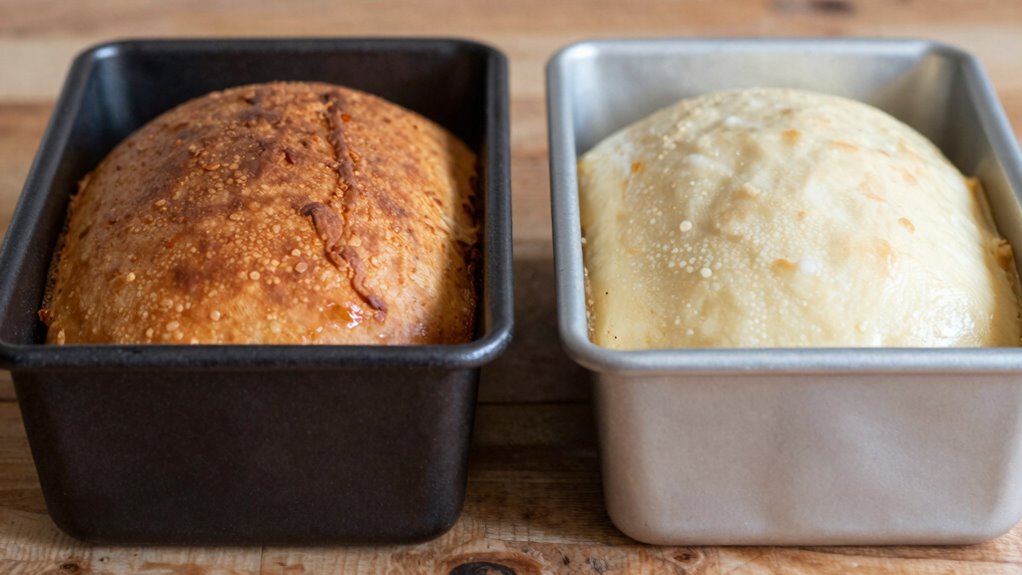
Dark bakeware browns food faster because it absorbs and conducts heat more efficiently than lighter pans. This means heat transfers quickly to your baked goods, causing faster caramelization and crust formation. Materials like non-stick coated metal or anodized aluminum are especially good at this. As a result, your treats may turn darker and crispier sooner than expected. To prevent over-browning, you can make simple adjustments — learn the key tips that can help you perfect your baking.
Key Takeaways
- Dark bakeware absorbs and conducts heat more efficiently, leading to faster browning of baked goods.
- The material’s higher heat absorption accelerates caramelization and Maillard reactions.
- Thinner dark pans heat up quickly, increasing the rate of crust formation.
- Dark surfaces lower the oven temperature needed to prevent over-browning.
- Rapid heat transfer causes quicker exterior browning before the interior is fully baked.
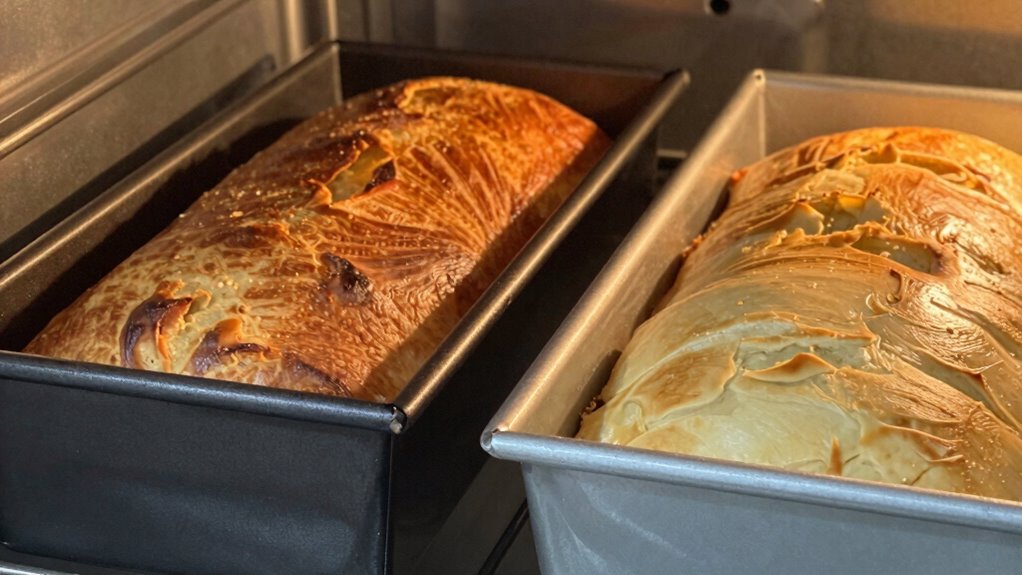
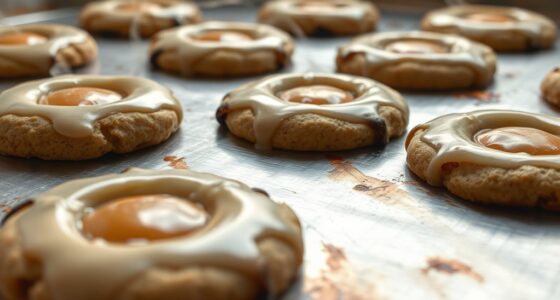
If you’ve noticed that your baked goods turn out darker and crustier than expected, it’s likely due to the type of bakeware you’re using. Dark bakeware absorbs heat more efficiently than lighter pans, causing baked goods to brown faster. This is especially noticeable if you’re not adjusting your baking temperature accordingly. When you use dark pans, the heat transfer to the batter or dough is more intense, which speeds up browning and crust formation. As a result, your treats may be overdone or burnt on the outside before they’re fully baked inside.
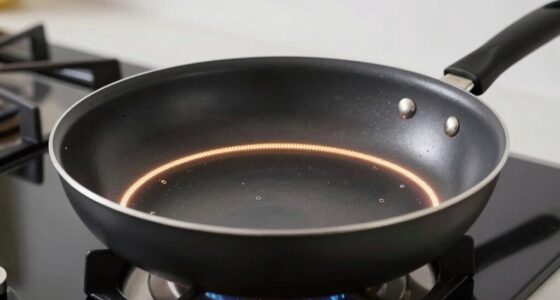
The key factor here is the pan material. Dark bakeware is often made of materials like non-stick coated metal or anodized aluminum, which have a high heat absorption rate. These materials conduct heat more rapidly and retain it better, leading to quicker caramelization and Maillard reactions that brown the surface. Light-colored pans, on the other hand, reflect more heat and distribute it more evenly, resulting in a slower, more controlled browning process. So, if you switch from a light pan to a dark one without adjusting the oven temperature, you might find that your baked goods are browning too quickly.
Baking temperature plays a vital role in this process. The standard advice is to lower your oven temperature by about 25°F when switching to dark bakeware. This adjustment compensates for the pan’s ability to absorb and conduct heat more efficiently. If you don’t make this change, the exterior of your baked goods can become over-browned or even burnt before the inside is fully baked. Keep in mind that every oven and pan material behaves slightly differently, so it’s wise to keep an eye on your baked goods and consider using an oven thermometer to verify accurate temperatures. Temperature adjustments are crucial for achieving consistent results. Recognizing the heat absorption properties of your bakeware can help you make better adjustments for consistent results. Additionally, understanding the thermal conductivity of different materials can help you select the right bakeware for specific recipes. Using proper bakeware can significantly influence the outcome of your baked goods, making it essential to choose the right type for each recipe.
In addition, the thickness of the pan impacts heat conduction. Thinner dark pans heat up more quickly, further accelerating browning. Conversely, heavier pans tend to distribute heat more evenly but still absorb more heat than light-colored options. To prevent over-browning, you might also consider reducing baking time or using lower oven temperatures when working with dark bakeware. Recognizing how pan material influences heat transfer can help you better control baking outcomes. Ultimately, understanding how pan material and baking temperature interact will help you achieve a perfect bake every time. When you recognize that dark bakeware browns faster, you can make simple adjustments to your oven settings and baking techniques, ensuring your baked goods are evenly baked and beautifully finished without unnecessary dark spots or burnt edges.
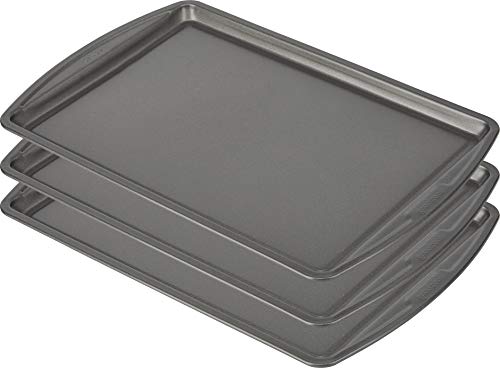
GoodCook Everyday Baking Sheet Set Nonstick Carbon Steel Standard-Sized Cookie Sheets for Even Baking, Bakeware Set Includes 3 Pans with Scratch-Resistant Finish, 13×9-Inch, Gray
- Set of 3 Baking Sheets: Includes three 13×9-inch pans
- Even Baking Performance: Ensures thorough, consistent baking
- Durable Carbon Steel Construction: Resists warping and scratching
As an affiliate, we earn on qualifying purchases.
As an affiliate, we earn on qualifying purchases.
Frequently Asked Questions
Does Dark Bakeware Affect Baking Time for All Recipes Equally?
Dark bakeware does affect baking time differently for various recipes due to its color contrast with light pans. It absorbs more heat, leading to faster browning and potentially uneven baking if you’re not careful. For consistent baking, consider adjusting your time or temperature, especially with delicate baked goods. You’ll find that dark pans require less time, but keep an eye on your results to maintain baking consistency across different recipes.
Can Dark Pans Cause Uneven Baking or Hot Spots?
Yes, dark pans can cause uneven baking or hot spots because their color contrast with light pans absorbs more heat, leading to localized hotspots. The material’s durability also plays a role; some dark bakeware heats unevenly if it’s thin or poorly made. To avoid this, consider rotating your baking sheet regularly and using a silicone or light-colored liner to promote even heat distribution.
How Should Oven Temperature Be Adjusted for Dark Bakeware?
You should lower your oven temperature by about 25°F when using dark bakeware to prevent over-browning. Dark pans absorb heat more quickly, so baking adjustments are necessary to avoid burning your baked goods. Keep a close eye on your oven and consider using an oven thermometer to guarantee accuracy. Making these small temperature adjustments helps achieve even baking and perfect results without over-browning.
Are There Health Concerns With Using Dark-Colored Bakeware?
Using dark-colored bakeware is like planting a garden in rich soil—you’re aware of its benefits and potential risks. There are generally no major health concerns, but consider the nutritional impact and chemical leaching if the bakeware is non-stick or coated. Some coatings might degrade over time, possibly leaching chemicals. To stay safe, choose high-quality, food-grade materials and avoid prolonged high-temperature baking to minimize any health risks.
How Does Material Composition Influence Heat Absorption in Dark Pans?
Material composition influences heat absorption in dark pans through thermal conductivity and reflective surfaces. Dark-colored materials, like cast iron or dark non-stick coatings, absorb more heat because they have higher thermal conductivity, transferring heat quickly. Additionally, their matte, non-reflective surfaces prevent heat reflection, ensuring more consistent heat absorption. This combination causes dark pans to heat up faster and brown baked goods more quickly than lighter pans, which reflect heat and have lower thermal conductivity.
GoodCook Everyday Baking Sheet Set Nonstick Carbon Steel Standard-Sized Cookie Sheets for Even Baking, Bakeware Set Includes 3 Pans with Scratch-Resistant Finish, 13×9-Inch, Gray
- Set of 3 Baking Sheets: Includes three 13×9-inch pans
- Even Baking Performance: Ensures thorough, consistent baking
- Durable Carbon Steel Construction: Resists warping and scratching
As an affiliate, we earn on qualifying purchases.
As an affiliate, we earn on qualifying purchases.
Conclusion
Remember, you get what you pay for, and that’s especially true with bakeware. Dark pans absorb heat more efficiently, making your baked goods brown faster. While they can save you time, keep a close eye to prevent burning. Understanding your bakeware helps you control the oven’s heat, ensuring perfect results every time. As the saying goes, “a stitch in time saves nine”—knowing your tools now prevents mishaps later in your baking adventures.

Nordic Ware Naturals Half Sheet – USA Made Aluminum Commercial Quality Sheet Pan for Baking or Roasting, Encapsulated Galvanized Steel Rim Prevents Warping, 2-Pack
- Material: Pure aluminum for even baking
- Durability: Rust-proof for long-lasting use
- Design: Encapsulated steel rims prevent warping
As an affiliate, we earn on qualifying purchases.
As an affiliate, we earn on qualifying purchases.
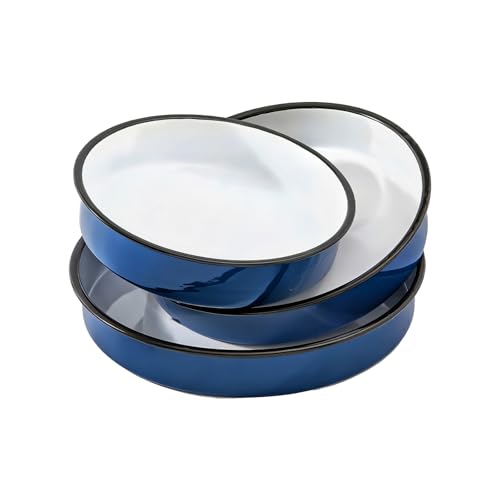
3-Pack Enamel Roasting & Baking Pan Set 10/12/14 Inch Round Cake Pans, High Temperature Resistant Baking Dishes for Turkey Pizza Casseroles Oven Bakeware PFOA & PTFE Free Ideal Gift for Mom – CookWare
- Sizes Included: 10, 12, and 14-inch pans
- Versatile Baking Use: Suitable for pizzas, pies, and more
- Even Heat Distribution: Flat-bottom design for consistent cooking
As an affiliate, we earn on qualifying purchases.
As an affiliate, we earn on qualifying purchases.