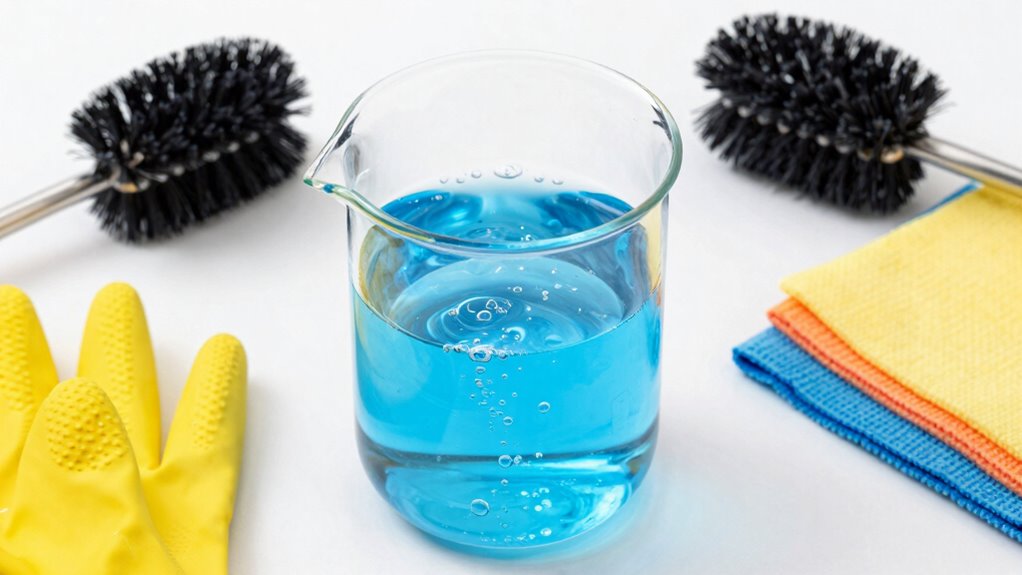
Understanding cleaning pH is key to choosing the right product for each mess. Acidic cleaners work well on mineral deposits and rust, while alkaline ones break down grease and organic grime. Using the correct pH balance guarantees effective cleaning without damaging surfaces, and eco-friendly options often have a neutral pH. By matching your cleaner to the mess, you get better results and protect your surfaces. Keep exploring to discover how pH can boost your cleaning routine.

Get your next haul delivered free with Prime
- Fast, free delivery on millions of items
- Prime Video, Amazon Music and more included
- Member-only deals all year
Key Takeaways
- Match acidic cleaners (pH below 7) for mineral deposits and rust removal.
- Use alkaline cleaners (pH above 7) to effectively break down grease and organic grime.
- For delicate surfaces, opt for neutral or slightly acidic cleaners to prevent damage.
- Adjust cleaning solutions’ pH with natural acids or alkalis to target specific messes.
- Always check product labels for pH levels to select the most appropriate cleaner.
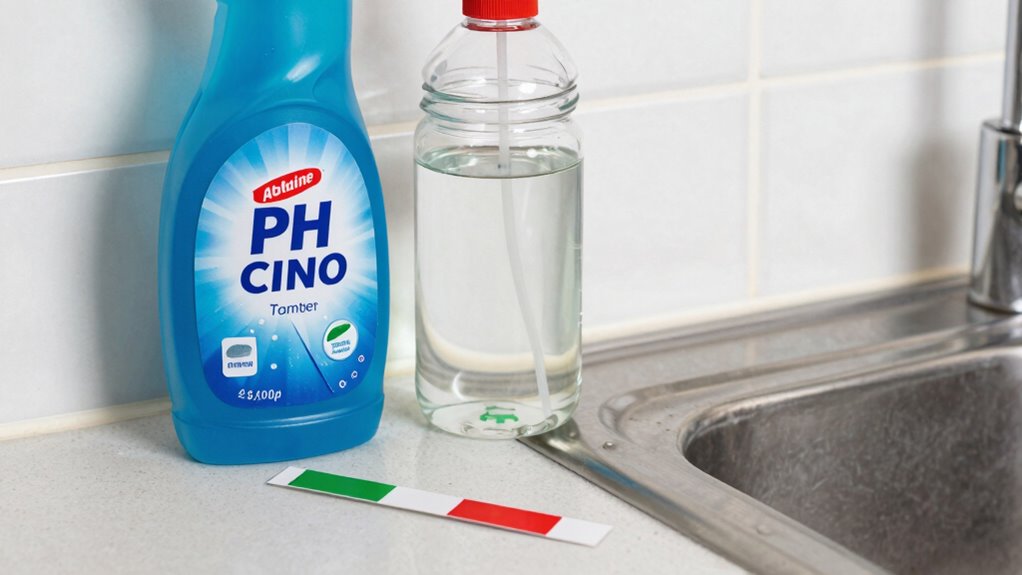
Have you ever wondered how the pH level of a cleaning solution affects its effectiveness? The truth is, understanding pH is key to choosing the right cleaner for every mess. The pH scale ranges from 0 to 14, with acidic solutions below 7, neutral at 7, and alkaline above 7. When you pick a cleaner aligned with the nature of the mess, you’re more likely to see better results. For example, acidic solutions work well on mineral deposits and rust, while alkaline cleaners excel at breaking down grease and organic grime. Knowing this helps you avoid using harsh chemicals unnecessarily and ensures you’re tackling stains effectively.
Eco friendly solutions are gaining popularity because they reduce environmental impact while still delivering cleaning power. Many eco-friendly options are made with natural ingredients that maintain a balanced pH, often close to neutral, which minimizes the risk of damage to surfaces or plants. pH balancing techniques come into play here; they allow you to adjust the pH of your homemade or commercial cleaners to match the specific cleaning task. For instance, adding a bit of vinegar (acidic) can boost the effectiveness of a natural cleaner for mineral buildup, while a splash of baking soda (alkaline) can enhance grease removal. These techniques make your cleaning routine more sustainable and less harmful to the environment, aligning well with eco-friendly solutions.
By understanding the importance of pH, you can optimize your cleaning efforts. For example, if you’re cleaning glass or delicate fabrics, a neutral or slightly acidic solution will prevent damage. On the other hand, tackling greasy stovetops or oily surfaces calls for alkaline cleaners. Adjusting pH levels using simple methods—like diluting with water, adding natural acids, or alkaline substances—helps you customize solutions for specific tasks. This flexibility not only improves cleaning efficiency but also extends the lifespan of your surfaces and materials.
Additionally, incorporating knowledge of connected equipment and smart cleaning tools can further enhance your routine, making it easier to monitor and adjust pH levels for optimal results. Remember that many commercial cleaners are formulated with specific pH levels to target particular messes. Reading labels carefully helps you select the right product, but knowing how to adjust pH yourself gives you an edge. When you incorporate pH balancing techniques into your cleaning routine, you’re making smarter choices that protect the environment and your home. Whether you’re aiming for eco-friendly solutions or simply trying to maximize the power of your cleaning agents, understanding pH levels empowers you to match the right cleaner to the mess every time. So, next time you’re faced with a stubborn stain or a delicate surface, think about pH—you’ll be surprised how much difference it makes.
eco-friendly pH neutral all-purpose cleaner
As an affiliate, we earn on qualifying purchases.
As an affiliate, we earn on qualifying purchases.
Frequently Asked Questions
How Do I Measure pH Levels Accurately at Home?
To measure pH levels accurately at home, grab pH testing kits or pH indicator strips. Dip the strip into the liquid you want to test, then compare the color change to the provided chart. Make sure to follow the instructions carefully, especially regarding immersion time and waiting for the color to stabilize. This simple method gives you quick, reliable readings to match your cleaner to the mess effectively.
Are Certain Cleaning pH Levels Better for Specific Surfaces?
Using the right cleaning pH level is like choosing the perfect suit for an event—you want it to match perfectly. For delicate surfaces like glass or electronics, opt for pH balanced cleaners to prevent damage. For tougher messes on tiles or grout, slightly alkaline solutions work best. Surface-specific solutions guarantee you clean effectively without harming your surfaces, making your cleaning routine more efficient and safe.
Can Using the Wrong pH Cleaner Damage My Belongings?
Using the wrong pH cleaner can damage your belongings because it can trigger unwanted chemical reactions or harm surface compatibility. For example, an acidic cleaner on a delicate surface might etch or discolor it, while an alkaline cleaner on certain materials could cause deterioration. Always check the recommended pH level for your specific surface to prevent damage, ensuring your cleaning efforts are effective and safe.
How Often Should I Test the pH of My Cleaning Solutions?
You should test the pH of your cleaning solutions at least once a month to keep your cleaning pH calibration on point. Like tuning a musical instrument, regular testing ensures your cleaner hits the right note for each mess. If you notice a change in cleaning frequency or results, test more often. This way, you prevent damage and maintain efficiency, making every cleaning session a harmonious success.
Is There a Natural Way to Adjust pH Levels in Homemade Cleaners?
Yes, you can naturally adjust pH levels in homemade cleaners using natural ingredients. For example, adding vinegar, which is acidic, lowers pH, while baking soda, a basic ingredient, raises pH. These natural ingredients help with pH balancing without chemicals, making your cleaner more effective for specific messes. Just test the pH first and add small amounts until you reach the desired level for ideal cleaning.
natural vinegar for mineral deposits
As an affiliate, we earn on qualifying purchases.
As an affiliate, we earn on qualifying purchases.
Conclusion
By matching your cleaner’s pH to the mess, you guarantee effectiveness, protect surfaces, and extend durability. When you choose the right pH, you simplify your cleaning routine, prevent damage, and achieve sparkling results. When you understand the importance of pH, you reveal the secret to smarter cleaning, better maintenance, and lasting shine. Ultimately, knowing the pH balance empowers you to clean confidently, efficiently, and responsibly—because the right match makes all the difference.
As an affiliate, we earn on qualifying purchases.
As an affiliate, we earn on qualifying purchases.
Halloween Picks
halloween
As an affiliate, we earn on qualifying purchases.