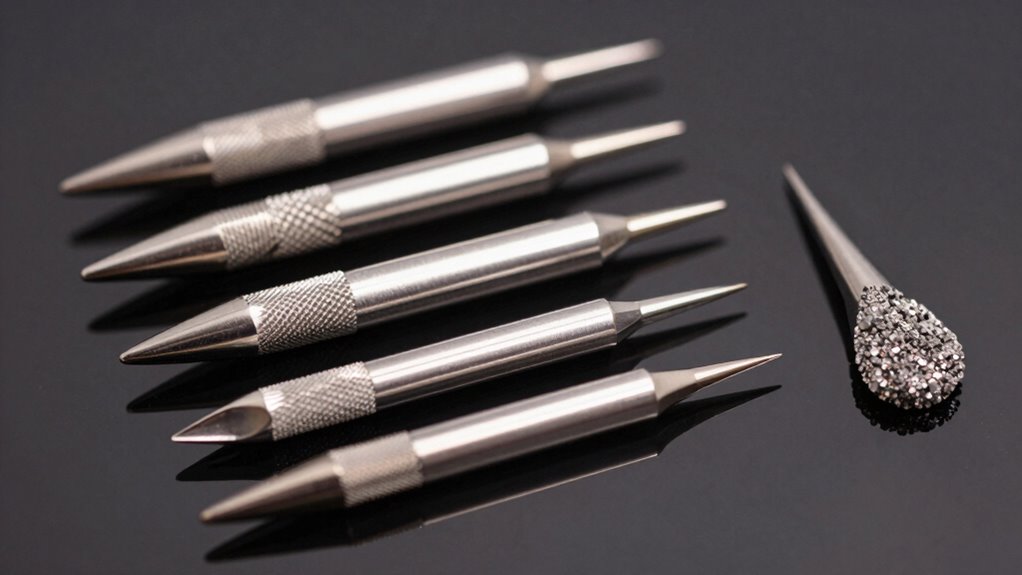
Nail drill bits come in various shapes like diameters, cones, and balls, each designed for specific tasks such as shaping, smoothing, or cuticle removal. Grit levels range from coarse for quick removal to fine for refining nails and smoothing surfaces. Using the right shape and grit helps you achieve professional-looking results while protecting your natural nails. Continual exploration of these tools will help you master their proper use and get the best manicure outcomes.

Get your next haul delivered free — and shop member deals
- Fast, free delivery on millions of items
- Access to Prime Big Deal Days deals on October 6–7
- Prime Video, Amazon Music and more included
Key Takeaways
- Nail drill bits come in various shapes like cone, barrel, pointed, and ball, each suited for specific shaping or removal tasks.
- Grit levels range from coarse to fine, affecting how much material is removed and the smoothness of the finish.
- Diamond tips are durable and abrasive, ideal for removing gel, acrylic, or hard gel efficiently.
- Using the correct shape and grit minimizes damage to natural nails and achieves precise results.
- Proper handling, speed control, and safety precautions are essential for effective and safe use of different drill bits.

Nail drill bits are essential tools for anyone looking to achieve professional-looking manicures and pedicures at home or in a salon. They help you shape, smooth, and remove nail enhancements efficiently. When selecting drill bits, you’ll notice various shapes and grit levels, each serving a specific purpose. Understanding these differences can make your nail care routine safer and more effective. One popular type of bit is the diamond tip. Diamond tips are renowned for their durability and abrasive power, making them ideal for removing gel polish, acrylic, or hard gel enhancements. They come in different coarseness levels, so you can choose a finer grit for delicate work or a coarser one for quick removal. However, because diamond tips are so abrasive, it’s vital to use them with proper safety precautions. You should always operate the drill at a controlled speed, avoid excessive pressure, and keep the bit moving to prevent heat buildup and potential injury. Wearing protective gear, like safety glasses, is also a good idea to shield your eyes from dust or debris.
When handling drill bits, especially diamond tips, safety precautions are paramount. Always sanitize your tools before and after use to prevent infections. Keep the drill at a low or medium speed when working on natural nails to avoid damage or discomfort. If you’re new to using drill bits, start with a softer grit and gradually increase the coarseness as needed. Remember, overusing a coarse bit on natural nails can cause thinning or splits, so use these bits carefully. Additionally, avoid pressing too hard — let the bit do the work. It’s also wise to take frequent breaks during your session to check your progress and avoid fatigue that can lead to mishandling. Proper technique and awareness of your tools’ limitations help you achieve professional results while minimizing risks.
Using the correct safety precautions and understanding your tools’ capabilities can significantly reduce the risk of injury. Ultimately, understanding which drill bits to use and how to handle them safely can elevate your nail care routine. Diamond tips are powerful tools when used correctly, but they require respect and caution. With the right safety precautions, you’ll prevent injuries and make sure your nails stay healthy and beautiful. Whether you’re shaping a new set or removing old enhancements, choosing the correct drill bit and knowing how to operate it responsibly will make all the difference. Keep your workspace clean, follow safety guidelines, and enjoy the process of creating flawless manicures and pedicures with confidence.
nail drill bits set for manicures
As an affiliate, we earn on qualifying purchases.
As an affiliate, we earn on qualifying purchases.
Frequently Asked Questions
How Do I Choose the Right Nail Drill Bit for My Nail Type?
To choose the right nail drill bit for your nail type, consider nail health and drill bit compatibility. If your nails are delicate or thin, opt for a finer grit and gentler shape to avoid damage. For thicker or stronger nails, a coarser grit works better. Always select a drill bit designed for your specific nail type, and avoid forcing incompatible bits to protect your nails and keep them healthy.
Are There Safety Tips for Beginners Using Nail Drill Bits?
A stitch in time saves nine, so always prioritize safety. As a beginner, wear safety gear like gloves and goggles, and use proper technique to prevent injury. Start slow, keep the drill moving smoothly, and avoid pressing too hard. Follow instructions carefully, and practice on a scrap nail before working on clients. These habits help you stay safe and develop confidence with your nail drill bits.
How Often Should I Replace My Nail Drill Bits?
You should replace your nail drill bits every 3 to 6 months, depending on usage and wear. Follow a proper maintenance schedule and sterilization procedures to keep them in good condition and prevent infections. Regularly inspect your bits for signs of damage or dullness, and replace them promptly when they show wear. Proper care ensures peak performance and safety during your nail treatments.
Can Different Shapes Be Used Interchangeably?
Imagine holding a set of interchangeable drill bits, each with a unique shape like tiny arcs, cones, or cylinders. While some bit shape versatility exists, not all shapes work equally well for every task. You can often swap out bits for similar shapes, but for precision and safety, stick to the recommended shapes for each job. Using the right shape guarantees efficient, smooth results without risking damage or injury.
What Materials Are Best for Sensitive Skin?
For sensitive skin, you should choose nail drill bits made from hypoallergenic materials like ceramic or high-quality stainless steel. These skin-sensitive options minimize irritation and are gentle on your skin. Avoid bits with rough grit or those made from cheaper metals, as they can cause discomfort or allergic reactions. Always opt for smooth, well-crafted bits designed specifically for delicate skin, ensuring a safer and more comfortable manicure experience.
diamond nail drill bits for gel removal
As an affiliate, we earn on qualifying purchases.
As an affiliate, we earn on qualifying purchases.
Conclusion
Now that you know the different shapes, grits, and their purposes, you’re better equipped to choose the right nail drill bits for your needs. Remember, it’s not just about having the tools but knowing how to use them effectively. With a bit of practice, you’ll master your craft and avoid biting off more than you can chew. Keep learning and experimenting—your perfect manicure is just a drill bit away.
professional nail drill bit shapes
As an affiliate, we earn on qualifying purchases.
As an affiliate, we earn on qualifying purchases.
As an affiliate, we earn on qualifying purchases.
Fall Picks
fall essentials
As an affiliate, we earn on qualifying purchases.