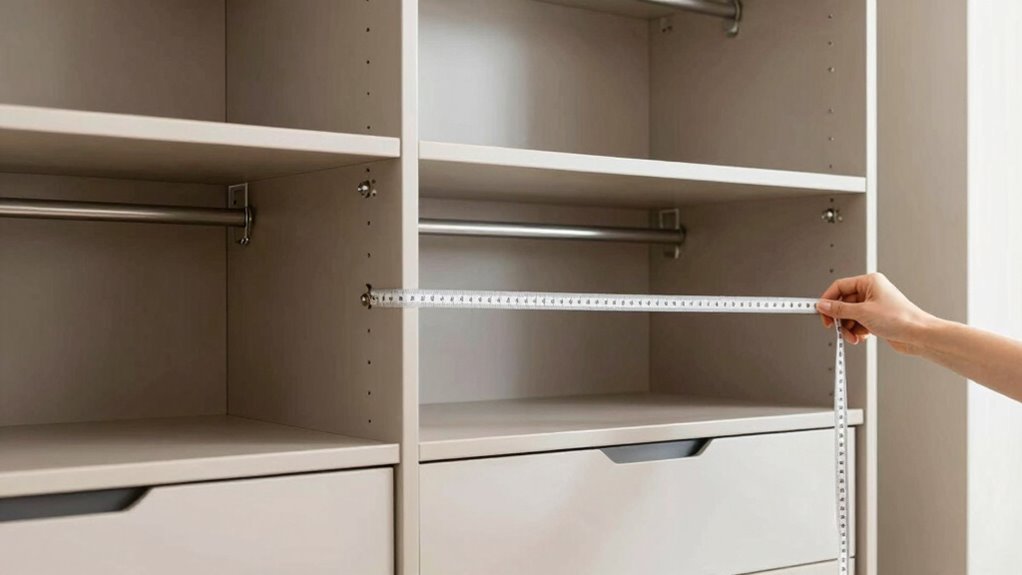
To measure your closet once and avoid returns, start by gathering a reliable tape measure, and take accurate dimensions of the width, depth, and height. Be sure to measure in several spots to catch any variations, and don’t forget to account for obstacles like moldings or outlets. Create a detailed plan or sketch with your measurements before ordering. If you keep these tips in mind, you’ll guarantee a perfect fit and save time down the line.
Key Takeaways
- Use a tape measure to record width, depth, and height at multiple points to identify any variations.
- Account for obstructions like doors, moldings, outlets, and irregularities during measurements.
- Create a detailed sketch or plan based on accurate measurements to guide ordering and installation.
- Double-check all measurements before finalizing to prevent errors and incompatible system components.
- Communicate precise measurements to professionals or when selecting pre-made components to ensure proper fit.
A well-designed closet system can transform your space by organizing everything efficiently and making your daily routine smoother. When planning your closet, one key aspect is choosing the right custom shelving. Unlike standard shelves, custom shelving is tailored to your specific needs, allowing you to maximize every inch of space. You can decide where to place your shoes, handbags, or folded clothes, ensuring that everything has its place. This not only keeps your closet tidy but also saves you time when you’re searching for items. Additionally, integrating different heights and depths into your custom shelving can accommodate larger or oddly shaped items, making your closet more functional overall.
Another essential element to think about is lighting options. Proper lighting makes a significant difference in how you see and access your belongings. Instead of relying solely on your room’s overhead light, consider adding LED strip lights or spotlights inside the closet. These options provide bright, even illumination that helps you quickly find what you’re looking for without rummaging through clutter. Lighting also highlights your storage solutions, making your closet seem more inviting and well-organized. When choosing lighting options, think about energy efficiency, ease of installation, and whether you want adjustable or fixed fixtures. Well-placed lighting can turn a dull, cluttered closet into a bright, accessible space that’s a pleasure to use.
Measuring your space accurately is essential before purchasing any closet system, especially when it involves custom shelving and lighting options. Use a tape measure to record the width, depth, and height of your closet. Don’t forget to account for obstructions like doors, moldings, or protruding outlets. It’s best to measure in multiple spots to catch any variations, as walls and floors aren’t always perfectly straight. Once you have your measurements, create a detailed plan or sketch, noting where you want your custom shelving and lighting fixtures. This preparation helps prevent mistakes and reduces the risk of ordering a system that doesn’t fit.
Furthermore, understanding the importance of contrast ratio and how it impacts image quality can help you choose the right lighting and shelving materials that reflect light effectively, enhancing the overall visual appeal of your closet space. Always double-check your measurements before finalizing your order. When working with professionals or purchasing pre-made components, providing precise measurements ensures everything will fit seamlessly. This careful planning minimizes returns and delays, saving you time and money. Remember, a well-measured closet system tailored with custom shelving and thoughtful lighting options will make your daily routine easier, more efficient, and more enjoyable. Taking the time to measure accurately and plan thoroughly pays off in a finished space that truly meets your needs, avoiding the frustration of returns or reconfigurations later on.
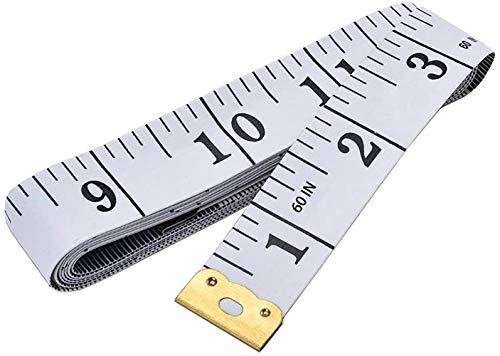
GDMINLO Soft Tape Measure Double Scale Body Sewing Flexible Tailor Craft Vinyl Ruler for Weight Loss Medical Body Measurement, Has Centimetre Scale on Reverse Side 60-inch(White)
Measuring range: 0 to 60 inches and 0 to 150 centimeters. There is a centimeter scale on the…
As an affiliate, we earn on qualifying purchases.
As an affiliate, we earn on qualifying purchases.
Frequently Asked Questions
What Tools Do I Need to Measure My Closet Accurately?
To measure your closet accurately, you need a reliable measuring tape and a laser distance meter. Use the measuring tape for small or curved areas, and the laser distance meter for longer, straight measurements to guarantee precision. Always double-check your measurements and record them carefully. These tools help you avoid mistakes, ensuring your closet system fits perfectly and you won’t need to return or reorder.
How Do I Account for Irregularly Shaped Closet Spaces?
When measuring irregularly shaped closet spaces, you need to be precise about irregular corners and uneven surfaces. Use a flexible measuring tape to follow the contours and note measurements at every bend or bump. For uneven surfaces, measure the highest and lowest points to get an accurate range. Mark these measurements clearly, and consider sketching a diagram to visualize all the irregularities. This approach helps you order a custom fit that truly matches your space.
Can I Install Closet Systems Myself Without Professional Help?
Sure, you can try DIY installation, but don’t pretend you’re a closet expert overnight. While it’s tempting to save money, professional assistance guarantees a seamless fit and avoids costly mistakes. Think of it as a gamble—sure, you might get lucky, but more often than not, you’ll wish you had called in the pros. So, assess your skills and decide if you’re ready for a closet project that’s more tricky than it looks.
How Often Should I Reassess My Closet Measurements?
You should reevaluate your closet measurements annually or whenever you notice storage issues. Regular evaluations help with storage optimization and accommodate seasonal adjustments, like adding space for winter clothing or summer gear. By staying proactive, you ensure your closet remains functional and efficient. Keep an eye on how your needs change over time, and make adjustments to prevent clutter and maximize your storage space.
What Are Common Mistakes to Avoid When Measuring a Closet?
Imagine you’re installing a custom closet, but you forget to account for hanging heights, leading to overcrowded shelves. Common mistakes include measuring too quickly, not considering storage capacity, or using the wrong tools. Always double-check measurements, avoid rushing, and guarantee your hanging heights suit your clothing. Accurate measurements help maximize storage capacity and prevent costly errors, making your closet functional and organized from the start.

AWTATOS Closet Organizer 8 Cube Storage Shelves Closet Clothes Organizers and Storage Stackable Cubby Shelving for Closet Bedroom Living Room Office White
Portable Closet: You can build this cube storage shelves how you want and stack in a combination of…
As an affiliate, we earn on qualifying purchases.
As an affiliate, we earn on qualifying purchases.
Conclusion
By measuring carefully the first time, you can avoid costly returns and guarantee your closet system fits perfectly. Did you know that nearly 30% of home improvement returns happen due to incorrect measurements? Taking that extra moment to double-check your dimensions saves time, money, and frustration. With accurate measurements, you’ll enjoy a seamless installation and a closet that truly meets your needs. Remember, a little prep goes a long way toward a satisfying, stress-free makeover.

Under Cabinet Lighting, LED Motion Sensor Light Indoor, 2200mAh USB Rechargeable Closet Lights Battery Operated, Stick On Magnetic Wireless Dimmable Under Counter Lights for Kitchen(2 Pack)
【Long-Lasting Battery & USB Charging】Experience uninterrupted illumination with our LED under cabinet lighting, featuring a 2200mAh high-capacity rechargeable…
As an affiliate, we earn on qualifying purchases.
As an affiliate, we earn on qualifying purchases.

ClosetMaid SuiteSymphony Small Closet Organizer Starter Kit with Tower and 3 Hang Rods, Shelves, Adjustable, Customizable Wardrobe Organizer System, Reach-In or Walk-In Closets, Pure White
ALL-IN-ONE SMALL CLOSET ORGANIZER: Wood closet organizer system kit includes tower, (3) expandable rods, (5) interior closet shelving…
As an affiliate, we earn on qualifying purchases.
As an affiliate, we earn on qualifying purchases.