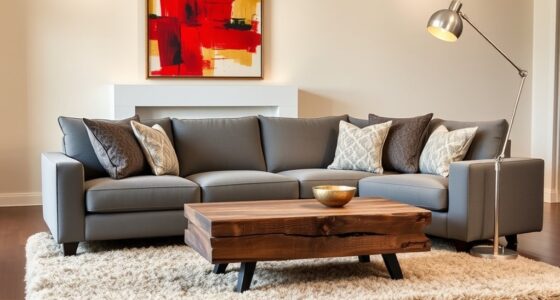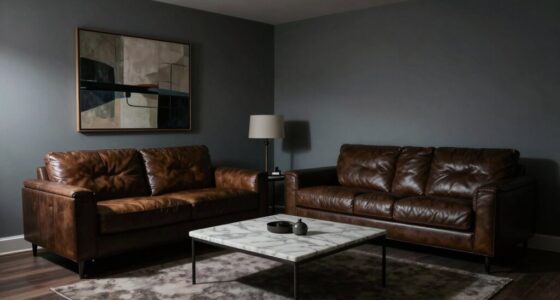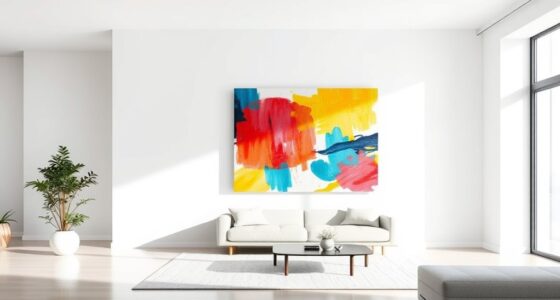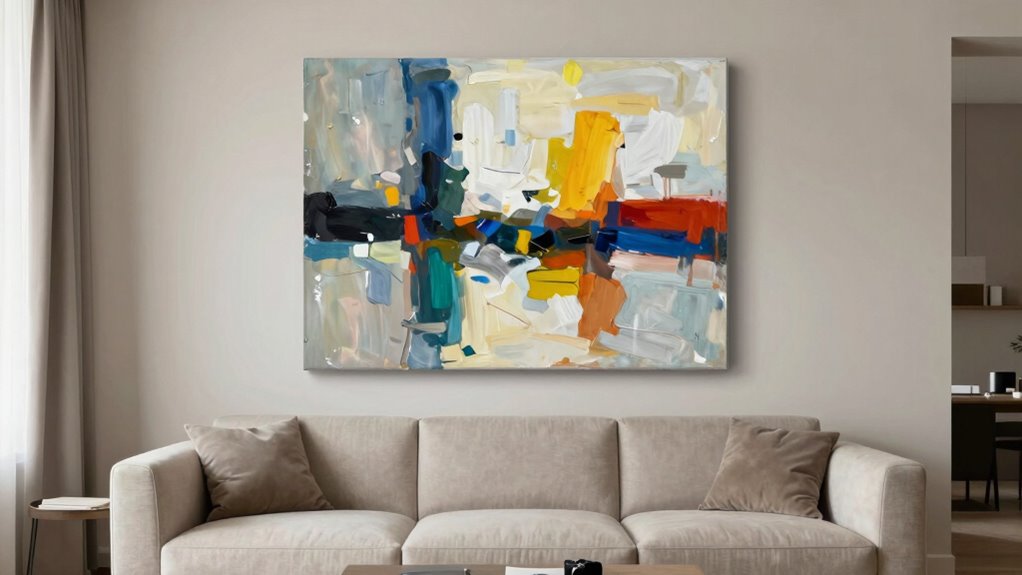
For a universally appealing height, hang your art with its center around 57 to 60 inches from the floor, which aligns with typical eye level. This measurement offers a comfortable viewing experience and works well for most spaces. Keep in mind that wall color and lighting can influence the ideal height, so some adjustments might be needed. Continue to explore these considerations to optimize your display!

Get your next haul delivered free with Prime
- Fast, free delivery on millions of items
- Prime Video, Amazon Music and more included
- Member-only deals all year
Key Takeaways
- Hang artwork so its center is approximately 57-60 inches from the floor for optimal eye-level viewing.
- Adjust height based on wall color and room lighting to enhance visual impact and harmony.
- When using picture lights, position art slightly above eye level to align with lighting fixtures.
- Consider the size of the artwork; larger pieces may be hung slightly higher for balance.
- Use the standard measurement as a starting point and modify as needed for specific wall and lighting conditions.

Have you ever wondered how high to hang your artwork for the perfect display? The right height can make all the difference, turning a simple wall into a captivating gallery space. When considering the ideal placement, think about gallery lighting and wall color choices. Proper lighting enhances your art’s details and colors, while wall color influences how your artwork stands out or blends in. Together, these elements help you achieve a balanced and visually appealing display.
Hanging art at the right height with proper lighting and wall color creates a stunning gallery vibe.
Start by measuring eye level, which is generally about 57 to 60 inches from the floor to the center of the artwork. This standard works well for most spaces because it allows viewers to appreciate the art comfortably without craning their necks. But don’t forget to consider your wall color choices. If your wall has a bold or dark hue, you might want to hang your art slightly higher or lower to prevent it from getting lost or overwhelming the space. Conversely, lighter or neutral walls can support lower placements, creating a cozy, inviting feel.
Gallery lighting plays a *vital* role in how your art is perceived. Proper lighting can highlight details and colors, but the placement of lights relative to the artwork also affects the height at which you hang pieces. For example, if you plan to install picture lights or track lighting, you’ll want to hang your art at a height that aligns with the lighting fixtures, often slightly above or around eye level. This ensures the light hits the artwork directly, avoiding glare and shadows that can diminish the viewing experience. Additionally, understanding art display principles can help you optimize your hanging strategy for visual harmony and impact.
As an affiliate, we earn on qualifying purchases.
Frequently Asked Questions
Should Art Be Hung at Eye Level in All Rooms?
You should generally hang art at eye level for ideal art placement, ensuring it’s accessible and visually balanced. In living rooms or spaces where people sit, consider placing art slightly lower so it’s appreciated from a seated position. Remember, achieving visual balance is key; adjust the height based on the room’s layout and furniture. This approach creates a harmonious look that draws attention without overwhelming the space.
How Do Ceiling Height Variations Affect Hanging Height?
Think of your ceiling as the sky, and your art as stars shining at different heights. When ceiling height varies, you must adjust your hanging height to match the sky’s expanse, creating harmony. For taller ceilings, hang art higher to avoid overwhelming the space, while lower ceilings benefit from slightly lower placements. This hanging variation guarantees your artwork complements your room’s unique ceiling height, creating balanced visual poetry.
What’s the Best Distance Between Multiple Pieces?
For an art grouping, aim for 2-5 inches of wall spacing between pieces. This creates a cohesive look without overcrowding or gaps. You should consider the size of each artwork and the overall wall space, adjusting spacing accordingly. Consistent wall spacing helps your art grouping feel balanced and intentional, drawing the eye smoothly across the display. Keep in mind, smaller pieces might need slightly closer spacing to feel connected.
How Do Different Art Sizes Influence Placement?
Different art sizes influence placement like puzzle pieces fitting together. Larger pieces command more space, so you should hang them lower or higher depending on your gallery style, ensuring they don’t overwhelm the wall. Smaller works work well in clusters or at eye level. Keep framing considerations in mind—thick frames add visual weight, so adjust their placement accordingly to create harmony and balance across your display.
Is It Better to Hang Art Over Furniture or Blank Wall Space?
You should hang art over furniture or blank wall space based on your room’s layout and style. For gallery walls, create a cohesive arrangement that complements the furniture below. Keep lighting considerations in mind—use spotlights or sconces to highlight your art. Generally, hang art about 6-12 inches above furniture for balance, but adjust based on the overall height of your space to achieve visual harmony.
As an affiliate, we earn on qualifying purchases.
Conclusion
Now that you know the perfect height, think of hanging art like planting a tree—you want it to grow just right. I once hung a picture too high, and it felt like trying to read a book from across the room. But when I adjusted it to eye level, everything clicked into place. Remember, just like nurturing a tree, careful placement makes your art thrive and creates a space where memories and beauty can flourish.
As an affiliate, we earn on qualifying purchases.
As an affiliate, we earn on qualifying purchases.
Halloween Picks
halloween
As an affiliate, we earn on qualifying purchases.