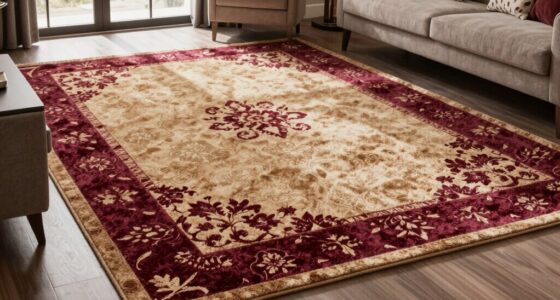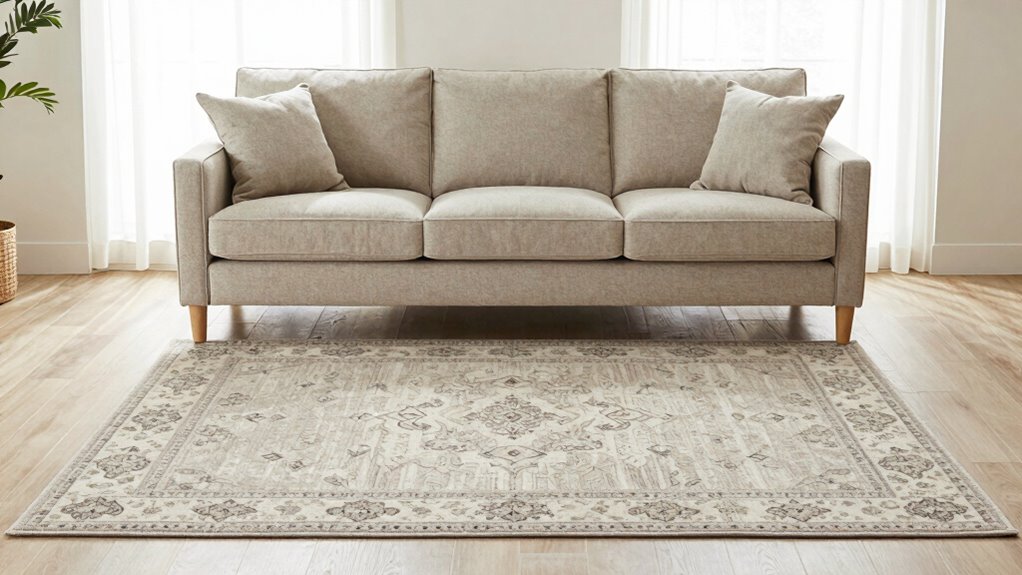

To avoid the ‘floating sofa’ mistake, you should choose a rug that’s proportionate to your furniture and room size. For sofas, make certain the rug extends beyond the front legs or all sides to create a grounded look. In smaller rooms, avoid tiny rugs that make furniture look disconnected; in larger spaces, opt for bigger rugs that unite the area. Keep these sizing tips in mind to create balanced, cohesive spaces, and find out more about perfect rug sizing for your room.

Get your next haul delivered free — and shop member deals
- Fast, free delivery on millions of items
- Access to Prime Big Deal Days deals on October 6–7
- Prime Video, Amazon Music and more included
Key Takeaways
- Ensure the rug extends under all front legs of the sofa to create a grounded, cohesive look.
- Avoid placing a rug that only covers part of the sofa, which can make it appear “floating” and disconnected.
- Choose a size that defines the seating area, ideally with the rug framing the entire arrangement.
- For small rooms, select a rug that fits comfortably beneath the sofa’s front legs, avoiding overly tiny or oversized options.
- Proper rug sizing anchors furniture and prevents the “floating sofa” appearance, enhancing room harmony and visual balance.

Choosing the right rug size can transform a room, but it’s easy to get overwhelmed by options. One of the most common mistakes people make is misjudging how an area rug should be placed within the space. When considering area rug placement, it’s essential to think about how the rug interacts with your furniture and the room’s dimensions. Ignoring room size considerations can lead to a rug that looks out of place or makes your space feel disjointed. Instead of randomly selecting a rug, measure your room carefully and visualize how different sizes will fit. A well-chosen rug anchors the furniture arrangement and creates a cohesive look.
If your room is small, don’t assume you need a tiny rug to avoid overwhelming the space. Conversely, if your room is large, a small rug can make the area feel fragmented. For a balanced look, aim for a rug that complements the room size considerations. For example, in a small living room, a rug that fits under the front legs of your sofa and chairs helps define the seating area without crowding the space. For larger rooms, a bigger rug that extends beyond the furniture creates a sense of unity and makes the space feel more inviting.
Additionally, understanding room size considerations can help you select a rug that enhances the overall harmony of your space. When it comes to room size considerations, think about how much floor space you want to showcase. In a living room, the rug should be large enough so that the furniture sits comfortably on it, with at least 6 to 12 inches of bare floor visible around the edges. This helps frame the area and prevents the rug from looking like an afterthought. If you’re working with a dining room, choose a rug that extends beyond the table’s edges by at least 24 inches to allow chairs to move freely without catching on the rug’s edge.
As an affiliate, we earn on qualifying purchases.
Frequently Asked Questions
How Do I Measure My Space Accurately Before Buying a Rug?
To measure your space accurately, use measuring techniques like a tape measure or laser measure for precise dimensions. Start by measuring the length and width of your room, then decide on rug placement strategies—such as extending the rug beyond furniture edges or anchoring it in the center. Always double-check your measurements and consider rug size proportions relative to your furniture to avoid the floating sofa mistake and make certain of a balanced look.
What Rug Size Is Ideal for Small Living Rooms?
For small living rooms, go for a rug that fits well with your furniture arrangement, typically 5×8 or 6×9 feet. Make certain proper rug placement by positioning the front legs of your sofa and chairs on the rug, creating a cohesive look. This not only maximizes space but also avoids the floating sofa mistake. Measure your space carefully to choose the right size, making your room feel cozy yet balanced.
Can a Rug Be Too Large for a Room?
Yes, a rug can be too large for a room, especially if it overwhelms your furniture arrangement or makes the space feel cramped. When layering rugs or choosing a size, make certain it complements your furniture without extending too far beyond the edges. A well-sized rug anchors your space, while one that’s too big can disrupt the flow and create a cluttered look. Always measure carefully before layering or placing your rug.
How Do I Choose a Rug Size for Open-Plan Spaces?
To choose the right rug size for open-plan spaces, start by considering your furniture placement—ensure all key pieces sit comfortably on the rug, creating a cohesive look. Opt for a rug that complements your room’s color coordination, tying the space together. Larger rugs that anchor multiple zones work best, but avoid floating rug edges, which can disrupt flow and make the space feel disjointed.
Are There Different Rug Sizing Rules for High-Traffic Areas?
Think of high-traffic areas as the heartbeat of your home—you need a sturdy rhythm. For rug placement in these zones, opt for larger rugs that extend under furniture to withstand daily wear. Rug layering can add protection and style, but make certain the rug is durable enough to handle frequent foot traffic. Prioritize thick, tightly woven rugs to keep your space safe, comfortable, and looking great longer.
As an affiliate, we earn on qualifying purchases.
Conclusion
To avoid the floating sofa mistake, remember that a rug should anchor your furniture like a steady keel guiding a ship. Guarantee your rug’s size ties everything together, creating a cohesive space where furniture feels grounded and inviting—no more drifting aimlessly. By following these sizing rules, you’ll craft a room that’s both stylish and harmonious, transforming your space into a well-orchestrated symphony rather than a scattered collection of pieces.
As an affiliate, we earn on qualifying purchases.
As an affiliate, we earn on qualifying purchases.
Fall Picks
fall essentials
As an affiliate, we earn on qualifying purchases.