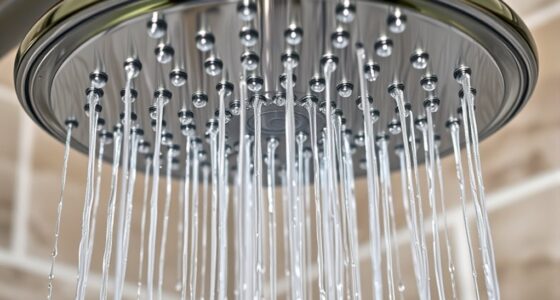
Shower filters can substantially reduce chlorine, odors, and some heavy metals like lead and mercury, helping improve water taste and protect your skin and hair. However, they can’t remove bacteria, viruses, or all chemical contaminants like pharmaceuticals or pesticides. Effectiveness varies by filter design and media used. To get the most from your filter and guarantee safe water, understanding its capabilities is key. Explore further to discover how to optimize your water quality.
Key Takeaways
- Shower filters effectively remove chlorine, odors, and some heavy metals like lead and mercury.
- They typically cannot eliminate bacteria, viruses, pharmaceuticals, or pesticides from water.
- Regular maintenance extends filter life and maintains removal efficiency for contaminants.
- Effectiveness varies by filter design; not all models target the same substances.
- For heavily contaminated water, additional treatment methods like reverse osmosis may be necessary.
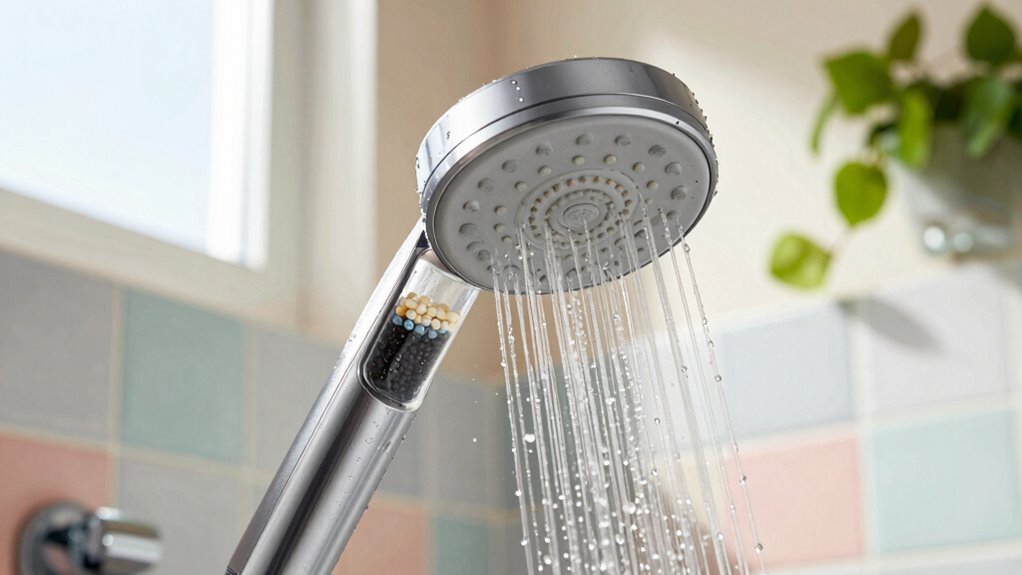
Have you ever wondered what’s lurking in your shower water? Many people don’t realize that tap water can carry a variety of contaminants, from chlorine and heavy metals to bacteria and chemicals. That’s where shower filters come into play, offering an added layer of water purification. But understanding what they can and can’t remove is essential before you invest in one. A good shower filter primarily targets chemicals like chlorine, which can cause dry skin and hair damage, as well as unpleasant odors. Some filters also reduce heavy metals such as lead and mercury, improving your water’s overall safety and taste. However, it’s important to recognize that not all shower filters are created equal, and their capabilities vary based on design and filter media.
To keep your shower filter working effectively, regular filter maintenance is vital. Most filters have a lifespan, usually between three to six months, depending on usage and water quality. If you neglect filter maintenance, it can become clogged or less efficient, defeating the purpose of water purification. Clean or replace filters as recommended by the manufacturer to guarantee you’re getting the best performance and protection. This not only extends the life of the filter but also guarantees that contaminants are being adequately removed, safeguarding your skin, hair, and overall health.
While shower filters excel at removing chlorine, some are limited in their ability to block other substances. For instance, they don’t typically eliminate bacteria, viruses, or certain chemicals like pharmaceuticals and pesticides. If your water source is contaminated with these, a standard shower filter might not suffice. In such cases, additional water treatment solutions, such as reverse osmosis or UV sterilization, might be necessary. It’s also worth noting that some filters can add beneficial minerals back into the water, improving its quality, but this feature varies by model. Additionally, understanding the effectiveness of filtration systems can help you choose the right product for your needs.
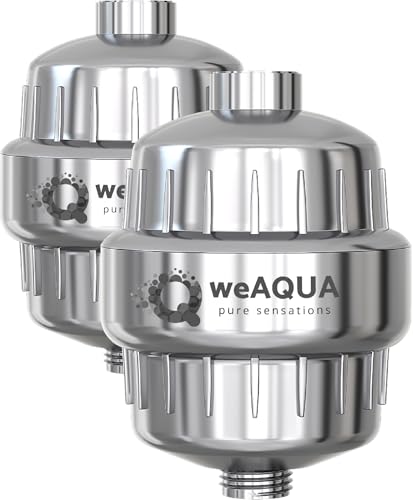
weAQUA Heavy Duty Shower Filter Family 2 PACK – 99% Removal for Hard Water, Chlorine, Fluoride, Heavy Metals, Micro-life, Organics and More
- Pack Size: Includes 2 high-quality filters
- Durable Construction: Chrome-plated ABS for longevity
- Zero Pressure Loss: Engineered for consistent water flow
As an affiliate, we earn on qualifying purchases.
As an affiliate, we earn on qualifying purchases.
Frequently Asked Questions
Do Shower Filters Affect Water Pressure?
Yes, shower filters can affect water pressure, especially if they are clogged or nearing the end of their filter lifespan. As the filter captures particles, it may slow water flow over time. To maintain ideal water pressure, replace your shower filter regularly and choose one designed for minimal flow restriction. This ensures you get clean water without sacrificing pressure, keeping your shower experience comfortable and effective.
How Often Should I Replace My Shower Filter?
Think of your shower filter as a trusted friend—once its filter lifespan ends, it’s time to replace. Typically, replacement frequency varies between 2 to 6 months, depending on usage and water quality. Keep an eye on any decrease in water flow or odor changes, signaling it’s time for a new filter. Regularly replacing your shower filter guarantees peak performance and keeps your water safe and clean.
Are Shower Filters Safe for All Skin Types?
Shower filters are generally safe for all skin types, but if you have skin sensitivities or allergies, you should choose filters that reduce chemical exposure carefully. While they help remove chlorine and other irritants, some filters may contain materials that could cause reactions. Always check product labels, and if you notice any irritation, stop use and consult a dermatologist. Properly maintained filters can provide safer, more comfortable showers for everyone.
Can Shower Filters Remove Bacteria and Viruses?
Did you know that most standard shower filters don’t eliminate bacteria and viruses? They mainly focus on removing chlorine, sediments, and chemicals. While some advanced filters offer bacterial removal and virus filtration, they aren’t foolproof for all pathogens. You won’t get complete protection from germs, so it’s best to combine filter use with other sanitation methods. Always check your filter’s specifications to see if it targets bacteria and viruses specifically.
Do Shower Filters Remove Beneficial Minerals From Water?
Shower filters typically don’t remove beneficial minerals from water, so your mineral retention remains intact. This helps maintain your water balance and guarantees you still get essential minerals like calcium and magnesium. However, some advanced filters might slightly reduce mineral levels. Overall, most standard filters focus on removing contaminants without stripping away these crucial nutrients, so you can enjoy clean water without compromising your mineral intake.

weAQUA Heavy Duty NO BS Shower Filter – 99% Removal for Hard Water, Chlorine, Fluoride, Heavy Metals, Micro-life, Organics and More
- Heavy Duty Shower Filter: Eliminates hard water and contaminants
- European Style Design: Chrome-plated, impact-resistant ABS material
- Real Filtration Media: Sediment, carbon, KDF, calcium sulfite
As an affiliate, we earn on qualifying purchases.
As an affiliate, we earn on qualifying purchases.
Conclusion
While shower filters can improve water quality by removing many contaminants, they won’t eliminate everything, like certain chemicals or microorganisms. Don’t assume a filter is a magic fix—it’s part of a broader approach to healthier living. Investing in a filter shows you care about your well-being, but stay informed about its limits. Ultimately, combining filtered water with good overall hygiene gives you the best protection for your skin and health.

Aquabliss High Output Revitalizing Shower Filter – Reduces Dry Itchy Skin, Dandruff, Eczema, and Dramatically Improves The Condition of Your Skin, Hair and Nails – Chrome (SF100)
- Visible improvements in 2-4 weeks: Rejuvenates skin, hair, and nails
- Multi-stage filtration system: Neutralizes odors and balances pH
- Restores water damage: Reduces chlorine, pesticides, and pharmaceuticals
As an affiliate, we earn on qualifying purchases.
As an affiliate, we earn on qualifying purchases.
Aquabliss High Output Revitalizing Shower Filter – Reduces Dry Itchy Skin, Dandruff, Eczema, and Dramatically Improves The Condition of Your Skin, Hair and Nails – Chrome (SF100)
- Visible improvements in 2-4 weeks: Rejuvenates skin, hair, and nails
- Multi-stage filtration system: Neutralizes odors and balances pH
- Restores water damage: Reduces chlorine, pesticides, and pharmaceuticals
As an affiliate, we earn on qualifying purchases.
As an affiliate, we earn on qualifying purchases.